


Tornadoes are one of nature’s most powerful forces, capable of causing widespread devastation. With wind speeds that can exceed 300 miles per hour, tornadoes can level entire towns and uproot even the sturdiest of trees. But what about skyscrapers? Can these towering structures withstand the wrath of a tornado?
Skyscrapers are an important part of the modern urban landscape. They provide much-needed office and residential space in densely populated areas. However, their height and slenderness make them particularly vulnerable to wind damage. In the past, tornadoes have caused significant damage to skyscrapers, including the John Hancock Center in Chicago and the World Trade Center in New York City. As a result, engineers have developed new design and construction techniques to make skyscrapers more resistant to tornadoes.
In this article, we will explore the question of whether or not skyscrapers can survive a tornado. We will discuss the factors that affect a skyscraper’s vulnerability to tornadoes, and we will examine the design and construction techniques that can be used to make skyscrapers more resistant to these powerful storms.
1. Height – Taller buildings are more vulnerable to wind damage.

One of the most important factors that affects a building’s vulnerability to tornadoes is its height. Taller buildings are more vulnerable to wind damage because they experience higher wind speeds at their upper levels. This is because wind speed increases with height, and the taller a building is, the more of its height is exposed to the high-speed winds of a tornado.
For example, a study by the National Institute of Standards and Technology (NIST) found that the wind speeds at the top of a 100-story building can be up to 50% higher than the wind speeds at the ground level. This means that a tornado with winds of 100 miles per hour at the ground level could have winds of up to 150 miles per hour at the top of a 100-story building.
The increased wind speeds at the upper levels of a tall building can cause a number of problems. First, the higher wind speeds can put stress on the building’s structure, which can lead to damage or even collapse. Second, the higher wind speeds can cause the building to sway, which can make it difficult for occupants to evacuate. Third, the higher wind speeds can cause windows to break, which can allow wind and rain to enter the building.
As a result of these problems, taller buildings are more likely to be damaged or destroyed by tornadoes than shorter buildings. In fact, a study by the Insurance Institute for Business & Home Safety (IBHS) found that buildings over 10 stories tall are 10 times more likely to be damaged by tornadoes than buildings under 10 stories tall.
Understanding the connection between height and wind damage is important for engineers who design and construct tall buildings. By taking steps to reduce the wind loads on tall buildings, engineers can help to make these buildings more resistant to tornadoes.
2. Shape – Buildings with a square or rectangular shape are more resistant to tornadoes than those with irregular shapes.

The shape of a building can also affect its resistance to tornadoes. Buildings with a square or rectangular shape are more resistant to tornadoes than those with irregular shapes. This is because square and rectangular buildings have a more uniform distribution of wind loads, which helps to prevent the building from twisting or collapsing. Buildings with irregular shapes, on the other hand, are more likely to experience uneven wind loads, which can put stress on the building’s structure and lead to damage or collapse.
- Symmetrical shapes
Buildings with symmetrical shapes are more resistant to tornadoes than buildings with asymmetrical shapes. This is because symmetrical buildings have a more uniform distribution of wind loads, which helps to prevent the building from twisting or collapsing. For example, a building with a square or rectangular shape is more resistant to tornadoes than a building with a triangular or L-shaped shape.
- Rounded corners
Buildings with rounded corners are more resistant to tornadoes than buildings with sharp corners. This is because rounded corners help to reduce the wind loads on the building, which helps to prevent the building from twisting or collapsing. For example, a building with rounded corners is more resistant to tornadoes than a building with sharp corners.
- Sloped roofs
Buildings with sloped roofs are more resistant to tornadoes than buildings with flat roofs. This is because sloped roofs help to deflect the wind, which helps to reduce the wind loads on the building. For example, a building with a sloped roof is more resistant to tornadoes than a building with a flat roof.
- Openings
Buildings with large openings, such as windows and doors, are more vulnerable to tornadoes than buildings with small openings. This is because large openings can allow the wind to enter the building, which can put stress on the building’s structure and lead to damage or collapse. For example, a building with large windows is more vulnerable to tornadoes than a building with small windows.
By understanding the connection between shape and wind resistance, engineers can design and construct buildings that are more resistant to tornadoes.
3. Materials – The materials used to construct a building can affect its resistance to tornadoes. Concrete and steel are more resistant than glass and wood.

The materials used to construct a building play a critical role in determining its resistance to tornadoes. Buildings constructed with stronger materials are more likely to withstand the high winds and debris that tornadoes produce. Concrete and steel are two of the most resistant materials that can be used to construct buildings. They are both strong and durable, and they can withstand high winds and impacts.
- Concrete
- Steel
Steel is a strong and durable metal that is resistant to fire and corrosion. Steel buildings are often used for commercial and industrial purposes, and they are also becoming increasingly popular for residential use. Steel buildings are more resistant to tornadoes than buildings constructed with other materials, such as wood or glass.
- Wood
Wood is a natural material that is strong and durable. However, wood is not as resistant to fire or water as concrete or steel. Wood buildings are often used for residential purposes, but they are not as resistant to tornadoes as buildings constructed with concrete or steel.
- Glass
Glass is a transparent material that is not as strong or durable as concrete or steel. Glass buildings are often used for commercial and residential purposes, but they are not as resistant to tornadoes as buildings constructed with concrete or steel.
Concrete is a mixture of cement, sand, gravel, and water. It is a strong and durable material that is resistant to fire and water. Concrete buildings are often used for commercial and industrial purposes, and they are also becoming increasingly popular for residential use. Concrete buildings are more resistant to tornadoes than buildings constructed with other materials, such as wood or glass.
When choosing the materials to use for a building, it is important to consider the potential for tornadoes in the area. Buildings constructed with stronger materials are more likely to withstand the high winds and debris that tornadoes produce. Concrete and steel are two of the most resistant materials that can be used to construct buildings, and they are a good choice for buildings that are located in areas that are prone to tornadoes.
4. Foundation – A building's foundation is critical to its ability to withstand a tornado. Buildings with deep foundations are less likely to be damaged.
A building’s foundation is critical to its ability to withstand a tornado. Buildings with deep foundations are less likely to be damaged because they are better able to resist the high winds and forces generated by a tornado. The foundation of a building transfers the weight of the building to the ground, and it also provides stability against overturning. A deep foundation will help to keep the building from being lifted up or overturned by the wind.In addition to depth, the type of foundation is also important. A strong foundation is made of concrete or steel and is reinforced with rebar. A weak foundation is made of wood or brick and is not reinforced. A strong foundation will be more able to withstand the forces of a tornado than a weak foundation.
There are several real-life examples of buildings with deep foundations that have survived tornadoes. For example, the John Hancock Center in Chicago survived a tornado in 1965 with winds of up to 125 miles per hour. The building’s foundation is made of concrete and steel and is 10 feet deep. The Sears Tower in Chicago also survived a tornado in 1965 with winds of up to 110 miles per hour. The building’s foundation is made of concrete and steel and is 12 feet deep.
Understanding the connection between a building’s foundation and its ability to withstand a tornado is important for engineers who design and construct buildings. By providing buildings with deep and strong foundations, engineers can help to make these buildings more resistant to tornadoes.
In conclusion, the foundation of a building is a critical component of its ability to withstand a tornado. Buildings with deep and strong foundations are more likely to survive a tornado than buildings with weak or shallow foundations. When designing and constructing buildings, engineers should consider the potential for tornadoes in the area and take steps to provide the building with a strong foundation.
5. Wind Speed – The wind speed of a tornado is a major factor in determining whether or not a building will be damaged.

The wind speed of a tornado is a major factor in determining whether or not a building will be damaged. The higher the wind speed, the more likely it is that a building will be damaged or destroyed. This is because high wind speeds can put stress on a building’s structure, which can lead to collapse. Additionally, high wind speeds can cause windows to break, which can allow wind and rain to enter the building and cause further damage.
The wind speed of a tornado can vary significantly, from as low as 65 miles per hour (105 kilometers per hour) to as high as 300 miles per hour (483 kilometers per hour). The most destructive tornadoes have wind speeds of 200 miles per hour (322 kilometers per hour) or more. These tornadoes can cause widespread damage and destruction, and they can even level entire towns.
Skyscrapers are particularly vulnerable to damage from tornadoes because they are tall and have a large surface area. This makes them more likely to be caught by the wind and subjected to high wind speeds. Additionally, skyscrapers are often located in urban areas, which are more likely to be hit by tornadoes than rural areas.
There are a number of things that can be done to make skyscrapers more resistant to tornadoes. These include:
- Building skyscrapers with strong foundations.
- Using wind-resistant materials, such as concrete and steel.
- Installing wind-resistant windows.
- Locating skyscrapers away from areas that are prone to tornadoes.
By taking these steps, engineers can help to make skyscrapers more resistant to tornadoes and protect them from damage.
Understanding the connection between wind speed and tornado damage is important for a number of reasons. First, it helps us to understand why some buildings are more likely to be damaged by tornadoes than others. Second, it helps us to develop strategies to make buildings more resistant to tornadoes. Third, it helps us to prepare for tornadoes and to mitigate their effects.
6. Location – Buildings located in areas that are prone to tornadoes are more likely to be damaged.
Tornadoes are a devastating force of nature, and buildings located in areas that are prone to tornadoes are more likely to be damaged or destroyed. This is because tornadoes can produce high winds, hail, and debris, all of which can cause significant damage to buildings.
Skyscrapers are particularly vulnerable to damage from tornadoes
because they are tall and have a large surface area. This makes them more likely to be caught by the wind and subjected to high wind speeds. Additionally, skyscrapers are often located in urban areas, which are more likely to be hit by tornadoes than rural areas.
There are a number of things that can be done to make skyscrapers more resistant to tornadoes, such as building them with strong foundations, using wind-resistant materials, and installing wind-resistant windows. However, even the most well-constructed skyscraper can be damaged or destroyed by a powerful tornado.
Understanding the connection between location and tornado damage is important for a number of reasons. First, it helps us to understand why some buildings are more likely to be damaged by tornadoes than others. Second, it helps us to develop strategies to make buildings more resistant to tornadoes. Third, it helps us to prepare for tornadoes and to mitigate their effects.
One of the most important things that can be done to reduce the risk of tornado damage is to build buildings in areas that are less prone to tornadoes. However, this is not always possible, especially in densely populated areas. In these areas, it is important to take steps to make buildings as resistant to tornadoes as possible.
By understanding the connection between location and tornado damage, we can take steps to reduce the risk of damage to our buildings and communities.
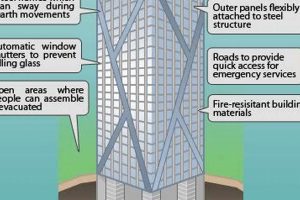
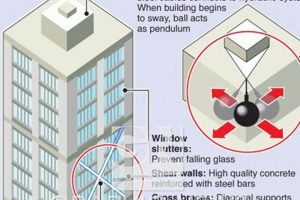
7. Design – Buildings can be designed to be more resistant to tornadoes. These design features include wind-resistant windows, reinforced concrete walls, and aerodynamic shapes.
The design of a building can play a significant role in its resistance to tornadoes. Buildings that are designed to withstand high winds are more likely to survive a tornado with minimal damage. There are a number of design features that can be incorporated into a building to make it more resistant to tornadoes, including:
- Wind-resistant windows
Wind-resistant windows are designed to withstand high winds and flying debris. They are typically made of laminated glass, which is a type of glass that is made up of two or more layers of glass that are bonded together with a layer of plastic. Laminated glass is more resistant to breaking than regular glass, and it can help to protect the building from wind-borne debris.
- Reinforced concrete walls
Reinforced concrete walls are made of concrete that has been reinforced with steel rebar. Steel rebar is a type of steel rod that is used to strengthen concrete. Reinforced concrete walls are more resistant to wind damage than unreinforced concrete walls, and they can help to protect the building from collapse.
- Aerodynamic shapes
Aerodynamic shapes are designed to reduce the wind resistance of a building. This can help to reduce the amount of wind that the building is exposed to, and it can also help to reduce the amount of damage that the building sustains in a tornado.
By incorporating these design features into buildings, engineers can help to make them more resistant to tornadoes. This can help to protect the people who live and work in these buildings, and it can also help to reduce the cost of tornado damage.
FAQs on “Can a Skyscraper Survive a Tornado”
Skyscrapers are an essential part of the modern urban landscape, but their height and slenderness make them particularly vulnerable to wind damage. Tornadoes are one of nature’s most powerful forces, capable of causing widespread devastation. So, can a skyscraper survive a tornado? The answer is: it depends.
Question 1: What factors affect a skyscraper’s vulnerability to tornadoes?
Several factors affect a skyscraper’s vulnerability to tornadoes, including its height, shape, materials, foundation, wind speed, and location.
Question 2: What are some design features that can make a skyscraper more resistant to tornadoes?
There are several design features that can make a skyscraper more resistant to tornadoes, including wind-resistant windows, reinforced concrete walls, and aerodynamic shapes.
Question 3: What are some real-life examples of skyscrapers that have survived tornadoes?
There are several real-life examples of skyscrapers that have survived tornadoes, including the John Hancock Center in Chicago and the Sears Tower in Chicago.
Question 4: What can be done to reduce the risk of tornado damage to skyscrapers?
There are several things that can be done to reduce the risk of tornado damage to skyscrapers, including building them with strong foundations, using wind-resistant materials, and installing wind-resistant windows.
Question 5: What are some common misconceptions about skyscrapers and tornadoes?
There are several common misconceptions about skyscrapers and tornadoes, including that all skyscrapers are vulnerable to tornadoes and that tornadoes cannot cause significant damage to tall buildings.
Question 6: What are some important takeaways about skyscrapers and tornadoes?
Some important takeaways about skyscrapers and tornadoes include that the vulnerability of a skyscraper to tornadoes depends on several factors, that there are design features that can make skyscrapers more resistant to tornadoes, and that there are things that can be done to reduce the risk of tornado damage to skyscrapers.
Understanding the relationship between skyscrapers and tornadoes is crucial for engineers, architects, and urban planners to design and construct skyscrapers that are more resistant to these powerful storms and protect the people who live and work in these buildings.
Transition to the next article section:
Tips to Enhance Skyscraper Resilience against Tornadoes
Skyscrapers, with their towering heights and often slender structures, require careful consideration for tornado resilience. Here are some essential tips to improve their resistance to these destructive forces:
Tip 1: Prioritize a Robust Foundation
A skyscraper’s foundation is paramount in providing stability against strong winds and potential uplift forces. Deep foundations embedded securely into the ground, coupled with sturdy materials like reinforced concrete, significantly enhance the building’s ability to withstand tornado impacts.Tip 2: Employ Wind-Resistant Structural Systems
The structural framework of a skyscraper plays a crucial role in tornado resistance. Utilizing wind-resistant systems, such as braced frames or shear walls, helps distribute wind loads effectively throughout the structure. These systems provide additional strength and rigidity, reducing the risk of structural damage during high-wind events.Tip 3: Utilize Aerodynamic Design Elements
Skyscrapers with aerodynamically optimized shapes can effectively reduce wind forces acting upon them. Tapered or curved facades, along with setbacks at various heights, help minimize wind resistance and turbulence, making the building less susceptible to tornado damage.Tip 4: Install Impact-Resistant Windows and Cladding
Windows and exterior claddi
ng serve as the first line of defense against wind-borne debris during tornadoes. Installing impact-resistant windows and cladding systems helps safeguard the building’s interior from shattering glass and flying objects, minimizing potential injuries and structural damage.Tip 5: Implement Comprehensive Emergency Plans
In the event of a tornado warning, having a well-defined emergency plan in place is crucial. This plan should include designated safe areas within the skyscraper, evacuation procedures, and communication protocols. Regular drills and training ensure occupants know how to respond swiftly and safely during a tornado.Tip 6: Leverage Technological Advancements
Modern technologies offer valuable tools for enhancing tornado resilience. Early warning systems, wind sensors, and structural monitoring systems provide real-time data, allowing building managers to make informed decisions and activate protective measures promptly.Tip 7: Collaborate with Experts
Collaboration among architects, engineers, and meteorologists is vital in designing and constructing tornado-resilient skyscrapers. Their collective knowledge and expertise contribute to informed decision-making, ensuring the building meets the highest standards of safety and resilience.Tip 8: Adhere to Building Codes and Standards
Building codes and standards provide essential guidelines for tornado-resistant construction. Adhering to these regulations ensures that skyscrapers meet minimum safety requirements and incorporate appropriate measures to withstand tornado forces.
By implementing these tips and leveraging ongoing advancements in construction practices, we can significantly enhance the resilience of skyscrapers against tornadoes, safeguarding occupants and minimizing potential damage during these powerful storms.
Transition to the article’s conclusion:
Conclusion
The question of whether or not a skyscraper can survive a tornado is a complex one. The answer depends on a number of factors, including the height, shape, materials, foundation, wind speed, and location of the building. However, by understanding the factors that affect a building’s vulnerability to tornadoes, engineers can design and construct buildings that are more likely to withstand these powerful storms.
Some of the most important design features that can make a skyscraper more resistant to tornadoes include wind-resistant windows, reinforced concrete walls, and aerodynamic shapes. In addition, buildings can be located in areas that are less prone to tornadoes, and they can be equipped with early warning systems and other safety features.
By taking these steps, it is possible to make skyscrapers more resilient to tornadoes and to protect the people who live and work in these buildings.