


Skyscrapers are an impressive feat of engineering, reaching extraordinary heights and providing valuable space in densely populated urban areas. However, with their great height comes a unique challenge – the potential for damage during earthquakes. To address this challenge, engineers have developed earthquake-resistant building techniques to create earthquake-proof skyscrapers that can withstand the forces of an earthquake without compromising the safety of occupants.
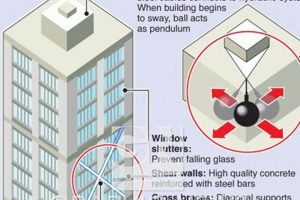
Earthquake-proof skyscrapers incorporate various innovative design features to mitigate the impact of earthquakes. They often have a strong and flexible structural framework that can absorb and dissipate seismic energy, preventing catastrophic failure. Additionally, these buildings may employ base isolation systems, which involve placing the building on a layer of bearings or pads that absorb and redirect earthquake forces away from the main structure.
The importance of earthquake-proof skyscrapers cannot be overstated. They provide safe and habitable spaces in earthquake-prone regions, ensuring the well-being of occupants and minimizing property damage. By implementing earthquake-resistant measures, engineers are not only constructing magnificent structures but also safeguarding lives and livelihoods in the face of natural disasters.
1. Structural Framework

In the context of earthquake-proof skyscrapers, the structural framework plays a critical role in ensuring the building’s resilience against seismic forces. A strong and flexible framework is designed to absorb and dissipate seismic energy, preventing catastrophic failure and safeguarding the lives of occupants.
- Shock Absorption: The framework is engineered to absorb the impact of seismic waves by flexing and bending without compromising its structural integrity. This absorption capacity reduces the overall forces transmitted to the building’s occupants and critical systems.
- Energy Dissipation: The flexible nature of the framework allows it to dissipate seismic energy through internal friction and damping mechanisms. This dissipation prevents the buildup of excessive energy that could otherwise lead to structural damage.
- Lateral Stability: The framework provides lateral stability to the building, resisting the horizontal forces generated by earthquakes. It ensures that the building does not sway excessively or overturn during a seismic event.
- Redundancy: Earthquake-proof skyscrapers often incorporate redundant structural elements to enhance their resilience. Multiple load paths and backup systems are designed to ensure that the building can withstand damage to individual components without compromising its overall stability.
In conclusion, the strong and flexible structural framework is a vital component of earthquake-proof skyscrapers. Its ability to absorb and dissipate seismic energy, provide lateral stability, and incorporate redundancy ensures the safety and integrity of these structures during earthquakes.
2. Base Isolation

Base isolation is a crucial strategy employed in earthquake-proof skyscrapers to protect them from the damaging effects of seismic forces. This technique involves placing the building on a layer of bearings or pads that act as a buffer between the ground and the structure. These bearings or pads are designed to absorb and redirect the energy of earthquake waves, preventing them from being transmitted to the main structure.
- Seismic Isolation: Bearings or pads made of materials such as rubber or lead-rubber are used to isolate the building from the ground. They absorb and dissipate seismic energy, preventing it from reaching the main structure.
- Horizontal Movement: The bearings or pads allow the building to move horizontally during an earthquake. This movement reduces the forces acting on the structure, preventing damage to critical components.
- Vertical Stability: While allowing horizontal movement, the base isolation system also maintains the vertical stability of the building. This ensures that the building does not overturn or collapse during an earthquake.
- Tuned Natural Frequency: The base isolation system is tuned to match the natural frequency of the building. This ensures that the bearings or pads move in resonance with the earthquake waves, effectively canceling out their energy.
In conclusion, base isolation is a vital component of earthquake-proof skyscrapers, providing an effective means to redirect earthquake forces away from the main structure. By incorporating base isolation systems, engineers can enhance the resilience of these structures and protect occupants from the devastating effects of earthquakes.
3. Energy Dissipation Devices
In the context of earthquake-proof skyscrapers, energy dissipation devices play a critical role in mitigating the damaging effects of seismic forces. These devices, which include dampers and shock absorbers, are strategically placed throughout the building to absorb and dissipate the energy generated by earthquakes, reducing the forces transmitted to the main structure and protecting occupants from harm.
Dampers, such as viscous dampers and tuned mass dampers, dissipate energy through friction or by moving in opposition to the building’s motion. Shock absorbers, on the other hand, absorb energy through deformation, preventing it from being transferred to the building’s structural components.
The incorporation of energy dissipation devices in earthquake-proof skyscrapers is crucial for several reasons. Firstly, these devices reduce the overall seismic forces acting on the building, preventing excessive stress on structural elements and reducing the risk of damage. Secondly, by dissipating energy, these devices minimize the building’s response to earthquake forces, mitigating vibrations and preventing resonance, which can amplify structural damage.
Real-life examples of the effectiveness of energy dissipation devices in earthquake-proof skyscrapers can be found worldwide. The Taipei 101 skyscraper in Taiwan, for instance, is equipped with tuned mass dampers that have successfully reduced the building’s sway during earthquakes. Similarly, the Burj Khalifa in Dubai utilizes viscous dampers to dissipate energy and enhance its seismic resilience.
Understanding the connection between energy dissipation devices and earthquake-proof skyscrapers is essential for several reasons. Firstly, it highlights the importance of incorporating these devices into the design of tall buildings in
earthquake-prone regions. Secondly, it emphasizes the effectiveness of these devices in mitigating seismic forces and protecting occupants from harm. Finally, it provides a practical understanding of how engineering solutions can be applied to enhance the safety and resilience of our built environment.
4. Tuned Mass Dampers

Tuned mass dampers (TMDs) are a critical component of earthquake-proof skyscrapers, playing a vital role in mitigating the damaging effects of seismic forces. These devices consist of a heavy mass suspended within a structure and tuned to the building’s natural frequency. During an earthquake, the TMD moves in opposition to the building’s motion, absorbing and dissipating energy, thereby reducing the structural response to seismic forces.
The effectiveness of TMDs in earthquake-proof skyscrapers has been demonstrated in numerous real-life examples. One notable case is the Taipei 101 skyscraper in Taiwan, which is equipped with a massive TMD weighing over 660 tons. During the 2002 Hualien earthquake, the TMD significantly reduced the building’s sway, preventing excessive structural damage.
Understanding the connection between TMDs and earthquake-proof skyscrapers highlights the importance of incorporating these devices into the design of tall buildings in earthquake-prone regions. TMDs effectively counteract building sway, reducing the forces transmitted to the main structure and protecting occupants from harm. This understanding is crucial for enhancing the safety and resilience of our built environment in the face of seismic hazards.
5. Foundation Systems

Foundation systems play a crucial role in ensuring the stability and integrity of earthquake-proof skyscrapers. Deep and sturdy foundations provide a solid base for these towering structures, anchoring them firmly into the ground and preventing overturning during seismic events.
- Deep Foundations: Skyscrapers are often built on deep foundations, such as piles or caissons, which extend deep into the ground. These foundations transfer the building’s weight to deeper, more stable soil layers, providing a secure base for the structure.
- Sturdy Foundations: The foundations of earthquake-proof skyscrapers are designed to be exceptionally sturdy and robust. They are typically constructed using reinforced concrete or steel, providing the necessary strength to resist the uplift forces and lateral loads generated by earthquakes.
Real-life examples of sturdy foundation systems can be found in some of the world’s tallest and most earthquake-resistant skyscrapers. The Burj Khalifa in Dubai, for instance, has a foundation system consisting of over 190 piles, each extending more than 50 meters into the ground. Similarly, the Taipei 101 in Taiwan utilizes a deep foundation system with piles extending over 80 meters below ground level.
Understanding the connection between foundation systems and earthquake-proof skyscrapers is crucial for several reasons. Firstly, it highlights the importance of a solid and stable foundation in ensuring the structural integrity of tall buildings during earthquakes. Secondly, it emphasizes the need for engineers to carefully design and construct foundations that can withstand the unique challenges posed by seismic activity. Finally, it provides a deeper appreciation for the engineering marvels that make earthquake-proof skyscrapers possible.
6. Lightweight Materials
The use of lightweight materials in the construction of earthquake-proof skyscrapers is a crucial strategy employed by engineers to minimize the seismic forces acting on these structures. By reducing the overall weight of the building, the forces generated by earthquakes are correspondingly reduced, mitigating the risk of structural damage and enhancing the building’s resilience.
- High-Strength Steel: Advanced high-strength steel alloys are utilized in the structural framework of earthquake-proof skyscrapers. These alloys offer exceptional strength-to-weight ratios, enabling the construction of lighter yet robust structures that can withstand seismic loads.
- Composite Materials: Composite materials, such as fiber-reinforced polymers and carbon fiber composites, are increasingly used in earthquake-proof skyscrapers. These materials possess high strength and stiffness while being significantly lighter than traditional materials like concrete, reducing the overall weight of the building.
- Aluminum Alloys: Aluminum alloys are employed in various components of earthquake-proof skyscrapers, including cladding and curtain walls. Aluminum is lightweight, durable, and corrosion-resistant, contributing to the overall weight reduction and structural integrity of the building.
- Innovative Cladding Systems: Advanced cladding systems, such as double-skin facades and unitized curtain walls, are designed to be lightweight and flexible. These systems minimize the weight of the building envelope while providing thermal insulation and protection from the elements.
Implementing lightweight materials in earthquake-proof skyscrapers offers numerous advantages. Reduced weight means lower seismic forces, which translates to decreased stress on structural components and enhanced overall stability. Additionally, lightweight buildings are more efficient to construct and require less energy for transportation and erection, promoting sustainability in the construction process.
Examples of earthquake-proof skyscrapers that utilize lightweight materials include the Burj Khalifa in Dubai, which employs high-strength steel and composite materials, and the Taipei 101 in Taiwan, which features a lightweight curtain wall system. These structures exemplify the successful integration of lightweight materials in earthquake-resistant design, showcasing their effectiveness in mitigating seismic forces and ensuring the safety of occupants.
7. Redundancy

In the context of earthquake-proof skyscrapers, redundancy plays a pivotal role in ensuring the structural integrity and safety of these towering structures during seismic events. Redundancy involves incorporating multiple load paths and backup systems into the building’s design, providing alternative ways for the structure to withstand and redistribute seismic forces.
The significance of redundancy in earthquake-proof skyscrapers lies in its ability to mitigate the risk of catastrophic failure in the event of an earthquake. By providing multiple load paths, the structure can effectively transfer seismic forces away from critical components, reducing the likelihood of localized damage and collapse. Backup systems, such as emergency generators and water pumps, ensure that essential services remain operational even if primary systems are compromised.
Real-life examples of redundancy in earthquake-proof skyscrapers can be found in renowned structures worldwide. The Bu
rj Khalifa in Dubai, for instance, employs a “bundled tube” structural system that incorporates multiple load paths to distribute seismic forces throughout the building’s height. Similarly, the Taipei 101 in Taiwan utilizes a “mega-frame” structural system that provides multiple levels of redundancy, ensuring the building’s stability even in the event of severe earthquakes.
Understanding the connection between redundancy and earthquake-proof skyscrapers is crucial for several reasons. Firstly, it highlights the importance of designing buildings with multiple layers of defense against seismic forces. Secondly, it emphasizes the need for engineers to carefully consider the potential failure modes of a structure and provide alternative paths for load transfer. Finally, it provides insight into the engineering strategies employed to enhance the resilience and safety of tall buildings in earthquake-prone regions.
FAQs on Earthquake-Proof Skyscrapers
This section addresses common concerns and misconceptions surrounding earthquake-proof skyscrapers.
Question 1: Are earthquake-proof skyscrapers completely immune to damage during earthquakes?
While earthquake-proof skyscrapers are designed to withstand significant seismic forces, they are not entirely immune to damage. However, the advanced engineering techniques employed in their construction aim to minimize the risk of structural failure and protect occupants during earthquakes.
Question 2: How do earthquake-proof skyscrapers differ from regular buildings in terms of structural design?
Earthquake-proof skyscrapers incorporate specialized structural elements such as base isolation systems, tuned mass dampers, and reinforced concrete or steel frameworks. These features enhance the building’s ability to absorb and dissipate seismic energy, reducing the impact of earthquakes on the structure.
Question 3: Are there any real-life examples of earthquake-proof skyscrapers that have successfully withstood major earthquakes?
Yes, there are numerous examples of earthquake-proof skyscrapers that have performed well during major earthquakes. The Burj Khalifa in Dubai and the Taipei 101 in Taiwan are notable examples that have withstood significant seismic events without sustaining major structural damage.
Question 4: How are occupants of earthquake-proof skyscrapers protected during earthquakes?
Earthquake-proof skyscrapers incorporate safety features such as emergency evacuation systems, fire suppression systems, and backup power generators to ensure the safety of occupants during and after earthquakes. These measures aim to minimize the risk of injuries or fatalities.
Question 5: Are earthquake-proof skyscrapers more expensive to construct than regular buildings?
The construction of earthquake-proof skyscrapers typically requires specialized materials and engineering techniques, which can increase the overall cost compared to regular buildings. However, the long-term benefits of enhanced safety and resilience often outweigh the additional expenses.
Question 6: Are there any limitations to the height of earthquake-proof skyscrapers?
The height of earthquake-proof skyscrapers is influenced by various factors such as the seismic activity of the region, available construction technologies, and economic considerations. While there is no absolute limit, taller buildings require more advanced engineering solutions to ensure their stability during earthquakes.
In summary, earthquake-proof skyscrapers represent a significant advancement in structural engineering, providing enhanced protection against seismic forces. Their design incorporates specialized features to absorb and dissipate earthquake energy, ensuring the safety of occupants and minimizing structural damage during earthquakes.
Transition to the next article section…
Tips for Enhancing Earthquake Resilience in Skyscrapers
To further enhance the earthquake resilience of skyscrapers, the following tips offer practical guidance:
Tip 1: Implement Advanced Structural Systems: Employ innovative structural systems, such as base isolation and tuned mass dampers, to effectively absorb and dissipate seismic energy, minimizing the impact on the building’s structure.
Tip 2: Utilize High-Strength Materials: Incorporate advanced materials, such as high-strength steel and composite materials, to reduce the overall weight of the building while maintaining structural integrity, resulting in lower seismic forces.
Tip 3: Ensure Redundancy in Structural Design: Provide multiple load paths and backup systems to ensure that the building can withstand damage to individual components without compromising its overall stability.
Tip 4: Implement Seismic Monitoring Systems: Install real-time monitoring systems to detect and assess seismic activity, enabling early warning and timely response to potential earthquakes.
Tip 5: Conduct Regular Maintenance and Inspections: Regularly inspect and maintain structural components, including foundations, frameworks, and energy dissipation devices, to ensure optimal performance during earthquakes.
Tip 6: Educate Occupants and Emergency Responders: Provide comprehensive earthquake preparedness training to occupants and emergency responders to enhance their awareness and response capabilities.
Tip 7: Collaborate with Experts: Engage experienced structural engineers, architects, and earthquake specialists to benefit from their expertise in designing and constructing earthquake-proof skyscrapers.
Tip 8: Adopt Sustainable Construction Practices: Incorporate sustainable building practices, such as using eco-friendly materials and optimizing energy efficiency, to minimize the environmental impact while enhancing the building’s overall resilience.
These tips provide valuable insights for architects, engineers, and building owners seeking to design and construct earthquake-proof skyscrapers that prioritize the safety of occupants and the integrity of the structures.
…
Conclusion
In conclusion, earthquake-proof skyscrapers represent a testament to the ingenuity and resilience of modern engineering. Through the implementation of advanced structural systems, innovative materials, and comprehensive safety measures, these towering structures are designed to withstand the forces of nature while safeguarding the lives of occupants. By incorporating redundancy, monitoring systems, and ongoing maintenance, we can further enhance the resilience of these architectural marvels. As we continue to advance our understanding of seismic activity and refine our construction techniques, the future of earthquake-proof skyscrapers holds the promise of even greater safety and sustainability.
The skyscrapers of tomorrow will not only define skylines but also serve as beacons of resilience in the face of adversity. By embracing innovation, collaboration, and a commitment to safety, we can create structures that stand tall not only in height but also in their ability to protect life and property in the face of earthquakes. The journey towards earthquake-proof skyscrapers is an ongoing pursuit, and it is one that we must continue with unwavering dedication.