


Skyscrapers, towering structures that dominate the skylines of major cities worldwide, offer undeniable advantages in terms of space optimization, urban planning, and architectural marvels. However, it is equally important to acknowledge the disadvantages associated with these vertical giants.
One significant disadvantage lies in the environmental impact of skyscrapers. Their construction requires vast amounts of resources and energy, contributing to greenhouse gas emissions and depletion of natural resources. Additionally, their dense concentration can lead to the formation of urban heat islands, where temperatures are significantly higher than in surrounding areas.
Furthermore, skyscrapers pose challenges in terms of safety and emergency response. During fires or other emergencies, evacuation from high floors can be extremely difficult and time-consuming. Moreover, the wind forces acting on tall buildings can cause structural swaying, leading to discomfort and potential hazards for occupants.
Another disadvantage is the limited natural light and ventilation in lower floors of skyscrapers. This can impact the well-being and productivity of occupants, as well as increase the reliance on artificial lighting and ventilation systems.
Finally, the construction and maintenance of skyscrapers can be prohibitively expensive. This cost burden can limit the feasibility of affordable housing and other essential urban developments.
1. Environmental impact

The construction and maintenance of skyscrapers can have a significant environmental impact. The vast amounts of resources and energy required for their construction contribute to greenhouse gas emissions and depletion of natural resources. Additionally, the dense concentration of skyscrapers in urban areas can lead to the formation of urban heat islands, where temperatures are significantly higher than in surrounding areas.
One of the most significant environmental impacts of skyscrapers is their contribution to greenhouse gas emissions. The production of steel, concrete, and other building materials used in skyscrapers releases large amounts of carbon dioxide into the atmosphere. Additionally, the operation of skyscrapers requires significant amounts of energy for lighting, heating, cooling, and ventilation. This energy consumption can contribute to air pollution and climate change.
Another environmental impact of skyscrapers is their contribution to the urban heat island effect. The dense concentration of skyscrapers in urban areas can trap heat and lead to higher temperatures than in surrounding areas. This can have a number of negative consequences, including increased air pollution, heat-related illnesses, and energy consumption.
The environmental impact of skyscrapers is a serious concern that must be considered when planning and constructing new buildings. By using sustainable building practices and choosing energy-efficient materials, it is possible to reduce the environmental impact of skyscrapers.
2. Safety and emergency response

Skyscrapers present unique challenges in terms of safety and emergency response. One of the most significant challenges is the difficulty of evacuating people from high floors in the event of a fire or other emergency. Traditional methods of evacuation, such as stairwells, can be extremely time-consuming and may not be feasible in all cases. As a result, skyscrapers often rely on specialized evacuation systems, such as fire escapes and elevators, which must be properly maintained and regularly tested to ensure their effectiveness.
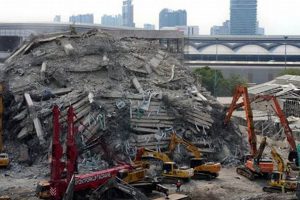
Another challenge is the potential for structural damage or collapse in the event of an earthquake or other natural disaster. Skyscrapers are designed to withstand high winds and seismic activity, but there is always the potential for catastrophic failure. In the event of a major earthquake, for example, skyscrapers may be at risk of collapsing, which could result in a large number of casualties.
The safety and emergency response challenges associated with skyscrapers must be carefully considered during the design and construction process. Building codes and regulations must be strictly enforced to ensure that skyscrapers are built to the highest safety standards. Additionally, regular inspections and maintenance are essential to ensure that these buildings remain safe for occupants and visitors.
Despite the challenges, skyscrapers can be designed and constructed to be safe and resilient. By incorporating the latest safety features and technologies, and by adhering to strict building codes and regulations, it is possible to mitigate the risks associated with these vertical giants.
3. Limited natural light and ventilation

In the realm of skyscraper design, the pursuit of height and density often comes at the expense of natural light and ventilation. This can have significant implications for the well-being and productivity of occupants, as well as the overall sustainability of the building.
- Health and well-being
Natural light and ventilation are essential for human health and well-being. They provide us with vitamin D, regulate our circadian rhythms, and improve our mood and cognitive function. In skyscrapers, where occupants may spend long periods of time indoors, the lack of natural light and ventilation can lead to a variety of health problems, including eye strain, headaches, and sleep disorders.
- Productivity
Studies have shown that natural light and ventilation can improve productivity by up to 20%. This is because natural light helps us to stay alert and focused, while fresh air helps to improve our cognitive function. In skyscrapers, where occupants may be working in windowless offices or in offices with limited natural light, the lack of these elements can lead to decreased productivity and increased absenteeism.
- Sustainability
Natural light and ventilation can also help to reduce the environmental impact of skyscrapers. By reducing the need for artificial lighting and ventilation, skyscrapers can save energy and reduce their greenhouse gas emissions. Additionally, natural ventilation can help to improve indoor air quality by removing pollutants and allergens.
- Cost
The lack of natural light and ventilation in skyscrapers can also lead to increased costs. This is because buildings with limited natural light and ventilation often require more artificial lighting and ventilation systems, which can be expensive to install and operate. Additionally, the la
ck of natural light and ventilation can make it more difficult to attract and retain tenants, which can lead to lost revenue.
Overall, the limited natural light and ventilation in skyscrapers can have a significant impact on the health, well-being, productivity, and sustainability of occupants. It is important to consider these factors when designing and constructing skyscrapers, and to incorporate features that maximize natural light and ventilation whenever possible.
4. Cost

The construction and maintenance of skyscrapers are notoriously expensive. This is due to a number of factors, including the need for specialized materials and engineering, the complex construction process, and the ongoing costs of maintenance and operation. The high cost of skyscrapers can have a number of negative consequences, including:
- Limited affordability: The high cost of skyscrapers can make them unaffordable for many people, including low-income families and individuals. This can lead to a shortage of affordable housing in urban areas, where skyscrapers are often concentrated.
- Displacement of existing residents: The construction of skyscrapers can lead to the displacement of existing residents, particularly in low-income and minority communities. This is because skyscrapers often require large amounts of land, which can lead to the demolition of existing buildings and the displacement of the people who live in them.
- Increased cost of living: The high cost of skyscrapers can also lead to an increase in the cost of living in urban areas. This is because the cost of constructing and maintaining skyscrapers is passed on to consumers in the form of higher rents and prices for goods and services.
The high cost of skyscrapers is a significant disadvantage that must be considered when planning and constructing new buildings. It is important to weigh the benefits of skyscrapers against the costs, and to ensure that the costs are not borne disproportionately by low-income and minority communities.
In recent years, there has been a growing trend towards the development of more affordable and sustainable skyscrapers. This is due in part to the increasing demand for affordable housing in urban areas, as well as the growing awareness of the environmental impact of skyscrapers. By using innovative design and construction techniques, it is possible to build skyscrapers that are both affordable and sustainable.
5. Urban heat island effect

Skyscrapers, with their dense concentration and vast surface area, can significantly contribute to the urban heat island effect. This phenomenon occurs when urban areas experience higher temperatures compared to surrounding rural areas due to various factors, including the presence of buildings, roads, and other infrastructure that absorb and re-emit heat.
- Increased absorption of solar radiation
Skyscrapers, with their large facades and reflective surfaces, can absorb and reflect a significant portion of solar radiation. This absorbed heat is then released into the surrounding environment, contributing to the overall warmth of the urban area.
- Reduced wind flow
The dense concentration of skyscrapers can impede wind flow at street level, reducing natural ventilation and contributing to heat build-up. This lack of air movement further traps heat within the urban canyon, exacerbating the urban heat island effect.
- Limited green spaces
Skyscrapers often occupy large footprints, leaving limited space for green areas such as parks and gardens. Vegetation plays a crucial role in regulating temperature by providing shade, releasing moisture through evapotranspiration, and promoting air flow. The scarcity of green spaces in skyscraper-dominated areas reduces the city’s ability to cool itself naturally.
- Anthropogenic heat emissions
Skyscrapers house a high concentration of human activities, leading to increased energy consumption and heat generation. Heating, cooling, and lighting systems in these buildings release substantial amounts of heat into the urban environment, further contributing to the urban heat island effect.
The urban heat island effect associated with skyscrapers can have several adverse consequences. It can lead to increased energy consumption for cooling, reduced air quality due to the formation of smog, and discomfort or even health risks for urban residents during hot weather. Therefore, mitigating the urban heat island effect should be a key consideration in the planning and design of skyscraper-dense urban areas.
6. Structural swaying
Skyscrapers, with their towering heights and slender profiles, are marvels of modern engineering. However, their very design can also introduce a unique challenge: structural swaying.
- Wind-induced sway
Skyscrapers are designed to withstand high winds, but even the strongest buildings can sway in response to strong gusts. This swaying is caused by the transfer of wind energy to the building’s structure, resulting in lateral movement that can be felt by occupants. While wind-induced sway is generally not dangerous, it can be disconcerting and may cause nausea or dizziness in some individuals.
- Seismic sway
In earthquake-prone areas, skyscrapers must be designed to withstand the forces of seismic activity. During an earthquake, the ground beneath a skyscraper can move violently, causing the building to sway back and forth. The amount of sway depends on the magnitude of the earthquake and the building’s structural design. While skyscrapers are designed to withstand even the strongest earthquakes, excessive swaying can damage the building and its contents, and can be dangerous for occupants.
- Resonance
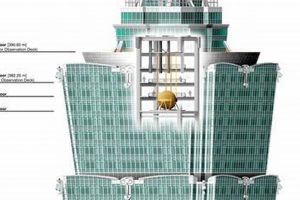
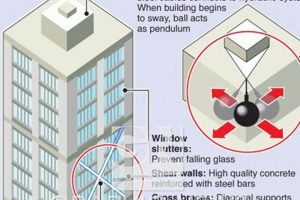
Skyscrapers can be susceptible to resonance, a phenomenon that occurs when the natural frequency of the building matches the frequency of an external force, such as wind or seismic activity. When resonance occurs, the building’s sway can be amplified, leading to potentially dangerous levels of movement. To prevent resonance, skyscrapers are often equipped with tuned mass dampers, which are devices that counteract the building’s natural sway.
- Human-induced sway
In some cases, the swaying of a skyscraper can be caused by the actions of its occupants. For example, if a large number of people move to one side of a building, it can cause the building to sway in that direction. This type of sway is typically minor and does not pose a safety risk, but it can be disconcerting for occupants.
Structural swaying is an inherent characteristic of tall buildings, and while it can be mitigated through careful design and engineering, it cannot be entirely eliminated. However, by understanding the causes and effects of structural swaying, architects and engineers can design skyscrapers that are safe and comfortable for occupants, even in the face of strong winds or seismic activity.
7. Strain on infrastructure
Skyscrapers, with their towering heights and dense populations, can place a significant strain on the infrastructure of a city. The construction and use of skyscrapers can impact various aspects of infrastructure, including transportation, energy, water supply, and waste management systems.
One of the most significant impacts of skyscrapers on infrastructure is the increased demand for transportation. Skyscrapers often attract large numbers of workers, visitors, and residents, which can lead to traffic congestion, overcrowding on public transportation, and increased demand for parking spaces. This can put a strain on existing transportation systems and may require investment in new infrastructure, such as wider roads, additional public transportation lines, and more parking garages.
Skyscrapers also consume a significant amount of energy, both for construction and operation. The lighting, heating, cooling, and ventilation systems in skyscrapers can place a strain on local energy grids. In some cases, the construction of skyscrapers may require upgrades to the electrical grid or the construction of new power plants.
Additionally, skyscrapers can strain water supply and waste management systems. The large number of occupants in a skyscraper can lead to increased water consumption and wastewater generation. This can put a strain on local water treatment and sewage systems and may require investment in new infrastructure to meet the increased demand.
Understanding the strain that skyscrapers can place on infrastructure is important for urban planners and policymakers. By considering the infrastructure implications of skyscrapers, they can make informed decisions about the construction and use of these buildings. This can help to ensure that skyscrapers are built in a sustainable way that minimizes their impact on infrastructure and the environment.
FAQs on Disadvantages of Skyscrapers
Skyscrapers, with their towering heights and impressive architectural designs, have become iconic structures in modern cities. However, these vertical giants also come with certain disadvantages that should be considered.
Question 1: What are the environmental impacts of skyscrapers?
The construction and maintenance of skyscrapers can significantly impact the environment. They consume vast amounts of resources and energy, contributing to greenhouse gas emissions and depletion of natural resources. Additionally, the dense concentration of skyscrapers in urban areas can lead to the formation of urban heat islands and increased air pollution.
Question 2: How do skyscrapers affect safety and emergency response?
Skyscrapers pose unique challenges in terms of safety and emergency response. Evacuating people from high floors during fires or other emergencies can be extremely difficult and time-consuming. Moreover, the wind forces acting on tall buildings can cause structural swaying, leading to discomfort and potential hazards for occupants.
Question 3: What are the disadvantages of limited natural light and ventilation in skyscrapers?
In lower floors of skyscrapers, limited natural light and ventilation can negatively impact the well-being and productivity of occupants. This can increase the reliance on artificial lighting and ventilation systems, further adding to energy consumption and potentially leading to health issues.
Question 4: Why are skyscrapers expensive to construct and maintain?
The construction and maintenance of skyscrapers are often prohibitively expensive. This cost burden can limit the feasibility of affordable housing and other essential urban developments. Additionally, the dense concentration of skyscrapers in certain areas can strain infrastructure, such as transportation systems and utilities.
Question 5: How do skyscrapers contribute to the urban heat island effect?
The dense concentration of skyscrapers in urban areas can lead to the formation of urban heat islands, where temperatures are significantly higher than in surrounding areas. This is due to the absorption and re-emission of heat by building materials, reduced wind flow at street level, and limited green spaces.
Question 6: What are the potential structural risks associated with skyscrapers?
Skyscrapers are designed to withstand high winds and seismic activity, but they are not immune to structural risks. Wind-induced sway, seismic sway, resonance, and human-induced sway are all potential concerns that must be addressed through careful design and engineering.
Understanding the disadvantages of skyscrapers is crucial for urban planning and sustainable development. By carefully considering these factors, architects, engineers, and policymakers can design and construct skyscrapers that minimize their negative impacts while maximizing their benefits.
Tips to Mitigate Disadvantages of Skyscrapers
Skyscrapers, with their towering heights and impressive architectural designs, have become iconic structures in modern cities. However, these vertical giants also come with certain disadvantages that should be considered.
Tip 1: Implement Sustainable Design and Construction Practices
To reduce the environmental impact of skyscrapers, architects and engineers can incorporate sustainable design and construction practices. This includes using energy-efficient materials, optimizing building orientation for natural light and ventilation, and installing green roofs and walls to mitigate the urban heat island effect.
Tip 2: Enhance Safety and Emergency Response Features
Skyscrapers should be designed with robust safety and emergency response features. This includes installing advanced fire suppression systems, providing multiple evacuation routes, and incorporating structural elements to minimize wind-induced sway and seismic risks.
Tip 3: Prioritize Natural Light and Ventilation
To improve the well-being and productivity of occupants, skyscrapers should be designed to maximize natural light and ventilation. This can be achieved through the use of large windows, light shelves, and operable windows that allow for fresh air circulation.
Tip 4: Explore Innovative and Cost-Effective Construction Methods
To reduce the cost of constructing and maintaining skyscrapers, architects and engineers should explore innovative and cost-effective construction methods. This includes using modular construction techniques, prefabrication, and optimizing building design to minimize material waste.
Tip 5: Encourage Mixed-Use Developments
To mitigate the strain on infrastructure, skyscrapers should be incorporated into mixed-use developments that combine residential, commercial, and retail spaces. This reduces the need for excessive transportation and provides a more sustainable and vibrant urban environment.
Tip 6: Invest in Public Transportation and Infrastructure
To accommodate the increased demand for transportation, cities with skyscrapers should invest in public transportation systems and infrastructure. This includes expanding public transportation networks, promoting walking and cycling, and implementing smart traffic management systems to reduce congestion.
Tip 7: Implement Green Building Standards and Certifications
To ensure that skyscrapers are constructed and operated in a sustainable manner, cities and building owners should adopt green building standards and certifications. Thes
e standards provide a framework for energy efficiency, water conservation, waste reduction, and indoor environmental quality.
Tip 8: Foster Collaboration and Innovation
To address the challenges associated with skyscrapers, collaboration and innovation among architects, engineers, policymakers, and urban planners is essential. By sharing knowledge, exploring new technologies, and implementing creative solutions, we can design and construct skyscrapers that are both sustainable and livable.
By implementing these tips, we can mitigate the disadvantages associated with skyscrapers while maximizing their benefits. This will ensure that skyscrapers continue to be iconic landmarks in our cities, while also contributing to a more sustainable and livable urban environment.
Summary of key takeaways or benefits:
- Reduced environmental impact
- Enhanced safety and emergency preparedness
- Improved occupant well-being and productivity
- Reduced construction and maintenance costs
- Mitigated strain on infrastructure
- Promoted sustainable urban development
- Fostered innovation and collaboration
Transition to the article’s conclusion:
Skyscrapers, when designed and constructed with careful consideration of their potential disadvantages, can be valuable assets to our cities. By embracing sustainable practices, implementing innovative solutions, and fostering collaboration, we can create skyscrapers that are not only iconic landmarks but also contribute to a more livable and sustainable urban environment.
Conclusion
Skyscrapers, with their soaring heights and architectural marvels, have reshaped skylines around the world. However, it is imperative to acknowledge and address the disadvantages associated with these vertical behemoths.
The environmental impact, safety concerns, limited natural light and ventilation, high costs, strain on infrastructure, and potential for structural risks must be carefully considered. By exploring these disadvantages, we can work towards mitigating their impact and ensuring that skyscrapers contribute positively to our urban environments.
To achieve this, sustainable design practices, enhanced safety features, innovative construction methods, and collaborative efforts among stakeholders are crucial. Embracing these strategies will allow us to harness the benefits of skyscrapers while minimizing their negative consequences.
Skyscrapers should not be seen as mere symbols of urban progress but as complex structures that require careful planning and responsible construction. By addressing the disadvantages of skyscrapers, we can create more livable, sustainable, and equitable cities for present and future generations.