


Skyscrapers are some of the tallest structures in the world, and they can sway in the wind. This swaying is usually not noticeable from the ground, but it can be felt by people who are inside the building. The amount of sway depends on a number of factors, including the height of the building, the wind speed, and the design of the building.
Skyscrapers are designed to sway in the wind to prevent them from collapsing. The swaying helps to dissipate the energy of the wind, and it also helps to keep the building from becoming too rigid. If a building is too rigid, it is more likely to be damaged by the wind.
The swaying of skyscrapers can be a fascinating sight to behold. It is a reminder of the power of nature and the ingenuity of humans. Skyscrapers are a marvel of engineering, and they are a testament to the human spirit.
1. Height

The height of a skyscraper is a primary factor influencing its susceptibility to sway. Taller buildings have a greater surface area exposed to wind forces, resulting in increased wind pressure. Additionally, the taller a building is, the longer its lever arm becomes. A lever arm is the distance from the point of rotation (the base of the building) to the point where the force is applied (the wind). The longer the lever arm, the greater the torque (twisting force) exerted by the wind, leading to more pronounced sway.
- Wind Speed: Stronger winds exert greater forces on the building, causing more pronounced sway.
- Design: The building’s structural design, including its shape, mass distribution, and damping systems, influences its sway behavior.
- Resonance: Skyscrapers can resonate with certain wind frequencies, amplifying sway.
- Damping: Damping mechanisms, such as tuned mass dampers, help dissipate energy and reduce sway.
Understanding the relationship between height and sway is crucial for engineers designing skyscrapers. They must carefully consider the building’s height and incorporate appropriate structural elements to ensure its stability and occupant comfort, even during strong winds.
2. Wind speed

Wind speed is a critical factor influencing the sway of skyscrapers. Stronger winds generate higher forces on the building’s exterior surfaces, resulting in more pronounced swaying. This phenomenon is directly related to the concept of “can you feel skyscrapers sway.” When wind speeds increase, the force exerted on the building amplifies, leading to more noticeable sway. This swaying can be perceptible to occupants, particularly those in higher floors.
- Wind pressure: Stronger winds exert greater pressure on the building’s surfaces, increasing the overall force acting on the structure.
- Resonance: High wind speeds can align with a skyscraper’s natural resonant frequency, causing the building to sway more vigorously.
- Gusts and turbulence: Sudden gusts of wind or turbulent airflows can create localized forces on the building, resulting in unpredictable sway.
Understanding the relationship between wind speed and skyscraper sway is crucial for structural engineers. They must consider the potential wind forces during the design process and incorporate appropriate measures to mitigate excessive sway, ensuring the safety and comfort of occupants.
3. Design
The design of a skyscraper plays a pivotal role in determining its susceptibility to sway. Several key design aspects directly influence the extent to which occupants may feel the building sway:
- Shape: The shape of a skyscraper affects its wind resistance. Buildings with streamlined or aerodynamic shapes, such as those with tapered tops, experience reduced wind forces and, consequently, less sway.
- Mass distribution: The distribution of mass within a skyscraper influences its sway behavior. Buildings with a centralized mass, such as those with a core structure, tend to sway less than those with a decentralized mass, such as those with multiple towers.
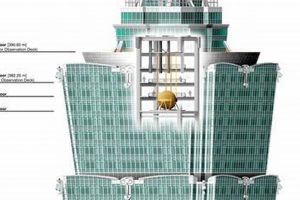
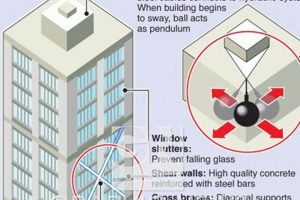
- Damping systems: Damping systems are incorporated into skyscrapers to dissipate energy and reduce sway. Common damping systems include tuned mass dampers, which consist of large weights suspended within the building to counteract sway.
By carefully considering these design aspects, engineers can mitigate excessive sway in skyscrapers, ensuring occupant comfort and safety while maintaining architectural aesthetics.
4. Resonance

Resonance is a phenomenon that occurs when an external force matches the natural frequency of an object, causing the object to vibrate with increased amplitude. In the context of skyscrapers, resonance can occur when wind forces align with the building’s natural swaying frequency, leading to amplified sway and potentially perceptible vibrations for occupants.
- Natural frequency: Every skyscraper has a natural frequency at which it tends to sway. This frequency is determined by the building’s height, mass, and stiffness.
- Wind-induced resonance: When wind forces match the building’s natural frequency, resonance occurs. This can happen during strong winds or when the wind speed aligns with certain atmospheric conditions.
- Amplified sway: Resonance causes the building to sway with greater amplitude, which can be felt by occupants, particularly those in higher floors.
Understanding resonance is crucial for skyscraper design. Engineers employ various strategies to mitigate resonance, such as incorporating tuned mass dampers or adjusting the building’s structural properties to shift its natural frequency away from typical wind frequencies.
5. Damping

Damping mechanisms play a critical role in mitigating sway in skyscrapers, thereby reducing the extent to which occupants can feel the building move. Damping refers to the ability of a structure to dissipate energy and reduce vibrations. In the context of skyscrapers, damping mechanisms are incorporated to counteract the swaying motion induced by wind forces.
One common damping mech
anism is the tuned mass damper (TMD). A TMD consists of a large mass suspended within the building, connected to the structure via springs and dampers. When the building sways, the TMD moves in opposition to the building’s motion, dissipating energy and reducing sway. TMDs are particularly effective at mitigating resonance, which occurs when wind forces align with the building’s natural swaying frequency, leading to amplified sway.
The importance of damping mechanisms in reducing perceptible sway cannot be overstated. Without adequate damping, skyscrapers would be more susceptible to excessive swaying, which could not only be uncomfortable for occupants but also pose safety concerns. By effectively dissipating energy and reducing sway, damping mechanisms ensure that occupants can feel confident in the stability of their building, even during strong winds.
6. Occupant perception

The perception of sway by occupants is a crucial aspect of understanding “can you feel skyscrapers sway”. When skyscrapers sway, occupants may experience movement, which can range from subtle vibrations to more pronounced oscillations, depending on factors such as the building’s height, wind conditions, and the occupant’s location within the building.
- Height: Sway is typically more perceptible at higher floors due to the increased distance from the building’s base. As the building sways, the top floors experience greater displacement compared to lower floors.
- Wind conditions: Stronger winds exert greater forces on the building, leading to more pronounced sway. During storms or high winds, occupants may feel the building swaying more noticeably.
- Location within the building: The location of an occupant within the building can also affect their perception of sway. Those near the center of the building may feel less sway compared to those near the perimeter.
- Individual sensitivity: Some occupants may be more sensitive to sway than others. Factors such as age, balance, and previous experiences can influence an individual’s perception of movement.
Understanding occupant perception of sway is crucial for designing skyscrapers that are not only structurally sound but also comfortable for occupants. Engineers and architects consider factors such as building height, wind loads, and damping systems to minimize perceptible sway and ensure occupant well-being.
The ability to feel skyscrapers sway is directly connected to the engineering measures put in place to ensure occupant safety. Skyscrapers are meticulously designed to withstand sway within safe limits, ensuring the well-being of their occupants even during strong winds.
The safety of skyscrapers is paramount, and engineers employ various strategies to mitigate excessive sway. These strategies include optimizing the building’s shape to reduce wind resistance, incorporating damping systems to dissipate energy and reduce vibrations, and carefully distributing mass throughout the structure. By addressing sway during the design phase, engineers can create skyscrapers that can withstand high winds without compromising occupant safety.
Understanding the connection between safety and perceptible sway is crucial. It highlights the importance of engineering measures in ensuring the stability and comfort of skyscrapers, allowing occupants to feel secure even as they experience slight movements due to wind forces.
FAQs on “Can You Feel Skyscrapers Sway”
Skyscrapers are marvels of modern engineering, but their height and exposure to wind can raise questions about their stability and occupant comfort. This FAQ section addresses common concerns and misconceptions surrounding the sway of skyscrapers, providing informative answers based on scientific principles and engineering practices.
Question 1: Is it normal to feel skyscrapers sway?
Answer: Yes, it is normal for skyscrapers to sway. Swaying is a natural response to wind forces acting on the building’s structure. The amount of sway depends on factors such as the building’s height, wind speed, and design.
Question 2: Is it safe to be in a skyscraper during strong winds?
Answer: Yes, skyscrapers are designed to withstand strong winds and ensure occupant safety. Engineers use various techniques, such as optimizing the building’s shape, incorporating damping systems, and distributing mass effectively, to minimize excessive sway and ensure structural integrity.
Question 3: Can skyscrapers sway too much?
Answer: Skyscrapers are designed with safety margins to prevent excessive swaying. Building codes and regulations set strict limits on allowable sway, and engineers carefully analyze wind loads and structural dynamics to ensure that skyscrapers remain stable even under extreme wind conditions.
Question 4: What can be done to reduce sway in skyscrapers?
Answer: Engineers employ various strategies to reduce sway in skyscrapers, including: optimizing the building’s shape to minimize wind resistance, incorporating tuned mass dampers to dissipate energy, and using active control systems to counteract sway in real-time.
Question 5: Is it possible to eliminate sway completely?
Answer: While it is not possible to eliminate sway entirely, engineers can design skyscrapers to minimize perceptible sway and ensure occupant comfort. Advanced damping systems and innovative structural designs allow for the construction of skyscrapers that sway within safe and imperceptible limits.
Question 6: What should I do if I feel uncomfortable with the swaying of a skyscraper?
Answer: If you experience discomfort due to skyscraper sway, you can move to a lower floor or a more central location within the building, where sway is typically less noticeable. Additionally, deep breathing exercises and focusing on a fixed point can help reduce the perception of movement.
Understanding the phenomenon of skyscraper sway is crucial for appreciating the engineering marvels that these structures represent. Skyscrapers are designed to sway safely within prescribed limits, ensuring occupant comfort and well-being. Advanced engineering techniques and continuous research contribute to the development of increasingly stable and resilient skyscrapers that redefine the boundaries of architectural innovation.
While “can you feel skyscrapers sway” provides insights into the sway behavior of skyscrapers, further exploration into the engineering principles and design considerations behind these towering structures can enhance our understanding of their resilience and safety.
Tips to Address “Can You Feel Skyscrapers Sway”
Recognizing the phenomenon of skyscraper sway and its potential impact on occupants, it is essential to consider practical tips to address this concern effectively. The following tips provide valuable guidance for various stakeholders involved in the design, construction, and occupancy of skyscrapers.
Tip 1: Optimize Building Design: Engineers can optimize the building’s design to minimize sway. This involves shaping the building to reduce wind resistance, strategically distributing mass, and incorporating aerodynamic features.
Tip 2: Implement Damping Systems: Damping systems, such as tuned mass dampers, can be incorporated into the building’s st
ructure to dissipate energy and reduce sway. These systems counteract building vibrations, enhancing occupant comfort.
Tip 3: Utilize Advanced Materials: Utilizing advanced materials, such as high-strength steel and composite materials, can increase the building’s stiffness and reduce susceptibility to sway. These materials enhance the structural integrity of skyscrapers.
Tip 4: Conduct Regular Inspections: Regular inspections and monitoring of the building’s structural health are crucial. This allows for early detection of any potential issues related to sway, enabling timely maintenance and repairs.
Tip 5: Educate Occupants: Educating occupants about skyscraper sway and its safety implications is essential. Providing clear information can alleviate concerns and promote a sense of confidence in the building’s stability.
By implementing these tips, stakeholders can effectively address the concerns surrounding “can you feel skyscrapers sway.” Optimizing building design, incorporating damping systems, utilizing advanced materials, conducting regular inspections, and educating occupants contribute to the safety and comfort of skyscraper occupants.
Understanding and addressing skyscraper sway is a multidisciplinary effort involving engineers, architects, building owners, and occupants. By embracing these tips, we can ensure that skyscrapers continue to be marvels of modern engineering, providing safe and comfortable living and working spaces high above the ground.
Conclusion
The exploration of “can you feel skyscrapers sway” has revealed the intricate interplay between engineering ingenuity and the forces of nature. Skyscrapers, with their towering heights, are a testament to the human quest to build structures that reach towards the heavens. However, their susceptibility to sway raises questions about occupant comfort and safety.
This article has delved into the various factors that influence skyscraper sway, including height, wind speed, design, resonance, damping, and occupant perception. It has emphasized the crucial role of engineers in designing skyscrapers to withstand sway within safe limits, ensuring the well-being of occupants. Advanced engineering techniques, such as the incorporation of damping systems and the use of innovative materials, contribute to the stability and resilience of these towering structures.
Understanding skyscraper sway is not only about addressing concerns but also about appreciating the engineering marvels that these structures represent. Skyscrapers are a symbol of human ambition and innovation, pushing the boundaries of architectural design and redefining our skylines. As we continue to build taller and more ambitious skyscrapers, the ability to mitigate sway will remain a critical aspect of ensuring their safety and habitability.
By embracing the latest advancements in engineering and embracing a collaborative approach involving architects, building owners, and occupants, we can create skyscrapers that are not only awe-inspiring but also provide safe and comfortable living and working environments. The ability to feel skyscrapers sway may be a reminder of the forces of nature, but it is also a testament to the ingenuity of engineers who design structures that withstand these forces, allowing us to live and work high above the ground with confidence and peace of mind.