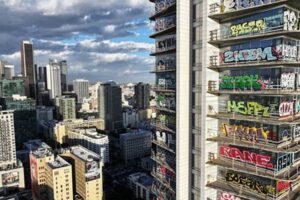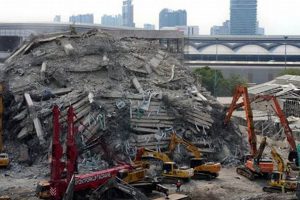



In recent years, China has implemented a ban on the construction of skyscrapers, defined as buildings exceeding 500 meters in height. This policy, officially known as the “super high-rise building control policy,” aims to promote sustainable urban development and reduce environmental impact.
The ban on skyscrapers has several key benefits. Firstly, it helps to mitigate air pollution by reducing the concentration of particulate matter and other pollutants in the urban environment. High-rise buildings can act as barriers to air circulation, leading to the accumulation of pollutants. By limiting the construction of these structures, China can improve air quality and promote public health.
Secondly, the ban on skyscrapers promotes energy conservation. Super high-rise buildings require significant amounts of energy to operate, both in terms of construction and ongoing maintenance. By limiting the construction of these energy-intensive structures, China can reduce its overall energy consumption and contribute to its carbon reduction goals.
In addition to these environmental benefits, the ban on skyscrapers also has implications for urban planning and design. By limiting the height of buildings, China can encourage a more balanced and sustainable urban environment. It can also help to preserve the historical and cultural character of cities, as high-rise buildings can often overshadow and detract from existing structures.
Overall, China’s ban on skyscrapers is a significant policy aimed at promoting sustainable urban development and reducing environmental impact. Through this measure, China is taking a proactive approach to addressing the challenges of urbanization and creating a more livable and sustainable future for its citizens.
1. Environmental protection

Skyscrapers, with their towering heights and vast floor areas, have a significant impact on the environment. They contribute to air pollution by releasing large amounts of particulate matter and other pollutants into the atmosphere. These pollutants can cause respiratory problems, heart disease, and other health issues. In addition, skyscrapers consume vast amounts of energy to power their lighting, heating, and cooling systems. This energy consumption contributes to greenhouse gas emissions, which drive climate change.
China’s ban on skyscrapers is a direct response to these environmental concerns. By limiting the construction of new skyscrapers, China aims to reduce air pollution and energy consumption. This will help to improve public health and mitigate the effects of climate change.
The ban on skyscrapers is just one part of China’s broader efforts to promote sustainable development. China has also implemented a number of other policies to reduce air pollution and energy consumption, such as promoting renewable energy and energy efficiency. These efforts are helping to make China a more sustainable and environmentally friendly country.
2. Urban planning
China’s ban on skyscrapers is part of a broader effort to promote sustainable and livable cities. High-rise buildings can have a number of negative impacts on the urban environment, including:
- Air pollution: Skyscrapers can act as barriers to air circulation, leading to the accumulation of pollutants in the urban environment.
- Energy consumption: Skyscrapers are energy-intensive structures, both in terms of construction and ongoing maintenance.
- Urban sprawl: Skyscrapers can contribute to urban sprawl by encouraging the development of high-density, car-dependent communities.
- Loss of green space: The construction of skyscrapers can lead to the loss of green space in cities, which is essential for recreation, air quality, and biodiversity.
By limiting the construction of skyscrapers, China is taking steps to address these negative impacts and promote a more balanced and sustainable urban environment. The ban will help to reduce air pollution, energy consumption, and urban sprawl, while also preserving green space and improving the overall quality of life in Chinese cities.
The ban on skyscrapers is just one part of China’s broader efforts to promote sustainable urban development. China has also implemented a number of other policies to reduce air pollution and energy consumption, such as promoting renewable energy and energy efficiency. These efforts are helping to make China a more sustainable and environmentally friendly country.
3. Historical preservation

Skyscrapers, with their towering heights and modern designs, can often overshadow and detract from the historical and cultural character of cities. By limiting the construction of skyscrapers, China is taking steps to preserve the unique architectural heritage and cultural identity of its cities.
For example, in the historic city of Beijing, the ban on skyscrapers has helped to protect the Forbidden City, a UNESCO World Heritage Site. The Forbidden City is a sprawling palace complex that was built during the Ming dynasty and served as the imperial palace for over 500 years. The ban on skyscrapers has ensured that the Forbidden City remains the dominant architectural feature in the city center, preserving its historical and cultural significance.
Another example is the city of Shanghai, which has a rich and diverse architectural heritage. The ban on skyscrapers has helped to protect the city’s historic buildings, such as the Bund, a waterfront area lined with colonial-era buildings. The ban has also helped to preserve the city’s traditional neighborhoods, such as the Xintiandi district, which features narrow streets and traditional Chinese architecture.
The ban on skyscrapers is just one part of China’s broader efforts to preserve its historical and cultural heritage. China has also implemented a number of other policies to protect historic buildings and cultural sites, such as the Cultural Heritage Protection Law and the Regulations on the Protection of Historical and Cultural Cities.
By limiting the construction of skyscrapers and implementing other policies to protect its historical and cultural heritage, China is taking steps to ensure that future generations can appreciate and enjoy the country’s rich and diverse cultural legacy.
4. Economic considerations

China’s ban on skyscrapers is not only an environmental and urban plan
ning measure but also an economic consideration. Skyscrapers are notoriously expensive to construct and maintain. The ban on skyscrapers frees up significant financial resources that can be allocated to other infrastructure projects, such as affordable housing, public transportation, and renewable energy.
- Construction costs: Skyscrapers require vast amounts of materials and labor to construct. The cost of constructing a single skyscraper can easily exceed billions of dollars.
- Maintenance costs: Skyscrapers are also expensive to maintain. The cost of maintaining a skyscraper includes expenses such as cleaning, repairs, and energy consumption.
- Opportunity cost: The resources used to construct and maintain skyscrapers could be used to fund other infrastructure projects that provide greater benefits to the public.
By banning skyscrapers, China is freeing up substantial financial resources that can be used to fund other infrastructure projects that are more urgently needed and provide greater benefits to the public. This is a wise economic decision that will help China to build a more sustainable and equitable society.
5. Safety and resilience

China’s ban on skyscrapers is not only an environmental and economic measure but also a safety and resilience measure. Supertall buildings, defined as buildings exceeding 300 meters in height, pose significant safety risks during earthquakes and other natural disasters.
- Structural integrity: Supertall buildings are more vulnerable to structural failure during earthquakes due to their height and slenderness. The higher a building is, the more it will sway and vibrate during an earthquake, which can put stress on the building’s structure and lead to collapse.
- Fire safety: Supertall buildings are also more difficult to evacuate in the event of a fire. The long travel distances to ground level and the limited number of evacuation routes can make it difficult for occupants to escape quickly and safely.
- Wind resistance: Supertall buildings are also more susceptible to wind damage. The wind can create strong forces on the building’s exterior, which can lead to structural damage or even collapse.
By banning the construction of supertall buildings, China is taking steps to reduce the safety risks associated with these structures. This is particularly important in earthquake-prone areas, such as the Sichuan province, where a devastating earthquake in 2008 killed nearly 70,000 people.
The ban on supertall buildings is just one part of China’s broader efforts to improve building safety and resilience. China has also implemented a number of other policies, such as stricter building codes and mandatory seismic retrofitting of existing buildings. These efforts are helping to make China’s cities safer and more resilient to natural disasters.
6. Social equity

China’s ban on skyscrapers is not only an environmental, economic, and safety measure but also a social equity measure. High-rise developments can lead to a number of social equity issues, including:
- Gentrification: High-rise developments can lead to gentrification, as wealthier residents move into the area and property values rise. This can displace low-income residents and small businesses.
- Segregation: High-rise developments can also lead to segregation, as different income groups and social classes tend to live in different neighborhoods.
- Lack of affordable housing: High-rise developments often cater to luxury and high-end housing, which can reduce the supply of affordable housing in the city.
By banning the construction of skyscrapers, China is taking steps to address these social equity issues and promote a more equitable distribution of urban space. The ban will help to prevent gentrification, segregation, and the loss of affordable housing. It will also help to create a more inclusive and diverse urban environment.
The ban on skyscrapers is just one part of China’s broader efforts to promote social equity. China has also implemented a number of other policies, such as increasing the supply of affordable housing and providing financial assistance to low-income families. These efforts are helping to make China a more just and equitable society.
7. International leadership

China’s ban on skyscrapers is not only a domestic policy but also a global leadership initiative. By taking this bold step, China is demonstrating its commitment to sustainable urban development and setting an example for other countries to follow.
- Environmental stewardship: China’s ban on skyscrapers is a clear signal that it is serious about addressing the environmental challenges facing the world today. Skyscrapers are notorious for their high energy consumption and carbon emissions. By banning their construction, China is sending a message that it is committed to reducing its environmental impact and transitioning to a more sustainable future.
- Urban planning best practices: China’s ban on skyscrapers is also a model for sustainable urban planning. High-rise developments can often lead to urban sprawl, traffic congestion, and other problems. By limiting the height of buildings, China is promoting a more compact and walkable urban environment.
- Economic diversification: China’s ban on skyscrapers is also a sign that it is moving away from an economic model that is overly reliant on real estate development. By encouraging other industries and sectors, China is creating a more diversified and resilient economy.
- Global influence: China’s ban on skyscrapers is likely to have a ripple effect around the world. As other countries see China’s success in implementing this policy, they may be more likely to adopt similar measures. This could lead to a global reduction in skyscraper construction and a more sustainable future for our planet.
In conclusion, China’s ban on skyscrapers is a bold and visionary policy that demonstrates its commitment to sustainable urban development and global leadership. By taking this step, China is setting an example for other countries to follow and helping to create a more sustainable and equitable future for all.
China Bans Skyscrapers
China’s ban on skyscrapers has raised a number of questions and concerns. Here are answers to some of the most frequently asked questions:
Question 1: Why has China banned skyscrapers?
China has banned skyscrapers primarily due to environmental concerns. Skyscrapers are energy-intensive to construct and operate, and they can contribute to air pollution and greenhouse gas emissions.
Question 2: What is the definition of a skyscraper under the ban?
The ban applies to buildings exceeding 500 meters in height.
Question 3: Does the ban apply to all buildings, including residential buildings?
Yes, the ban applies to all types of buildi
ngs, including residential buildings.
Question 4: What are the economic implications of the ban?
The ban is expected to have a significant impact on the real estate sector in China. However, it is also expected to lead to increased investment in other sectors of the economy, such as infrastructure and renewable energy.
Question 5: What are the social implications of the ban?
The ban is expected to have a positive impact on social equity by reducing the dominance of high-rise developments and promoting a more balanced urban environment.
Question 6: Is China the only country to ban skyscrapers?
No, other countries have also implemented restrictions on skyscraper construction, such as the United Arab Emirates and India.
Summary of key takeaways:
- China’s ban on skyscrapers is primarily driven by environmental concerns.
- The ban applies to all types of buildings exceeding 500 meters in height.
- The ban is expected to have significant economic and social implications.
- China is not the only country to implement restrictions on skyscraper construction.
Transition to the next article section:
China’s ban on skyscrapers is a bold and visionary policy that demonstrates its commitment to sustainable urban development and global leadership. By taking this step, China is setting an example for other countries to follow and helping to create a more sustainable and equitable future for all.
Tips for Understanding China’s Ban on Skyscrapers
China’s ban on skyscrapers is a complex policy with far-reaching implications. Here are five tips for understanding this policy:
Tip 1: Understand the environmental motivations behind the ban.
China’s ban on skyscrapers is primarily driven by environmental concerns. Skyscrapers are energy-intensive to construct and operate, and they can contribute to air pollution and greenhouse gas emissions. By banning skyscrapers, China is sending a clear message that it is committed to reducing its environmental impact.
Tip 2: Recognize the economic implications of the ban.
The ban on skyscrapers is expected to have a significant impact on the real estate sector in China. However, it is also expected to lead to increased investment in other sectors of the economy, such as infrastructure and renewable energy. In the long term, the ban could help China to develop a more diversified and sustainable economy.
Tip 3: Consider the social implications of the ban.
The ban on skyscrapers is expected to have a positive impact on social equity by reducing the dominance of high-rise developments and promoting a more balanced urban environment. The ban could also help to preserve China’s cultural heritage by protecting historic buildings from being overshadowed by skyscrapers.
Tip 4: Be aware of the international context of the ban.
China is not the only country to implement restrictions on skyscraper construction. Other countries, such as the United Arab Emirates and India, have also taken steps to limit the height of buildings. This suggests that there is a growing global consensus on the need to reduce the environmental and social impacts of skyscrapers.
Tip 5: Recognize the potential benefits of the ban.
The ban on skyscrapers could have a number of benefits for China, including reduced air pollution, improved energy efficiency, and a more equitable distribution of urban space. The ban could also help to preserve China’s cultural heritage and promote a more sustainable and livable urban environment.
Summary of key takeaways:
- China’s ban on skyscrapers is primarily driven by environmental concerns.
- The ban is expected to have significant economic and social implications.
- China is not the only country to implement restrictions on skyscraper construction.
- The ban could have a number of benefits for China, including reduced air pollution, improved energy efficiency, and a more equitable distribution of urban space.
Transition to the article’s conclusion:
China’s ban on skyscrapers is a bold and visionary policy that demonstrates its commitment to sustainable urban development and global leadership. By taking this step, China is setting an example for other countries to follow and helping to create a more sustainable and equitable future for all.
China Bans Skyscrapers
China’s ban on skyscrapers is a bold and visionary policy that has far-reaching implications for urban development, sustainability, and the built environment. By limiting the construction of supertall buildings, China is demonstrating its commitment to reducing environmental impacts, promoting sustainable urban planning, and creating a more equitable and livable society.
The ban on skyscrapers is a clear signal that China is serious about addressing the challenges of urbanization and climate change. It is a model for other countries to follow as they seek to create more sustainable and resilient cities. China’s leadership in this area is a reminder that we all have a responsibility to build a more sustainable future for our planet.