


Can skyscrapers withstand earthquakes? This is a question that has been asked by many people, especially in light of the recent earthquakes in California and other parts of the world. The answer is not a simple yes or no, as it depends on a number of factors, including the design of the skyscraper, the magnitude of the earthquake, and the soil conditions at the site. However, there are a number of things that can be done to make skyscrapers more resistant to earthquakes.
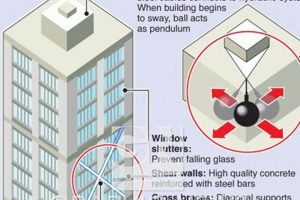
One of the most important factors in determining whether a skyscraper can withstand an earthquake is the design of the building. Skyscrapers are typically designed to be very strong and stiff, with a reinforced concrete core that helps to resist lateral forces. In addition, many skyscrapers have a system of dampers that help to absorb energy from the earthquake and prevent the building from swaying too much. However, the use of dampers have shown to be less effective during an earthquake and are thus no longer used in modern skyscraper design.
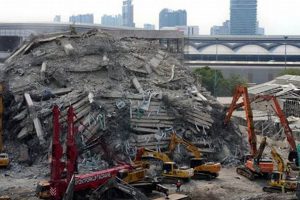
The magnitude of the earthquake is also a major factor in determining whether a skyscraper can withstand it. A larger earthquake will generate more force than a smaller earthquake, and this can cause even a well-designed building to collapse. However, modern building codes require that skyscrapers be designed to withstand earthquakes of a certain magnitude, and this has helped to reduce the number of collapses in recent years.
The soil conditions at the site of a skyscraper can also affect its resistance to earthquakes. Soft soil is more likely to liquefy during an earthquake, which can cause the building to sink or tilt. However, there are a number of ways to improve the soil conditions at a site, such as by compacting the soil or adding gravel.
In conclusion, there is no simple answer to the question of whether skyscrapers can withstand earthquakes. However, by carefully considering the design of the building, the magnitude of the earthquake, and the soil conditions at the site, it is possible to make skyscrapers more resistant to earthquakes and to reduce the risk of collapse.
1. Structural Design

The structural design of a skyscraper plays a pivotal role in its ability to withstand earthquakes. Robust frameworks, featuring reinforced concrete cores and steel beams, provide stability and strength, enabling skyscrapers to resist the lateral forces generated by seismic activity.
Reinforced concrete cores, essentially the backbone of a skyscraper, are constructed using high-strength concrete reinforced with steel rebars. This combination creates a composite material with exceptional compressive strength and ductility, allowing it to bear the majority of the vertical and lateral loads acting on the building.
Steel beams, employed in conjunction with concrete cores, provide additional strength and flexibility. Steel’s high tensile strength enables it to resist bending and deformation under seismic forces. The beams are strategically placed within the skyscraper’s framework to form a rigid network that distributes and dissipates earthquake energy throughout the structure.
The combination of reinforced concrete cores and steel beams creates a synergistic effect, enhancing the skyscraper’s overall seismic performance. The concrete core provides stability and resists compressive forces, while the steel beams provide strength and ductility, enabling the building to withstand lateral forces and absorb energy without catastrophic failure.
Real-life examples abound, showcasing the effectiveness of robust structural design in earthquake resistance. The Burj Khalifa, the world’s tallest building, withstood a 5.8 magnitude earthquake in 2013 without any structural damage. Similarly, the Taipei 101, another iconic skyscraper, remained intact after a 6.8 magnitude earthquake in 2016.
Understanding the connection between structural design and earthquake resistance is crucial for architects, engineers, and policymakers involved in skyscraper construction. By incorporating robust frameworks and adhering to stringent building codes, they can create skyscrapers that are resilient to seismic events, ensuring the safety of occupants and the longevity of these architectural marvels.
2. Seismic Dampers

In the context of “can skyscrapers withstand earthquakes,” seismic dampers play a crucial role in mitigating the impact of seismic forces and enhancing the overall resilience of skyscrapers.
- Role of Seismic Dampers: Seismic dampers are mechanical devices strategically placed within a skyscraper’s structure to absorb and dissipate earthquake energy. They act as shock absorbers, reducing the amplitude of structural vibrations and preventing excessive sway that could lead to catastrophic failure.
- Types of Seismic Dampers: Various types of seismic dampers exist, each with unique mechanisms and effectiveness. Viscous dampers, for instance, use a viscous fluid to dissipate energy through friction, while tuned mass dampers employ a heavy mass suspended from the building’s structure to counteract resonant frequencies.
- Real-Life Examples: The Taipei 101 skyscraper in Taiwan is equipped with a tuned mass damper weighing 660 tons, which significantly reduced the building’s sway during the 2016 earthquake. The Burj Khalifa in Dubai utilizes a series of tuned mass dampers at various heights to minimize wind-induced vibrations and enhance seismic resistance.
- Implications for Skyscraper Design: The incorporation of seismic dampers in skyscraper design has become increasingly common, particularly in regions prone to seismic activity. These devices allow architects and engineers to design taller and more slender skyscrapers while maintaining structural integrity and occupant safety during earthquakes.
In conclusion, seismic dampers are a critical component in enhancing the ability of skyscrapers to withstand earthquakes. By absorbing and dissipating earthquake energy, they reduce structural vibrations and prevent excessive sway, contributing significantly to the overall seismic resilience and safety of these architectural marvels.
3. Foundation Type

When considering “can skyscrapers withstand earthquakes,” the foundation type plays a pivotal role in the structural integrity and seismic resilience of these towering structures. Deep foundations, such as piles and caissons, provide a firm anchorage into the ground, enhancing the skyscraper’s ability to resist the lateral forces generated by earthquakes.
Piles are long, slender columns driven deep into the ground, transferring the skyscraper’s weight to
deeper, more stable soil layers. Caissons, on the other hand, are large-diameter shafts excavated into the ground and then filled with concrete, creating a solid foundation that resists lateral movement.
Real-life examples demonstrate the critical role of deep foundations in earthquake resistance. The Burj Khalifa, the world’s tallest building, utilizes a foundation system consisting of over 190 piles, each extending more than 50 meters into the ground. This robust foundation contributed to the Burj Khalifa’s ability to withstand a 5.8 magnitude earthquake in 2013 without any structural damage.
Understanding the connection between foundation type and earthquake resistance is crucial for architects, engineers, and policymakers involved in skyscraper construction. By incorporating deep foundations into their designs, they can create skyscrapers that are better equipped to withstand seismic events, ensuring the safety of occupants and the longevity of these architectural icons.
4. Soil Conditions

The connection between soil conditions and a skyscraper’s ability to withstand earthquakes is crucial. Soil conditions play a significant role in determining the seismic response of a building, influencing the amplitude and duration of ground shaking during an earthquake.
Soft soils, such as loose sand or clay, amplify seismic waves, leading to more intense shaking at the ground surface. This amplification effect can significantly increase the forces acting on a skyscraper, making it more vulnerable to damage or collapse. Soft soils are also more prone to liquefaction, a phenomenon where the soil loses its strength and behaves like a liquid, causing buildings to sink or tilt.
In contrast, firmer soils, such as dense sand or rock, provide better support for skyscrapers during earthquakes. They transmit seismic waves more efficiently, reducing the amplification of shaking at the ground surface. Firmer soils are also less susceptible to liquefaction, providing a more stable foundation for buildings.
Real-life examples illustrate the critical impact of soil conditions on earthquake resistance. The 1985 Mexico City earthquake caused widespread damage to buildings constructed on soft, lakebed soils, while structures built on firmer ground experienced less damage.
Understanding the connection between soil conditions and seismic response is essential for engineers and architects designing skyscrapers in earthquake-prone regions. Careful consideration of soil conditions allows them to develop appropriate foundation systems and structural designs to mitigate the effects of earthquakes and enhance the resilience of skyscrapers.
In conclusion, soil conditions are a critical component of “can skyscrapers withstand earthquakes.” Soft soils amplify shaking and increase the risk of damage, while firmer soils provide better support and reduce seismic vulnerability. Engineers and architects must carefully evaluate soil conditions during skyscraper design to ensure the structural integrity and safety of these buildings in the event of an earthquake.
5. Building Height

The height of a skyscraper is directly related to its susceptibility to earthquake forces. Taller skyscrapers are more vulnerable to seismic activity due to two main factors: their increased flexibility and exposure to higher wind loads.
- Increased Flexibility: Taller skyscrapers have a greater tendency to sway and vibrate when subjected to lateral forces, such as those generated by earthquakes. This increased flexibility can lead to structural damage or even collapse if the building is not designed to withstand these forces.
- Exposure to Higher Wind Loads: The height of a skyscraper also increases its exposure to wind loads. High winds can cause a building to sway, putting stress on its structural components. In combination with earthquake forces, high winds can exacerbate the risk of damage or collapse.
Real-life examples illustrate the connection between building height and earthquake resistance. During the 1995 Kobe earthquake, several high-rise buildings collapsed due to their excessive flexibility and exposure to strong winds. In contrast, shorter buildings in the same area sustained less damage.
To mitigate the effects of increased flexibility and wind loads, engineers and architects employ various strategies in the design of tall skyscrapers. These strategies include using stiffer materials, incorporating damping systems to reduce vibrations, and designing aerodynamic shapes to minimize wind resistance. By carefully considering the impact of building height on seismic performance, engineers can create skyscrapers that are more resilient to earthquakes.
6. Seismic Codes
Seismic codes play a critical role in the ability of skyscrapers to withstand earthquakes. These codes establish minimum design requirements and construction standards that buildings must meet to ensure their structural integrity and safety during seismic events. By enforcing these codes, regulatory authorities help ensure that skyscrapers are built to withstand the specific seismic hazards present in their geographic location.
Seismic codes address various aspects of building design and construction, including:
- Structural design: Codes specify the minimum strength and stiffness requirements for structural elements, such as beams, columns, and walls, to resist earthquake forces.
- Materials: Codes specify the types and grades of materials that must be used in construction, ensuring that they can withstand the stresses imposed by earthquakes.
- Foundation systems: Codes provide guidelines for the design and construction of foundation systems to ensure that buildings are adequately anchored to the ground and can resist lateral forces.
- Non-structural elements: Codes also address the design and installation of non-structural elements, such as cladding, partitions, and mechanical systems, to minimize the risk of injury or damage during earthquakes.
The importance of seismic codes is evident in real-life examples. Buildings constructed in accordance with stringent seismic codes have consistently performed better during earthquakes, sustaining less damage and posing a reduced risk to occupants. Conversely, buildings that do not meet code requirements are more likely to experience significant damage or collapse during seismic events.
Understanding the connection between seismic codes and earthquake resistance is crucial for architects, engineers, and policymakers involved in the design and construction of skyscrapers. By adhering to these codes, they can create buildings that are more resilient to seismic activity, ensuring the safety of occupants and the longevity of these architectural marvels.
7. Regular Maintenance

The connection between regular maintenance and a skyscraper’s ability to withstand e
arthquakes is undeniable. Ongoing inspections, repairs, and upgrades play a vital role in ensuring the structural integrity and seismic resilience of these towering structures throughout their lifespan.
Regular inspections allow for the early detection of potential issues, such as cracks, corrosion, or damage to structural components. By promptly addressing these issues through repairs and upgrades, the building’s overall stability and strength are maintained. This preventive approach helps to mitigate the risk of sudden failures or catastrophic collapse during seismic events.
Real-life examples underscore the importance of regular maintenance. The Empire State Building, one of the world’s most iconic skyscrapers, undergoes rigorous annual inspections and maintenance procedures. These efforts have contributed to its remarkable resilience, enabling it to withstand numerous earthquakes, including the 5.8 magnitude earthquake in 2011.
Understanding the significance of regular maintenance empowers architects, engineers, and building owners to prioritize these activities as an integral part of a skyscraper’s life-cycle management. By investing in ongoing maintenance, they not only enhance the building’s ability to withstand earthquakes but also extend its lifespan, ensuring the safety of occupants and the continued value of these architectural marvels.
FAQs on “Can Skyscrapers Withstand Earthquakes?”
This section addresses common questions and misconceptions regarding the ability of skyscrapers to withstand earthquakes.
Question 1: Are skyscrapers designed to collapse during earthquakes?
No, skyscrapers are not designed to collapse during earthquakes. They are engineered with robust frameworks, seismic dampers, and deep foundations to resist lateral forces and maintain structural integrity.
Question 2: What factors determine a skyscraper’s ability to withstand earthquakes?
Several factors influence a skyscraper’s seismic resilience, including its structural design, the presence of seismic dampers, foundation type, soil conditions, building height, and adherence to seismic codes.
Question 3: Are taller skyscrapers more vulnerable to earthquakes?
Yes, taller skyscrapers are generally more susceptible to earthquake forces due to their increased flexibility and exposure to higher wind loads. However, advanced engineering techniques and strict building codes help mitigate these vulnerabilities.
Question 4: How do seismic codes contribute to earthquake resistance?
Seismic codes establish minimum design requirements and construction standards that buildings must meet to ensure their structural integrity during earthquakes. By adhering to these codes, architects and engineers can create skyscrapers that are better equipped to withstand seismic forces.
Question 5: Is regular maintenance important for earthquake resilience?
Yes, ongoing inspections, repairs, and upgrades are crucial to maintain a skyscraper’s structural integrity and seismic resilience over its lifespan. Regular maintenance helps detect and address potential issues, mitigating the risk of sudden failures during earthquakes.
Summary: Skyscrapers can be designed and constructed to withstand earthquakes effectively. Advanced engineering techniques, strict seismic codes, and regular maintenance play vital roles in enhancing their seismic resilience, ensuring the safety of occupants and the longevity of these architectural marvels.
Transition:
Tips to Enhance Skyscraper Resilience to Earthquakes
To effectively address “can skyscrapers withstand earthquakes,” consider these crucial tips:
Tip 1: Prioritize Robust Structural Design: Employ robust frameworks that combine reinforced concrete cores with steel beams to provide stability and strength against lateral forces.
Tip 2: Implement Seismic Dampers: Install seismic dampers to absorb and dissipate earthquake energy, reducing structural vibrations and preventing excessive sway.
Tip 3: Ensure Deep and Stable Foundations: Utilize deep foundations, such as piles and caissons, to firmly anchor skyscrapers into the ground, enhancing their ability to resist lateral forces.
Tip 4: Consider Soil Conditions: Carefully evaluate soil conditions at the construction site. Opt for firmer soils that provide better support and reduce the risk of liquefaction during earthquakes.
Tip 5: Adhere to Stringent Seismic Codes: Strictly follow seismic codes and building regulations to ensure that skyscrapers meet minimum design requirements and construction standards for earthquake resistance.
Tip 6: Prioritize Regular Maintenance: Conduct regular inspections, repairs, and upgrades to maintain structural integrity and seismic resilience throughout the skyscraper’s lifespan.
Tip 7: Promote Research and Innovation: Encourage ongoing research and innovation in earthquake engineering to develop advanced technologies and materials for enhanced seismic resistance.
Summary: By implementing these tips, architects, engineers, and policymakers can create skyscrapers that are better equipped to withstand earthquakes, safeguarding lives and preserving these architectural icons.
Transition: In conclusion, addressing “can skyscrapers withstand earthquakes” requires a multifaceted approach that encompasses robust design, cutting-edge technologies, and a commitment to ongoing maintenance.
Conclusion
The ability of skyscrapers to withstand earthquakes is a complex issue influenced by various factors, including structural design, seismic dampers, foundation type, soil conditions, building height, and adherence to seismic codes. By carefully considering these factors and implementing robust engineering practices, architects and engineers can create skyscrapers that are more resilient to seismic forces.
Regular maintenance and ongoing research are also crucial for maintaining and enhancing the seismic resilience of skyscrapers over their lifespan. By embracing innovation and promoting a proactive approach to earthquake preparedness, we can ensure that these architectural marvels continue to grace our skylines while safeguarding the safety of their occupants.