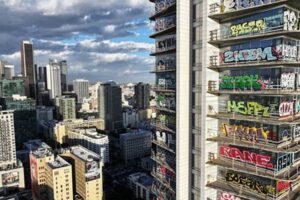



“Dark skyscrapers” is a term used to describe tall buildings that use a significant amount of energy at night. This can be due to a variety of factors, such as the use of inefficient lighting systems, the lack of natural light, or the presence of large amounts of electronic equipment.
Dark skyscrapers can have a negative impact on the environment. They can contribute to light pollution, which can disrupt the sleep patterns of humans and animals. They can also lead to increased greenhouse gas emissions, as the energy used to power these buildings is often generated from fossil fuels.
There are a number of things that can be done to reduce the energy consumption of dark skyscrapers. These include using more efficient lighting systems, increasing the use of natural light, and installing renewable energy sources such as solar panels.
1. Energy Consumption

Dark skyscrapers are a major source of energy consumption. The lighting, heating, and cooling of these buildings can account for a significant portion of a city’s energy use. For example, the Empire State Building in New York City uses approximately 100 million kilowatt-hours of electricity per year, which is enough to power 30,000 homes.
The energy consumption of dark skyscrapers is a major concern because it contributes to climate change. The burning of fossil fuels to generate electricity releases greenhouse gases into the atmosphere, which trap heat and cause the planet to warm. Climate change is already having a significant impact on the world, leading to more extreme weather events, rising sea levels, and other disruptions.
There are a number of things that can be done to reduce the energy consumption of dark skyscrapers. These include:
- Using more efficient lighting systems
- Increasing the use of natural light
- Installing renewable energy sources such as solar panels
- Improving the insulation of buildings
- Using more efficient heating and cooling systems
By taking these steps, we can reduce the energy consumption of dark skyscrapers and help to mitigate climate change.
2. Light Pollution

Light pollution is a growing problem in many cities around the world. It is caused by the excessive and inappropriate use of artificial light, which can have a negative impact on the environment, human health, and wildlife.
- Glare
Glare is a major problem caused by light pollution. It can be caused by bright lights that shine directly into people’s eyes, making it difficult to see. Glare can be a problem for drivers, pedestrians, and cyclists, and it can also be a nuisance for people who live or work near bright lights.
- Skyglow
Skyglow is another problem caused by light pollution. It is caused by the scattering of light in the atmosphere, which makes the sky appear brighter than it would be naturally. Skyglow can make it difficult to see stars and other celestial objects, and it can also disrupt the sleep patterns of animals.
- Light trespass
Light trespass is a problem that occurs when light from one property shines onto another property. This can be a nuisance for people who live or work in the affected area, and it can also disrupt the sleep patterns of animals.
- Ecological disruption
Light pollution can also have a negative impact on wildlife. Many animals use the darkness of night to hunt, find mates, and raise their young. Light pollution can disrupt these activities, and it can also make animals more vulnerable to predators.
Dark skyscrapers are a major contributor to light pollution. The bright lights that are used to illuminate these buildings can shine for miles, creating glare, skyglow, and light trespass. This can have a negative impact on the environment, human health, and wildlife.
3. Greenhouse Gas Emissions

Greenhouse gas emissions are a major concern for our planet. They are released into the atmosphere when fossil fuels are burned, and they trap heat, causing the planet to warm. Dark skyscrapers are a major contributor to greenhouse gas emissions. The energy used to power these buildings, often generated from fossil fuels, releases significant amounts of greenhouse gases into the atmosphere.
- Energy consumption
Dark skyscrapers consume a significant amount of energy, which is often generated from fossil fuels. This releases greenhouse gases into the atmosphere, contributing to climate change.
- Materials used in construction
The materials used to construct dark skyscrapers, such as concrete and steel, have a high carbon footprint. This means that they release significant amounts of greenhouse gases during their production.
- Transportation
Dark skyscrapers often attract a large number of occupants and visitors, which can lead to increased traffic and transportation emissions. This can contribute to air pollution and greenhouse gas emissions.
- Waste disposal
The waste generated by dark skyscrapers, such as construction waste and discarded materials, can end up in landfills, where it can decompose and release methane, a potent greenhouse gas.
The greenhouse gas emissions associated with dark skyscrapers are a major concern for our planet. By reducing the energy consumption of these buildings, using more sustainable materials, and promoting alternative transportation options, we can help to mitigate climate change and protect our planet for future generations.
4. Negative Impact on Wildlife

Dark skyscrapers can have a negative impact on wildlife in a number of ways. The bright lights used to illuminate these buildings can disrupt the natural day-night cycle of animals, which can interfere with their feeding, breeding, and sleeping patterns. For example, birds may be attracted to the lights of tall buildings and become disoriented, leading to collisions with the buildings or other objects. Additionally, the loss of natural darkness can disrupt the behavior of nocturnal animals, such as bats, which rely on darkness to hunt and navigate.
In addition to disrupting the natural day-night cycle, the lights from dark skyscrapers can also create glare and light pollution, whic
h can make it difficult for animals to see. This can make it difficult for animals to hunt, find mates, and avoid predators. For example, sea turtles may be disoriented by the lights of coastal skyscrapers and become stranded on beaches, making them vulnerable to predators or dehydration.
The negative impact of dark skyscrapers on wildlife is a serious concern. By understanding the ways in which these buildings can affect animals, we can take steps to mitigate these impacts and protect wildlife.
5. Health Risks for Humans

Dark skyscrapers can pose significant health risks for humans due to various factors, including:
- Circadian disruption
The bright lights used to illuminate dark skyscrapers can disrupt the body’s natural circadian rhythm, which is the 24-hour cycle that regulates sleep-wake patterns and other bodily functions. This disruption can lead to a variety of health problems, including sleep deprivation, fatigue, and impaired cognitive function.
- Eye strain
The intense lighting used in dark skyscrapers can cause eye strain, headaches, and other vision problems. This is especially true for people who work in or live near dark skyscrapers and are exposed to the bright lights for long periods of time.
- Increased risk of cancer
Studies have shown that exposure to light at night, such as the light emitted from dark skyscrapers, can increase the risk of certain types of cancer, including breast cancer and prostate cancer.
- Mental health problems
The disruption of the circadian rhythm and the lack of natural light in dark skyscrapers can lead to mental health problems, such as depression and anxiety.
It is important to note that these health risks are not limited to people who work in or live near dark skyscrapers. Anyone who is exposed to the bright lights of dark skyscrapers, even for short periods of time, can be affected.
6. Economic Costs

Dark skyscrapers can impose significant economic costs on cities and their residents.
- Increased energy consumption: Dark skyscrapers often consume large amounts of energy to power their lighting, heating, and cooling systems. This can lead to higher energy bills for businesses and residents, as well as increased greenhouse gas emissions.
- Reduced property values: Dark skyscrapers can have a negative impact on property values in surrounding areas. This is because they can block natural light, create glare, and contribute to light pollution. As a result, businesses and residents may be less willing to pay high prices for properties near dark skyscrapers.
- Increased crime: Some studies have shown that dark skyscrapers can be associated with increased crime rates. This is because they can create dark and secluded areas that are attractive to criminals.
- Reduced tourism: Dark skyscrapers can make cities less attractive to tourists. This is because they can create a sense of gloom and make it difficult to see the city’s landmarks and attractions.
The economic costs of dark skyscrapers are a serious concern for cities around the world. By understanding these costs, cities can take steps to reduce the negative impact of dark skyscrapers and create more sustainable and livable communities.
7. Architectural Design

The architectural design of dark skyscrapers is a complex and challenging task. Architects must consider a variety of factors, including the building’s height, shape, and materials, as well as the surrounding environment. Dark skyscrapers can have a significant impact on the cityscape, and it is important to ensure that they are designed in a way that is both aesthetically pleasing and environmentally sustainable.
One of the most important considerations for architects is the building’s height. Dark skyscrapers can be very tall, and this can create a number of challenges. For example, tall buildings can be more difficult to evacuate in the event of a fire or other emergency. They can also be more susceptible to wind damage and other structural problems.
Another important consideration is the building’s shape. The shape of a building can affect its energy efficiency and its impact on the surrounding environment. For example, a building with a large surface area will be more exposed to the sun and wind, which can lead to increased energy consumption. A building with a complex shape can also create wind tunnels, which can make the area around the building uncomfortable for pedestrians.
The materials used to construct a dark skyscraper can also have a significant impact on its environmental performance. For example, buildings made of concrete and steel are more energy-intensive to construct and operate than buildings made of wood or other renewable materials. Architects must carefully consider the environmental impact of the materials they use.
The architectural design of dark skyscrapers is a complex and challenging task, but it is also an important one. By carefully considering the building’s height, shape, and materials, architects can create dark skyscrapers that are both aesthetically pleasing and environmentally sustainable.
8. Urban Planning

Urban planning plays a critical role in shaping the built environment, including the design, construction, and regulation of dark skyscrapers. By considering the potential impacts of dark skyscrapers on the surrounding community and environment, urban planners can help to mitigate their negative effects and promote sustainable development.
- Zoning and Land Use Regulations
Zoning regulations determine the types of buildings that can be constructed in a particular area, as well as their height, size, and setbacks. Urban planners can use zoning to limit the construction of dark skyscrapers in certain areas, such as near residential neighborhoods or historic landmarks. They can also establish height limits to prevent dark skyscrapers from overshadowing neighboring buildings and blocking sunlight.
- Building Codes and Standards
Building codes and standards establish minimum requirements for the design and construction of buildings, including dark skyscrapers. These codes can address issues such as energy efficiency, fire safety, and structural stability. By ensuring that dark skyscrapers meet these standards, urban planners can help to reduce their environmental impact and make them safer for occupants.
- Transportation Planning
Transportation planning is essential for managing the traffic and pedestrian flow around dark skyscrapers. Urban planners can design transportation systems that encourage walking, cycling, and public transit, thereby reducing the number of vehicles on the road and mitigating the air pollution and
congestion caused by dark skyscrapers. - Public Open Space and Green Infrastructure
Public open space and green infrastructure, such as parks, plazas, and green roofs, can help to offset the negative impacts of dark skyscrapers. These spaces provide natural light and ventilation, reduce heat island effects, and improve air quality. Urban planners can incorporate public open space and green infrastructure into the design of dark skyscraper developments to create more sustainable and livable communities.
By considering the potential impacts of dark skyscrapers and implementing appropriate planning strategies, urban planners can help to mitigate their negative effects and promote sustainable development. This includes using zoning regulations to limit the construction of dark skyscrapers in certain areas, establishing height limits to prevent them from overshadowing neighboring buildings, and incorporating public open space and green infrastructure into their design.
9. Sustainable Solutions

Sustainable solutions are essential for mitigating the negative impacts of dark skyscrapers and promoting sustainable development in urban environments. By incorporating sustainable practices and technologies into the design, construction, and operation of dark skyscrapers, architects, urban planners, and building owners can reduce their environmental footprint and create healthier, more livable communities.
One key aspect of sustainable solutions for dark skyscrapers is energy efficiency. By using energy-efficient lighting systems, appliances, and building materials, dark skyscrapers can significantly reduce their energy consumption. This not only lowers operating costs but also reduces greenhouse gas emissions, contributing to the fight against climate change.
Another important aspect of sustainable solutions is the use of renewable energy sources. By installing solar panels, wind turbines, or geothermal systems, dark skyscrapers can generate their own clean energy, reducing their reliance on fossil fuels and further reducing their carbon footprint.
Sustainable solutions also extend to water conservation and waste management. Dark skyscrapers can incorporate rainwater harvesting systems to collect and reuse rainwater for irrigation or other non-potable purposes. They can also implement waste sorting and recycling programs to reduce the amount of waste sent to landfills.
In addition to environmental benefits, sustainable solutions for dark skyscrapers can also enhance the health and well-being of occupants and the surrounding community. By using natural materials, providing natural ventilation, and incorporating green spaces, dark skyscrapers can create healthier indoor environments and reduce the urban heat island effect.
Overall, sustainable solutions are crucial for addressing the challenges posed by dark skyscrapers and creating more sustainable and livable urban environments. By embracing sustainable practices and technologies, architects, urban planners, and building owners can transform dark skyscrapers into beacons of sustainability, contributing to a greener and healthier future for our cities.
FAQs on Dark Skyscrapers
This section addresses frequently asked questions and misconceptions surrounding dark skyscrapers, providing clear and informative answers.
Question 1: What are dark skyscrapers?
Answer: Dark skyscrapers refer to tall buildings that exhibit excessive energy consumption at night due to inefficient lighting systems, lack of natural light, or excessive use of electronic equipment.
Question 2: How do dark skyscrapers impact the environment?
Answer: Dark skyscrapers can contribute to light pollution, disrupt wildlife patterns, increase greenhouse gas emissions, and negatively affect human health.
Question 3: Are dark skyscrapers energy inefficient?
Answer: Yes, dark skyscrapers are often energy inefficient due to their reliance on artificial lighting and inadequate insulation, leading to higher energy consumption.
Question 4: How can we reduce the negative impacts of dark skyscrapers?
Answer: Implementing energy-efficient lighting, increasing natural light access, using renewable energy sources, and incorporating green building practices can mitigate the negative impacts of dark skyscrapers.
Question 5: What is the role of urban planning in addressing dark skyscrapers?
Answer: Urban planning plays a crucial role in regulating the construction and design of dark skyscrapers through zoning laws, building codes, and transportation planning to minimize their environmental impact.
Question 6: Can dark skyscrapers be sustainable?
Answer: Yes, dark skyscrapers can be sustainable by incorporating sustainable solutions such as energy efficiency measures, renewable energy systems, water conservation strategies, and waste management practices.
In summary, dark skyscrapers present challenges related to energy consumption and environmental impact. However, by embracing sustainable practices and implementing appropriate regulations, we can mitigate their negative effects and create more sustainable and livable urban environments.
Transition to the next article section: Exploring Architectural Innovations in Dark Skyscrapers
Tips for Addressing Dark Skyscrapers
To mitigate the negative impacts of dark skyscrapers and promote sustainable urban development, consider these practical tips:
Tip 1: Embrace Energy-Efficient Lighting
Replace inefficient lighting systems with energy-saving LED bulbs, motion sensors, and daylight harvesting technologies to reduce energy consumption and light pollution.
Tip 2: Maximize Natural Light
Design buildings with ample windows, skylights, and open floor plans to allow natural light to penetrate deep into the building, reducing the reliance on artificial lighting.
Tip 3: Implement Renewable Energy Sources
Install solar panels, wind turbines, or geothermal systems to generate clean energy on-site, reducing greenhouse gas emissions and promoting sustainability.
Tip 4: Enhance Building Insulation
Use high-performance insulation materials to improve thermal efficiency, reduce heat loss, and minimize the need for excessive heating or cooling, leading to lower energy consumption.
Tip 5: Promote Green Building Practices
Incorporate sustainable building practices throughout the design and construction process, such as using recycled materials, reducing waste, and implementing water conservation measures.
Tip 6: Encourage Public Transportation and Walkability
Promote public transportation, cycling, and pedestrian-friendly infrastructure to reduce traffic congestion, air pollution, and the urban heat island effect associated with dark skyscrapers.
Tip 7: Advocate for Responsible Urban Planning
Support urban planning policies that regulate the construction and design of dark skyscrapers, considering their environmental impact and promoting sustainable development.
Tip 8: Raise Awareness and Educate the Public
Educate the public, building owners, and policymakers about the negative impacts of dark skyscrapers and the benefits of sustainable solutions to foster a collective effort towards creating more livable and environmentally friendly urban
environments.
By implementing these tips, we can effectively address the challenges posed by dark skyscrapers, promote sustainable practices, and create more sustainable and livable urban environments for present and future generations.
Dark Skyscrapers
Dark skyscrapers, with their excessive energy consumption and negative environmental impacts, pose significant challenges to sustainable urban development. However, by embracing sustainable practices, implementing responsible urban planning policies, and raising public awareness, we can mitigate their adverse effects and transform these structures into beacons of sustainability.
The transition towards sustainable dark skyscrapers requires a collective effort. Architects, urban planners, building owners, and policymakers must prioritize energy efficiency, renewable energy integration, and green building practices. By working together, we can create urban environments that are not only visually appealing but also environmentally responsible and livable for generations to come.