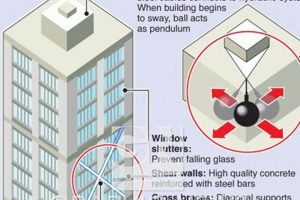



An earthquake in a skyscraper, also known as a high-rise building, refers to a seismic event that occurs in or near a tall structure. Earthquakes can cause significant damage to skyscrapers due to their height, weight, and complex structural systems.
The impact of an earthquake on a skyscraper can vary depending on factors such as the magnitude and epicenter of the earthquake, the design and construction of the building, and the local soil conditions. Earthquakes can cause structural damage to skyscrapers, including cracks, broken windows, and even collapse. They can also disrupt building systems such as elevators, electricity, and water supply.
To mitigate the risks associated with earthquakes, skyscrapers are often designed with features such as reinforced concrete structures, base isolation systems, and tuned mass dampers. These features are intended to absorb or reduce the energy of seismic waves and protect the building from damage.
1. Structural Design

Structural design plays a crucial role in ensuring that skyscrapers can withstand the forces of an earthquake. Seismic forces, which are the forces exerted by the ground during an earthquake, must be carefully considered in the design process. The structural design of a skyscraper must be able to resist these forces without collapsing or mengalami significant damage.
- Base Isolation
One common structural design feature used in skyscrapers is base isolation. Base isolation involves placing the building on a layer of flexible material, such as rubber or lead-rubber bearings. This layer of material absorbs and dissipates seismic energy, reducing the amount of force that is transferred to the rest of the building.
Shear Walls
Shear walls are another important structural design feature used in skyscrapers. Shear walls are vertical walls made of reinforced concrete or steel that are designed to resist lateral forces, such as those caused by an earthquake. Shear walls help to keep the building from swaying and collapsing.
Moment-Resisting Frames
Moment-resisting frames are structural systems that are designed to resist the bending forces caused by an earthquake. Moment-resisting frames are typically made of steel or reinforced concrete and are designed to flex and absorb energy without collapsing.
Damping Systems
Damping systems are used to reduce the vibrations of a building during an earthquake. Damping systems can be passive, such as tuned mass dampers, or active, such as active control systems. Tuned mass dampers are large weights that are suspended from the building and are tuned to the natural frequency of the building. When the building starts to vibrate, the tuned mass damper moves in the opposite direction, which helps to reduce the vibrations.
These are just a few of the structural design features that are used to protect skyscrapers from earthquakes. By carefully considering the seismic forces that a building may be subjected to, and by using appropriate structural design features, engineers can design skyscrapers that are able to withstand earthquakes and protect the people who live and work in them.
2. Seismic forces
Seismic forces are the forces exerted by the ground during an earthquake. These forces can cause buildings to shake, sway, and even collapse. The magnitude of seismic forces depends on the magnitude of the earthquake, the distance from the earthquake’s epicenter, and the local soil conditions.
- Ground shaking
Ground shaking is the most common seismic force. It occurs when the ground moves back and forth or up and down during an earthquake. Ground shaking can cause buildings to shake, sway, and even collapse.
- Liquefaction
Liquefaction is a phenomenon that can occur when the ground is saturated with water and subjected to strong seismic forces. Liquefaction can cause the ground to lose its strength and behave like a liquid. This can cause buildings to sink or tilt.
- Lateral spreading
Lateral spreading is a phenomenon that can occur when the ground is sloping and subjected to strong seismic forces. Lateral spreading can cause the ground to move sideways, which can damage buildings and infrastructure.
- Surface faulting
Surface faulting occurs when the ground ruptures during an earthquake. Surface faulting can damage buildings and infrastructure that are located on or near the fault line.
Seismic forces can have a devastating impact on skyscrapers. In order to protect skyscrapers from seismic forces, engineers use a variety of structural design features, such as base isolation, shear walls, and moment-resisting frames.
3. Building materials

The choice of building materials plays a critical role in the seismic performance of a skyscraper. Materials that are strong, ductile, and lightweight are ideal for use in earthquake-resistant buildings.
Some of the most common building materials used in skyscrapers include:
- Steel
Steel is a strong and ductile material that is well-suited for use in earthquake-resistant buildings. Steel structures can flex and absorb energy without collapsing, which makes them ideal for use in high-rise buildings.
Concrete
Concrete is a strong and durable material that is often used in the construction of skyscrapers. Concrete structures are less ductile than steel structures, but they are more fire-resistant.
Composite materials
Composite materials are made from a combination of two or more different materials. Composite materials can be tailored to have specific properties, such as high strength and ductility. This makes them ideal for use in earthquake-resistant buildings.
The choice of building materials is a critical factor in the seismic performance of a skyscraper. By using strong, ductile, and lightweight materials, engineers can design skyscrapers that are able to withstand earthquakes and protect the people who live and work in them.
4. Occupant safety

Occupant safety is of paramount importance in the design and construction of skyscrapers, particularly in earthquake-prone regions. Earthquakes can cause significant damage to skyscrapers, and if not properly designed, they can collapse, posing a significant
risk to the occupants. Therefore, it is essential to consider occupant safety in every aspect of the design and construction process.
There are a number of factors that contribute to occupant safety in skyscrapers during earthquakes. These include:
- The structural design of the building
- The choice of building materials
- The implementation of fire safety measures
- The provision of emergency evacuation plans
- The training of occupants on earthquake safety procedures
By considering all of these factors, engineers and architects can design and construct skyscrapers that are safe for occupants in the event of an earthquake.
One important aspect of occupant safety in skyscrapers is the provision of emergency evacuation plans. These plans should be developed in consultation with local emergency responders and should be tailored to the specific building and its occupants. Emergency evacuation plans should include procedures for occupants to follow in the event of an earthquake, including how to evacuate the building safely and where to go for shelter.
Another important aspect of occupant safety in skyscrapers is the training of occupants on earthquake safety procedures. This training should include information on what to do before, during, and after an earthquake. Occupants should be trained on how to identify potential hazards, how to evacuate the building safely, and how to provide first aid to injured persons.
By following these guidelines, building owners and managers can help to ensure the safety of occupants in skyscrapers during earthquakes.
5. Emergency response

Emergency response is a critical component of earthquake preparedness for skyscrapers. In the event of an earthquake, it is essential to have a plan in place to ensure the safety of occupants and to minimize damage to the building. Emergency response plans should be developed in consultation with local emergency responders and should be tailored to the specific building and its occupants.
Emergency response plans should include procedures for occupants to follow in the event of an earthquake, including how to evacuate the building safely and where to go for shelter. Occupants should also be trained on how to identify potential hazards, how to provide first aid to injured persons, and how to shut off utilities.
In addition to developing emergency response plans, building owners and managers should also conduct regular drills to ensure that occupants are familiar with the procedures. Drills should be conducted at different times of day and under different conditions to ensure that occupants are prepared for any eventuality.
By developing and implementing a comprehensive emergency response plan, building owners and managers can help to ensure the safety of occupants in skyscrapers during earthquakes.
6. Building Codes

Building codes are essential for ensuring the safety of skyscrapers in the event of an earthquake. Building codes are regulations that specify the minimum standards for the design, construction, and maintenance of buildings. These codes are developed by experts in the field of structural engineering and are based on the latest scientific research. Building codes are essential because they help to ensure that buildings are designed and constructed in a way that can withstand the forces of an earthquake.
One of the most important aspects of building codes is that they require buildings to be designed to resist lateral forces. Lateral forces are the forces that are applied to a building from the side, such as the forces caused by an earthquake. Building codes specify the minimum amount of lateral force that a building must be able to withstand. This ensures that buildings are able to resist the forces of an earthquake without collapsing.
Building codes also specify the types of materials that can be used to construct buildings. These materials must be able to withstand the forces of an earthquake without failing. Building codes also specify the methods that must be used to construct buildings. These methods must be able to ensure that the building is able to withstand the forces of an earthquake without collapsing.
Building codes are essential for ensuring the safety of skyscrapers in the event of an earthquake. By requiring buildings to be designed and constructed in a way that can withstand the forces of an earthquake, building codes help to protect the lives of the people who live and work in skyscrapers.
7. Seismic retrofitting

Seismic retrofitting is the process of modifying an existing structure to make it more resistant to earthquakes. This can involve adding new structural elements, strengthening existing elements, or both. Seismic retrofitting is an important consideration for skyscrapers, as they are particularly vulnerable to damage from earthquakes.
- Strengthening structural elements
One common seismic retrofitting technique is to strengthen the structural elements of a building. This can involve adding new steel beams or columns, reinforcing concrete walls, or installing shear walls. Shear walls are vertical walls that are designed to resist lateral forces, such as those caused by an earthquake.
- Adding new structural elements
Another common seismic retrofitting technique is to add new structural elements to a building. This can involve adding new outriggers or moment frames. Outriggers are horizontal beams that are connected to the exterior walls of a building. Moment frames are structural systems that are designed to resist the bending forces caused by an earthquake.
- Base isolation
Base isolation is a seismic retrofitting technique that involves placing a building on a layer of flexible material, such as rubber or lead-rubber bearings. This layer of material absorbs and dissipates seismic energy, reducing the amount of force that is transferred to the rest of the building.
- Damping systems
Damping systems are seismic retrofitting techniques that are used to reduce the vibrations of a building during an earthquake. Damping systems can be passive, such as tuned mass dampers, or active, such as active control systems. Tuned mass dampers are large weights that are suspended from the building and are tuned to the natural frequency of the building. When the building starts to vibrate, the tuned mass damper moves in the opposite direction, which helps to reduce the vibrations.
Seismic retrofitting is an important consideration for skyscrapers, as it can significantly reduce the risk of damage from earthquakes. By strengthening the structural elements of a building, adding new structural elements, or using base isolation or damping systems, engineers can help to ensure that skyscrapers are able to withstand the forces of an earthquake and protect the people who live and work in them.
FAQs about Earthquakes in Skyscrapers
Earthquakes pose a significant threat to skyscrapers due to their height, weight, and complex structural systems. Here are answers to some frequently asked questions about earthquakes in skysc
rapers:
Question 1: Are skyscrapers safe in earthquakes?
Skyscrapers are designed to withstand earthquakes, but their safety depends on factors such as the magnitude and epicenter of the earthquake, the design and construction of the building, and the local soil conditions. Modern skyscrapers are typically built with features such as reinforced concrete structures, base isolation systems, and tuned mass dampers to mitigate the effects of earthquakes.
Question 2: What are the biggest risks to skyscrapers during an earthquake?
The biggest risks to skyscrapers during an earthquake include structural damage, such as cracks, broken windows, and even collapse; disruption of building systems, such as elevators, electricity, and water supply; and occupant safety, such as injuries from falling debris or being trapped in damaged elevators.
Question 3: How are skyscrapers designed to withstand earthquakes?
Skyscrapers are designed to withstand earthquakes using various structural features, including reinforced concrete structures, base isolation systems, shear walls, moment-resisting frames, and damping systems. These features are designed to absorb or reduce the energy of seismic waves and protect the building from damage.
Question 4: What is base isolation and how does it protect skyscrapers from earthquakes?
Base isolation is a seismic retrofitting technique that involves placing a building on a layer of flexible material, such as rubber or lead-rubber bearings. This layer of material absorbs and dissipates seismic energy, reducing the amount of force that is transferred to the rest of the building.
Question 5: How can occupants of skyscrapers stay safe during an earthquake?
Occupants of skyscrapers can stay safe during an earthquake by following these steps: drop to the ground, take cover under a sturdy table or desk, and hold on until the shaking stops. Avoid windows, exterior walls, and elevators. If you are in an elevator, press the emergency stop button and brace yourself.
Question 6: What should building owners and managers do to prepare for earthquakes?
Building owners and managers should develop emergency response plans, conduct regular drills, and train occupants on earthquake safety procedures. They should also consider seismic retrofitting to improve the earthquake resistance of their buildings.
By understanding these key points, we can better prepare for and mitigate the risks associated with earthquakes in skyscrapers.
Transition to the next article section:
Tips for Earthquake Safety in Skyscrapers
Skyscrapers are designed to withstand earthquakes, but occupants can take steps to further enhance their safety. Here are five tips for earthquake safety in skyscrapers:
Tip 1: Know Your Evacuation Plan
Familiarize yourself with the evacuation plan for your building and practice it regularly. Know the location of all exits and stairwells, and identify a safe place to gather outside the building.
Tip 2: Stay Calm and Follow Instructions
In the event of an earthquake, remain calm and follow the instructions of building security or emergency personnel. Do not use elevators, as they may malfunction or become trapped.
Tip 3: Protect Yourself from Falling Objects
During an earthquake, falling objects pose a significant hazard. Seek shelter under a sturdy table or desk, and cover your head and neck with your arms.
Tip 4: Be Prepared for Aftershocks
After an earthquake, be prepared for aftershocks, which can occur hours, days, or even weeks later. Stay informed about official updates and follow safety guidelines.
Tip 5: Store Emergency Supplies
Keep a small emergency kit in your office or apartment, including water, non-perishable food, a flashlight, a whistle, and a first-aid kit.
Conclusion
Earthquakes pose a significant threat to skyscrapers, but modern skyscrapers are designed with advanced structural features and technologies to withstand seismic forces and protect occupants. Building codes, seismic retrofitting techniques, and emergency response plans further enhance the safety of skyscrapers in earthquake-prone regions.
While skyscrapers are generally safe in earthquakes, occupants can take steps to further enhance their safety. By following earthquake safety tips, such as knowing evacuation plans, staying calm, protecting themselves from falling objects, being prepared for aftershocks, and storing emergency supplies, occupants can contribute to their own safety and the well-being of the community.
Ongoing research and advancements in earthquake engineering continue to improve the seismic performance of skyscrapers. By investing in earthquake safety measures and promoting public awareness, we can create resilient communities and mitigate the risks associated with earthquakes.