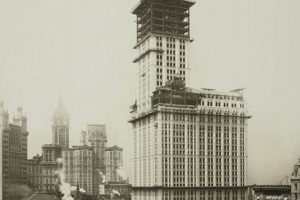



An early skyscraper is a tall, multi-story building that was constructed during the late 19th and early 20th centuries predominantly in the United States. It should be noted that skyscrapers can also be referred to as high-rise buildings.
The construction of skyscrapers was made possible by the invention of the elevator, which allowed for the efficient movement of people and goods between floors. Skyscrapers were also made possible by the development of new building materials and techniques, such as the steel frame, which allowed for the construction of taller and more slender buildings.
Skyscrapers have had a major impact on the development of cities. They have allowed for the concentration of people and businesses in urban areas, and have helped to create more efficient and vibrant cities. Skyscrapers have also become iconic symbols of cities, and have helped to shape the skylines of many of the world’s largest cities.
1. Height

The height of early skyscrapers was a major factor in their significance. At the time of their construction, early skyscrapers were among the tallest buildings in the world. This height gave them a number of advantages, including:
- Increased visibility: Early skyscrapers were highly visible from a distance, which made them ideal for advertising and other promotional purposes.
- Improved views: The height of early skyscrapers gave occupants panoramic views of the surrounding city.
- Increased prestige: Early skyscrapers were seen as symbols of progress and modernity, and their height was a major factor in this perception.
The height of early skyscrapers also had a number of practical benefits. For example, the height of early skyscrapers allowed for the installation of elevators, which made it possible to move people and goods between floors quickly and efficiently. The height of early skyscrapers also allowed for the construction of large, open floor plans, which were ideal for offices and other commercial uses.
The height of early skyscrapers was a major factor in their success. It gave them a number of advantages, both in terms of visibility and practicality. As a result, early skyscrapers were quickly adopted by businesses and other organizations, and they continue to be a popular building type today.
2. Steel frame

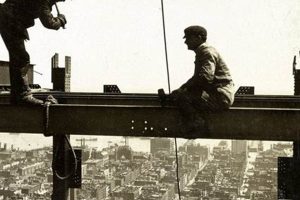
The development of the steel frame was a major breakthrough in the construction of early skyscrapers. Prior to the use of steel frames, buildings were limited in height due to the weight and strength of the materials used in their construction. Steel frames, however, are much stronger and lighter than other materials, such as wood or stone. This allowed architects and engineers to design and construct buildings that were taller and more slender than ever before.
- Strength: Steel frames are incredibly strong, which allows them to support the weight of a tall building. This strength is due to the unique properties of steel, which is a very hard and durable material.
- Lightness: Steel frames are also very light, which reduces the overall weight of a building. This lightness makes it possible to construct taller buildings without having to worry about the building collapsing under its own weight.
- Flexibility: Steel frames are also very flexible, which allows them to withstand wind and other forces without collapsing. This flexibility is important for tall buildings, which are more likely to be exposed to high winds and other forces.
The development of the steel frame was a major factor in the construction of early skyscrapers. Steel frames allowed architects and engineers to design and construct buildings that were taller and more slender than ever before. This led to the development of new architectural styles and the creation of some of the world’s most iconic buildings.
3. Elevators

Elevators were a key component of early skyscrapers. Prior to the invention of elevators, buildings were limited in height due to the difficulty of moving people and goods between floors. Elevators solved this problem by providing a safe and efficient way to transport people and goods between floors. This allowed architects and engineers to design and construct buildings that were taller than ever before.
Elevators also had a major impact on the design of early skyscrapers. Prior to the invention of elevators, buildings were typically designed with a central staircase. This staircase was used to move people and goods between floors. However, as buildings became taller, it became increasingly difficult to use stairs to move people and goods between floors. Elevators provided a much more efficient way to move people and goods between floors, and this allowed architects and engineers to design buildings with more open floor plans.
The invention of elevators had a major impact on the development of early skyscrapers. Elevators allowed architects and engineers to design and construct buildings that were taller and more slender than ever before. This led to the development of new architectural styles and the creation of some of the world’s most iconic buildings.
4. Ornamentation

The ornamentation of early skyscrapers was an important part of their design. It reflected the architectural styles of the time, and it helped to create a sense of grandeur and importance. Ornamentation was also used to attract attention and to make buildings more visually appealing.
The most common types of ornamentation used on early skyscrapers included:
- Carvings: Carvings were often used to decorate the facades of early skyscrapers. They could be simple or complex, and they often depicted scenes from mythology or history.
- Sculptures: Sculptures were also used to decorate the facades of early skyscrapers. They could be freestanding or attached to the building. Sculptures often depicted human figures, animals, or mythical creatures.
- Mural paintings: Mural paintings were often used to decorate the interiors of early skyscrapers. They could be simple or complex, and they often depicted scenes from history or nature.
- Stained glass windows: Stained glass windows were often used to decorate the windows of early skyscrapers. They could be simple or complex, and they often depicted religious or historical scenes.
The ornamentation of early skyscrapers was an important part of their design. It helped t
o create a sense of grandeur and importance, and it attracted attention. Ornamentation also reflected the architectural styles of the time, and it helped to make buildings more visually appealing.
5. Function

Early skyscrapers were primarily used for commercial purposes, such as offices and retail, because they offered a number of advantages over traditional low-rise buildings. First, skyscrapers could accommodate a large number of people and businesses in a relatively small amount of space. This was important in densely populated urban areas, where land was scarce and expensive.
- Increased efficiency: Skyscrapers allowed businesses to operate more efficiently by providing them with large, open floor plans and efficient transportation systems.
- Improved visibility: Skyscrapers were highly visible from a distance, which made them ideal for advertising and other promotional purposes.
- Increased prestige: Skyscrapers were seen as symbols of progress and modernity, and businesses that occupied skyscrapers were seen as being successful and prestigious.
The use of skyscrapers for commercial purposes had a major impact on the development of cities. Skyscrapers helped to concentrate businesses and people in urban areas, and they helped to create more efficient and vibrant cities.
6. Symbolism

Early skyscrapers were often seen as symbols of progress and modernity because they represented the latest in architectural and engineering innovation. They were the tallest buildings in the world, and their steel frames and elevators allowed them to reach unprecedented heights. Skyscrapers were also seen as symbols of the growing power and wealth of the United States, and they helped to create a sense of national pride.
The symbolism of early skyscrapers was important for a number of reasons. First, it helped to attract investment and development to cities. Businesses and individuals were eager to be associated with the progress and modernity that skyscrapers represented. Second, the symbolism of skyscrapers helped to create a sense of civic pride. Citizens were proud to live in cities that had the tallest and most modern buildings in the world. Finally, the symbolism of skyscrapers helped to shape the way that people thought about the future. Skyscrapers were seen as a symbol of the limitless potential of human ingenuity, and they inspired people to dream big.
The symbolism of early skyscrapers is still relevant today. Skyscrapers continue to be seen as symbols of progress and modernity, and they continue to inspire people around the world. Skyscrapers are a reminder of the human capacity for innovation and achievement, and they continue to shape the way that we think about the future.
7. Legacy

Early skyscrapers have had a major impact on the development of cities, and continue to be iconic landmarks. Their legacy is due to a number of factors, including their:
- Height and grandeur: Early skyscrapers were the tallest buildings in the world at the time of their construction, and their height and grandeur made them instantly recognizable landmarks. They were also often designed with elaborate facades and decorative details, which added to their visual appeal.
- Functional importance: Early skyscrapers were not just symbols of progress and modernity; they were also important functional buildings. They provided much-needed office space for businesses and other organizations, and they helped to concentrate people and businesses in urban areas.
- Cultural significance: Early skyscrapers have become cultural icons, and they are often associated with the cities in which they are located. They are often featured in movies, television shows, and other forms of popular culture, and they are a popular tourist destination.
The legacy of early skyscrapers is still felt today. They continue to be iconic landmarks, and they continue to play an important role in the development of cities. Early skyscrapers are a reminder of the ingenuity and creativity of the architects and engineers who designed and built them, and they continue to inspire people around the world.
Early Skyscraper FAQs
This section addresses frequently asked questions concerning the topic of early skyscrapers, providing clear and concise answers to enhance understanding.
Question 1: What factors contributed to the emergence of early skyscrapers?
The development of early skyscrapers was primarily driven by the invention of the steel frame and the elevator. Steel frames allowed for the construction of taller and more slender buildings, while elevators facilitated efficient vertical transportation, overcoming the limitations of traditional low-rise structures.
Question 2: What were the primary uses of early skyscrapers?
Early skyscrapers were predominantly used for commercial purposes, particularly as office buildings and retail spaces. Their height and visibility made them attractive for businesses seeking to establish a prominent presence in urban centers.
Question 3: How did early skyscrapers influence urban development?
The construction of early skyscrapers had a significant impact on urban development. They enabled the concentration of businesses and people in dense urban areas, promoting economic growth and creating more vibrant and efficient cities. Skyscrapers also became symbols of urban progress and modernity.
Question 4: What architectural styles were prevalent in early skyscrapers?
Early skyscrapers showcased a diverse range of architectural styles, reflecting the eclectic tastes of the era. Notable styles included Beaux-Arts, Art Deco, and Gothic Revival, each characterized by distinct ornamental features and design elements.
Question 5: What safety measures were implemented in early skyscrapers?
Early skyscrapers incorporated various safety features to ensure the well-being of occupants. These included fireproofing materials, sprinkler systems, and emergency exits. Building codes and regulations were also developed to address structural stability and fire safety.
Question 6: How have early skyscrapers influenced contemporary architecture?
Early skyscrapers have served as a foundation for modern high-rise construction. Their innovative structural systems and design principles continue to inspire architects and engineers today, shaping the skylines of cities worldwide.
In conclusion, early skyscrapers represent a pivotal era in architectural history, characterized by technological advancements, urban transformation, and enduring design legacies.
Tips for Understanding Early Skyscrapers
Comprehending the significance and impact of early skyscrapers requires a multifaceted approach. Here are some valuable tips to enhance your understanding:
Tip 1: Explore Historical Context
Understanding the historical context in which early skyscrapers emerged is crucial. Consider the social, economic, and technological factors that infl
uenced their development and the challenges faced by architects and engineers.
Tip 2: Analyze Architectural Features
Examine the architectural features that characterize early skyscrapers, such as steel frames, elevators, and ornamentation. Analyze how these elements contributed to their structural stability, functionality, and aesthetic appeal.
Tip 3: Study Notable Examples
Study specific examples of early skyscrapers to gain a deeper understanding of their design and construction. Research iconic buildings like the Empire State Building, Chrysler Building, and Woolworth Building, exploring their unique characteristics and the innovations they represent.
Tip 4: Consider Urban Impact
Assess the impact of early skyscrapers on urban development. Analyze how they influenced the concentration of businesses and people in cities, shaped skylines, and contributed to the growth and transformation of urban centers.
Tip 5: Examine Cultural Significance
Explore the cultural significance of early skyscrapers. Consider how they became symbols of progress, modernity, and national pride, and how they have been featured in popular culture, art, and literature.
By following these tips, you can gain a comprehensive understanding of early skyscrapers, their architectural significance, and their lasting impact on cities and society.
Key Takeaways:
- Early skyscrapers emerged from a combination of historical factors and technological advancements.
- Their architectural features, such as steel frames and elevators, enabled unprecedented height and functionality.
- Notable examples of early skyscrapers showcase the ingenuity and innovation of architects and engineers.
- Early skyscrapers played a significant role in shaping urban development and transforming cities.
- They hold cultural significance as symbols of progress, modernity, and architectural achievement.
Conclusion
Early skyscrapers stand as a testament to human ingenuity and architectural innovation. Their construction revolutionized the way we live and work in cities, forever altering the urban landscape. The development of steel frames and elevators made possible the creation of these towering structures, which became symbols of progress and modernity.
The legacy of early skyscrapers continues to shape modern architecture and urban planning. Their influence can be seen in the skyscrapers that dominate skylines around the world, as well as in the design principles and safety measures that have become standard in high-rise construction. By studying early skyscrapers, we gain a deeper appreciation for the challenges and triumphs that have shaped our built environment.