


Skyscrapers, towering giants of the modern world, are marvels of engineering that defy gravity and reshape skylines. While their imposing presence may give the impression of immobility, these colossal structures are not immune to the forces of nature. Skyscrapers do indeed move, albeit in subtle and controlled ways.
The movement of skyscrapers is primarily driven by two factors: wind and seismic activity. Strong winds can cause skyscrapers to sway gently, with taller buildings experiencing greater movement at their. This swaying is designed into the building’s structure to prevent damage from excessive wind loads. Additionally, skyscrapers are equipped with sophisticated damping systems, such as tuned mass dampers, which counteract wind-induced vibrations and enhance stability.
Seismic activity, such as earthquakes, poses a more significant threat to skyscrapers. To withstand the powerful forces of an earthquake, skyscrapers are constructed with flexible frameworks that allow them to absorb and dissipate seismic energy. These frameworks are designed to minimize damage to the building’s structural integrity and ensure the safety of occupants.
The movement of skyscrapers is not only a testament to the ingenuity of engineers but also a crucial aspect of their design. By allowing buildings to sway and flex, engineers can mitigate the impact of environmental forces and ensure the longevity of these architectural wonders.
1. Wind

This phenomenon is directly related to the concept of “do skyscrapers move” as it highlights one of the primary factors that cause skyscrapers to move. Wind exerts a force on buildings, and taller buildings have a greater surface area exposed to the wind, resulting in more pronounced swaying.
- Structural Design
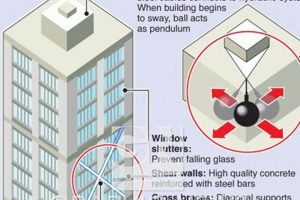
Skyscrapers are designed with flexible frameworks that allow them to sway within certain limits. This flexibility helps to dissipate wind energy and reduce the risk of structural damage. - Height and Location
Taller buildings are more susceptible to swaying because they are exposed to stronger winds at higher altitudes. Additionally, buildings located in areas with high wind speeds, such as coastal regions, are more likely to experience significant swaying. - Resonance
Skyscrapers can be susceptible to resonance, a phenomenon where the frequency of wind matches the natural frequency of the building. This can amplify the swaying motion and lead to discomfort for occupants or even structural damage. - Damping Systems
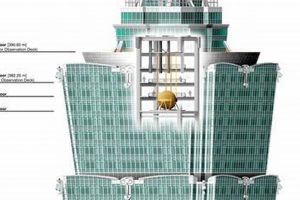
To mitigate the effects of wind-induced swaying, skyscrapers are often equipped with damping systems, such as tuned mass dampers. These systems absorb and dissipate energy, reducing the amplitude of swaying.
In summary, the movement of skyscrapers due to wind is a complex interaction between structural design, height and location, resonance, and damping systems. Understanding these factors is crucial for engineers to design skyscrapers that are not only visually stunning but also safe and resilient.
2. Seismic activity

Earthquakes are among the most powerful and destructive natural forces, posing a significant threat to tall buildings like skyscrapers. The impact of an earthquake on a skyscraper depends on various factors, including the building’s height, structural design, and the intensity of the earthquake.
- Structural Design
Skyscrapers are designed to withstand seismic activity by incorporating flexible frameworks that can absorb and dissipate seismic energy. These frameworks allow the building to sway and flex during an earthquake, reducing the risk of structural damage. - Base Isolation
Some skyscrapers are equipped with base isolation systems, which are layers of flexible material placed between the building’s foundation and the ground. These systems help to isolate the building from the ground motion during an earthquake, reducing the forces transmitted to the building. - Damping Systems
Damping systems, such as tuned mass dampers, are often used in skyscrapers to reduce the amplitude of swaying during an earthquake. These systems absorb and dissipate energy, helping to stabilize the building.
By incorporating these design features, engineers can create skyscrapers that are more resilient to seismic activity, ensuring the safety of occupants and minimizing the risk of structural damage.
3. Damping systems
Damping systems play a crucial role in mitigating the movement of skyscrapers caused by wind and seismic activity. These systems counteract vibrations and enhance the stability of tall buildings, ensuring the safety and comfort of occupants.
- Tuned Mass Dampers
Tuned mass dampers (TMDs) are one of the most common types of damping systems used in skyscrapers. TMDs consist of a heavy mass suspended from the building’s structure. The mass is tuned to the natural frequency of the building, which means that it vibrates in opposition to the building’s movement. This counteracting force helps to reduce the amplitude of the building’s vibrations. - Viscous Dampers
Viscous dampers are another type of damping system that is commonly used in skyscrapers. Viscous dampers consist of a piston moving within a cylinder filled with a viscous fluid. As the building vibrates, the piston moves through the fluid, dissipating energy and reducing the amplitude of the vibrations. - Friction Dampers
Friction dampers are a third type of damping system that is sometimes used in skyscrapers. Friction dampers consist of two surfaces that are pressed together with a friction material in between. As the building vibrates, the surfaces slide against each other, generating friction and dissipating energy.
By incorporating damping systems into skyscraper designs, engineers can effectively counteract wind-induced vibrations and enhance the stability of these towering structures. These systems play a crucial role in ensuring the safety and comfort of occupants, protecting against excessive movement that could potentially cause damage or discomfort.
4. Structural design

The structural design of skyscrapers plays a pivotal role in their ability to withstand environmental forces and maintain stability. By incorporating flexible frameworks, engineers create buildings that can sway and fl
ex, effectively mitigating the impact of wind and seismic activity.
The flexible frameworks used in skyscraper construction are designed to absorb and dissipate energy, preventing it from being transferred to the building’s structural components. This allows skyscrapers to withstand strong winds and earthquakes without suffering significant damage.
For example, the Burj Khalifa, the world’s tallest building, is designed with a central concrete core surrounded by a series of steel and glass facades. This design allows the building to sway up to 1.5 meters in high winds without compromising its structural integrity.
Understanding the connection between structural design and skyscraper movement is crucial for ensuring the safety and longevity of these towering structures. By incorporating flexible frameworks, engineers can create skyscrapers that are not only visually stunning but also resilient to the forces of nature.
5. Safety
The connection between “Safety: By allowing buildings to move, engineers can minimize damage and ensure occupant safety” and “do skyscrapers move” highlights the critical role of movement in ensuring the safety of occupants in high-rise buildings. Skyscrapers are designed to move to mitigate the impact of environmental forces, primarily wind and seismic activity.
Allowing buildings to move reduces the risk of structural damage by dissipating energy and preventing it from being transferred to the building’s structural components. This movement is carefully controlled and engineered to ensure that the building remains stable and safe, even during strong winds or earthquakes.
Real-life examples demonstrate the effectiveness of this approach. The Taipei 101 skyscraper in Taiwan is designed to sway up to one meter in high winds. During a typhoon in 2015, the building swayed significantly, but its structural integrity was maintained, and there were no reports of damage or injuries.
Understanding the connection between “Safety: By allowing buildings to move, engineers can minimize damage and ensure occupant safety” and “do skyscrapers move” is crucial for designing and constructing safe and resilient skyscrapers. By incorporating flexible frameworks and movement-absorbing systems, engineers can create buildings that can withstand environmental forces without compromising the safety of occupants.
6. Design

The connection between “Design: The movement of skyscrapers is not only a testament to engineering ingenuity but also a crucial aspect of their design.” and “do skyscrapers move” lies in the fundamental role of movement in shaping the design and functionality of high-rise buildings. Movement is not merely a consequence of environmental forces acting upon skyscrapers, but an integral consideration in their architectural conception and structural engineering.
Allowing skyscrapers to move provides several advantages. Firstly, it helps to mitigate the impact of wind and seismic forces. By incorporating flexible frameworks and damping systems, engineers can design skyscrapers that can sway and flex, dissipating energy and reducing the risk of structural damage. This is particularly important in regions prone to strong winds or earthquakes.
Secondly, movement can enhance occupant comfort. Skyscrapers that are designed to move can reduce the perception of motion for occupants, creating a more comfortable and less stressful environment. This is achieved through the use of tuned mass dampers and other systems that counteract building vibrations.
Thirdly, movement can be an architectural expression. The dynamic nature of skyscrapers, as they sway and flex in response to environmental forces, can be visually striking and contribute to the overall aesthetic appeal of the building.
In conclusion, the movement of skyscrapers is not just a physical phenomenon but a crucial aspect of their design. By understanding the connection between “Design: The movement of skyscrapers is not only a testament to engineering ingenuity but also a crucial aspect of their design.” and “do skyscrapers move,” engineers can create high-rise buildings that are not only structurally sound and safe but also aesthetically pleasing and comfortable for occupants.
7. Longevity

The connection between “Longevity: The ability of skyscrapers to withstand environmental forces contributes to their longevity and resilience.” and “do skyscrapers move” lies in the fundamental role of movement in ensuring the long-term integrity and performance of high-rise buildings. By allowing skyscrapers to move, engineers can design structures that can withstand the forces of nature, such as wind and earthquakes, without compromising their structural stability or safety.
- Structural Integrity
Allowing skyscrapers to move reduces the risk of structural damage by dissipating energy and preventing it from being transferred to the building’s structural components. This movement is carefully controlled and engineered to ensure that the building remains stable and safe, even during strong winds or earthquakes. - Reduced Maintenance Costs
Skyscrapers that are designed to move require less maintenance compared to rigid structures. As the building can sway and flex, it is less likely to develop cracks or other damage that could require costly repairs. This reduced maintenance contributes to the overall longevity and cost-effectiveness of the building. - Increased Occupant Comfort
Skyscrapers that are designed to move can reduce the perception of motion for occupants, creating a more comfortable and less stressful environment. This is achieved through the use of tuned mass dampers and other systems that counteract building vibrations, leading to increased occupant satisfaction and well-being. - Architectural Expression
The dynamic nature of skyscrapers, as they sway and flex in response to environmental forces, can be visually striking and contribute to the overall aesthetic appeal of the building. This movement can be incorporated into the architectural design, creating unique and iconic structures that become landmarks in the urban landscape.
In conclusion, the ability of skyscrapers to withstand environmental forces is directly tied to their movement. By allowing buildings to move, engineers can design skyscrapers that are not only structurally sound and safe but also durable, cost-effective, and aesthetically pleasing. This contributes to the overall longevity and resilience of these iconic structures, ensuring that they continue to serve their purpose and enhance the urban environment for generations to come.
8. Monitoring

The connection between “Monitoring: Skyscrapers are equipped with sensors to monitor movement and ensure structural integrity.” and “do skyscrapers move” lies in the crucial role of monitoring in understanding and managing the movement of skyscrapers. By continuously monitoring movement, engineers can assess the structural integrity of the
building and ensure its safety and performance.
Skyscrapers are equipped with an array of sensors, including accelerometers, inclinometers, and strain gauges. These sensors collect data on the building’s movement, including its sway, tilt, and vibrations. This data is transmitted to a central monitoring system, where it is analyzed to detect any anomalies or patterns that may indicate potential issues.
Real-time monitoring allows engineers to identify and address potential problems before they escalate into major structural issues. For example, if the monitoring system detects excessive swaying or vibrations, engineers can investigate the cause and implement measures to mitigate the movement, such as adjusting the building’s damping systems or strengthening its structural components.
Understanding the connection between “Monitoring: Skyscrapers are equipped with sensors to monitor movement and ensure structural integrity.” and “do skyscrapers move” is essential for ensuring the safety and longevity of these iconic structures. By continuously monitoring movement, engineers can proactively manage the effects of environmental forces and maintain the structural integrity of skyscrapers, ensuring that they remain safe and habitable for occupants.
9. Maintenance

The connection between “Maintenance: Regular maintenance and inspections are essential to ensure that skyscrapers continue to perform as intended.” and “do skyscrapers move” lies in the crucial role maintenance plays in managing the movement of skyscrapers and ensuring their structural integrity and safety.
- Ensuring Structural Stability
Regular maintenance and inspections allow engineers to identify and address potential issues that could affect the structural stability of a skyscraper. By proactively addressing issues such as loose bolts, corrosion, or damage to structural components, maintenance helps to prevent excessive movement and ensures that the building can withstand environmental forces. - Maintaining Damping Systems
Skyscrapers are often equipped with damping systems, such as tuned mass dampers, to mitigate the effects of movement caused by wind or seismic activity. Regular maintenance of these systems is essential to ensure they are functioning properly and effectively counteracting movement, preventing excessive swaying or vibrations that could compromise the building’s stability. - Monitoring Movement Patterns
Maintenance also involves monitoring the movement patterns of a skyscraper over time. By analyzing data from sensors installed throughout the building, engineers can detect any changes in movement patterns that may indicate potential issues or areas that require attention. This monitoring helps to identify and address issues before they become major problems, ensuring the continued safe performance of the skyscraper. - Preserving Aesthetics and Functionality
Regular maintenance and inspections also contribute to preserving the aesthetic appeal and functionality of a skyscraper. By addressing issues such as facade damage, leaks, or malfunctioning equipment, maintenance helps to maintain the building’s appearance and ensures that it continues to function as intended, providing a safe and comfortable environment for occupants.
In conclusion, the connection between “Maintenance: Regular maintenance and inspections are essential to ensure that skyscrapers continue to perform as intended.” and “do skyscrapers move” is evident in the crucial role maintenance plays in managing the movement of skyscrapers, ensuring their structural integrity, and preserving their aesthetic appeal and functionality. By proactively addressing potential issues and monitoring movement patterns, maintenance helps to ensure that skyscrapers continue to perform as intended, providing safe and habitable spaces for occupants.
FAQs on “Do Skyscrapers Move”
This section addresses frequently asked questions and misconceptions regarding the movement of skyscrapers, providing clear and informative answers based on scientific principles and engineering practices.
Question 1: Do skyscrapers actually move?
Yes, skyscrapers are designed to move to some extent. They are not rigid structures but are engineered to sway and flex in response to environmental forces such as wind and seismic activity.
Question 2: Why are skyscrapers designed to move?
Allowing skyscrapers to move helps to mitigate the impact of wind and seismic forces. By swaying and flexing, the building can absorb and dissipate energy, reducing the risk of structural damage.
Question 3: How much do skyscrapers move?
The amount of movement in a skyscraper depends on its height, design, and the intensity of environmental forces. Taller buildings tend to sway more than shorter ones, and buildings in windy or earthquake-prone areas may experience more movement.
Question 4: Is it safe to be inside a skyscraper that is moving?
Yes, it is generally safe to be inside a moving skyscraper. Buildings are designed with safety in mind and can withstand significant movement without compromising structural integrity.
Question 5: How do engineers ensure that skyscrapers remain stable during movement?
Engineers employ various techniques to ensure stability, such as using flexible frameworks, incorporating damping systems, and conducting regular monitoring and maintenance.
Question 6: What are the benefits of allowing skyscrapers to move?
Allowing skyscrapers to move provides several benefits, including reduced structural damage during environmental events, increased occupant comfort by reducing the perception of motion, and potential architectural expression through the dynamic nature of the building.
Remember, the movement of skyscrapers is a carefully controlled and engineered aspect of their design, ensuring the safety and longevity of these iconic structures.
To delve deeper into related topics, you may explore the following article sections:
- Importance and Benefits of Skyscraper Movement
- Engineering Strategies for Managing Skyscraper Movement
- Case Studies of Skyscrapers Designed to Move
Tips Related to “Do Skyscrapers Move”
Skyscrapers, with their towering heights and slender profiles, are marvels of engineering that sway and flex in response to environmental forces. Understanding the movement of skyscrapers is crucial for ensuring their safety and longevity. Here are some key tips to consider:
Tip 1: Acknowledge the Purposeful Movement of Skyscrapers
Skyscrapers are not designed to be rigid structures but rather to move in a controlled manner. This movement, caused by wind and seismic activity, helps to mitigate structural damage and enhance occupant comfort.
Tip 2: Prioritize Structural Stability
Ensuring the structural stability of skyscrapers during movement is paramount. Engineers use flexible frameworks, damping systems, and advanced materials to enhance the building’s ability to withstand environmental forces without compromising safety.
Tip 3: Implement Effective Damping Systems
Damping systems, such as tuned mass dampers, play a critical role in reducing the amplitude of skyscraper movement. These systems absorb and dissipate energy, minimizing vibrations and enhancing stability.
Tip 4: Conduct Regular Monitoring and Maintenance
Regular monit
oring and maintenance are essential for ensuring the continued performance of skyscrapers. Engineers use sensors and inspections to assess movement patterns, identify potential issues, and implement timely repairs or upgrades.
Tip 5: Embrace Architectural Expression
The dynamic movement of skyscrapers can be incorporated into the architectural design. By embracing the fluidity of the structure, architects and engineers can create visually striking and iconic landmarks that enhance the urban landscape.
In conclusion, understanding and managing the movement of skyscrapers is crucial for ensuring their safety, longevity, and architectural appeal. By incorporating these tips into the design, construction, and maintenance of skyscrapers, engineers and architects can create structures that withstand environmental forces, provide a comfortable environment for occupants, and become iconic symbols of human ingenuity.
Conclusion
Skyscrapers, once perceived as static giants, are now recognized for their dynamic nature. Their ability to move, carefully engineered and controlled, is not a flaw but a testament to human ingenuity. By understanding and embracing the movement of skyscrapers, we can create structures that are not only safe and resilient but also aesthetically captivating.
As we continue to push the boundaries of architectural design, the movement of skyscrapers will undoubtedly play a pivotal role. By incorporating innovative materials, advanced damping systems, and sophisticated monitoring technologies, we can create skyscrapers that are not only taller and more slender but also more responsive to the forces of nature. These structures will not only redefine our skylines but also serve as symbols of our unwavering pursuit of progress and innovation.