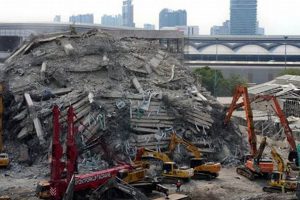



China’s rapid urbanization and construction boom have led to a surplus of vacant skyscrapers, a phenomenon known as “empty skyscrapers.” These unoccupied towers are primarily concentrated in smaller cities and less developed regions, where the supply of new housing has outpaced demand.
The presence of empty skyscrapers highlights the challenges associated with China’s urbanization process. Overbuilding and speculative investment have contributed to a glut of unsold properties, leading to concerns about the sustainability of the real estate market. Additionally, the vacancy of these buildings represents a waste of resources and a missed opportunity for providing affordable housing to those in need.
Addressing the issue of empty skyscrapers requires a multifaceted approach. Government policies aimed at regulating the real estate market, promoting affordable housing, and encouraging urban planning can help reduce the surplus of vacant properties. Additionally, exploring innovative uses for these buildings, such as converting them into affordable housing, community centers, or mixed-use developments, can help revitalize these structures and serve the needs of the local population.
1. Overbuilding

Overbuilding is a major contributing factor to the phenomenon of empty skyscrapers in China. The rapid construction of new housing has led to a surplus of unsold properties, which in turn has resulted in many vacant skyscrapers. This overbuilding is often driven by speculative investment, where investors purchase properties in the hopes of selling them for a profit in the future. However, when demand for housing does not keep pace with the supply, it can lead to a glut of unsold properties, as seen in the case of China’s empty skyscrapers.
The oversupply of housing units has had several negative consequences for China. First, it has led to a waste of resources, as many of these empty skyscrapers are left unused and unoccupied. Second, it has contributed to the formation of “ghost cities,” which are entire cities that have been built but remain largely empty. Third, it has raised concerns about the sustainability of China’s real estate market, as the oversupply of housing could lead to a decline in property values.
Addressing the issue of overbuilding requires a multifaceted approach. Government policies aimed at regulating the real estate market and promoting sustainable urban planning can help reduce the surplus of vacant properties. Additionally, exploring innovative uses for these buildings, such as converting them into affordable housing or community centers, can help revitalize these structures and serve the needs of the local population.
2. Speculative investment

Speculative investment has played a significant role in the development of China’s empty skyscrapers. Investors have purchased properties with the expectation of future price increases, which has further contributed to the oversupply of housing units. This speculative investment has been driven by several factors, including:
- Rapid urbanization: The rapid urbanization of China has led to a surge in demand for housing, which has attracted investors looking to profit from the rising property prices.
- Government policies: Government policies, such as loose credit and low interest rates, have made it easier for investors to obtain financing to purchase properties.
- Cultural factors: Cultural factors, such as the traditional Chinese preference for owning property, have also contributed to the speculative investment in real estate.
The oversupply of housing units caused by speculative investment has had several negative consequences for China, including:
- Wasted resources: Many of the empty skyscrapers are left unused and unoccupied, representing a waste of resources.
- Formation of “ghost cities”: Entire cities have been built but remain largely empty due to the oversupply of housing.
- Concerns about the sustainability of China’s real estate market: The oversupply of housing could lead to a decline in property values, which could have a negative impact on the Chinese economy.
Addressing the issue of speculative investment requires a multifaceted approach. Government policies aimed at regulating the real estate market and promoting sustainable urban planning can help reduce the surplus of vacant properties. Additionally, exploring innovative uses for these buildings, such as converting them into affordable housing or community centers, can help revitalize these structures and serve the needs of the local population.
3. Ghost cities

Ghost cities, a phenomenon closely tied to China’s empty skyscrapers, are entire cities that have been built with little or no population. These cities are often located in remote areas or in cities that have experienced a decline in population. The construction of ghost cities is often driven by speculative investment and overbuilding, and they represent a significant waste of resources.
- Economic implications: Ghost cities can have a negative impact on the local economy, as they often lack the infrastructure and economic activity to sustain themselves. This can lead to job losses and a decline in tax revenue.
- Social implications: Ghost cities can also have a negative impact on the social fabric of a community. The lack of population can lead to a sense of isolation and alienation, and it can make it difficult to provide essential services such as education and healthcare.
- Environmental implications: The construction of ghost cities can also have a negative impact on the environment. The clearing of land for development can lead to deforestation and habitat loss, and the construction of buildings can contribute to air and water pollution.
The phenomenon of ghost cities is a complex one, and there is no easy solution to the problem. However, by understanding the causes and consequences of ghost cities, we can begin to develop strategies to address this issue and prevent its recurrence in the future.
4. Wasted resources

Empty skyscrapers in China represent a significant waste of resources, including materials, energy, and land. The construction of these buildings requires vast amounts of raw materials, such as steel, concrete, and glass. The p
roduction and transportation of these materials contribute to environmental pollution and greenhouse gas emissions.
In addition to the materials used in construction, empty skyscrapers also consume a significant amount of energy. The lighting, heating, and cooling of these buildings can put a strain on local energy grids, especially in regions where energy resources are scarce. Furthermore, the construction of empty skyscrapers often involves the conversion of natural land into urban areas, which can lead to habitat loss and other environmental problems.
The waste of resources associated with empty skyscrapers is a major concern for China, as the country faces increasing pressure to reduce its environmental impact and conserve its natural resources. The government has implemented a number of policies aimed at reducing the construction of empty skyscrapers, including restrictions on land use and increased taxes on unoccupied buildings. However, more needs to be done to address this issue and ensure that China’s urban development is sustainable.
5. Missed opportunity

The presence of empty skyscrapers in China represents a missed opportunity to provide affordable housing and other much-needed community amenities. These vacant buildings could be converted into residential units, community centers, schools, or hospitals, helping to address the shortage of affordable housing and improve the quality of life for many people.
For example, in the city of Shenzhen, a number of empty skyscrapers have been converted into affordable housing units, providing much-needed shelter for low-income families. In the city of Chengdu, an empty skyscraper has been converted into a community center, offering a variety of services and activities for local residents. These are just a few examples of how empty skyscrapers can be repurposed to serve the needs of the community.
The conversion of empty skyscrapers into affordable housing and community amenities can have a number of benefits. First, it can help to address the shortage of affordable housing in China. Second, it can help to improve the quality of life for many people, by providing access to essential services and amenities. Third, it can help to revitalize declining urban areas, by bringing new life and activity to these areas.
6. Urban planning

Urban planning plays a crucial role in shaping the built environment and ensuring its sustainability. However, poor urban planning and a lack of coordination between developers and local governments have contributed to the problem of empty skyscrapers in China.
- Inadequate land use planning: Local governments may approve the construction of skyscrapers without carefully considering the demand for such buildings or the impact they will have on the surrounding area. This can lead to an oversupply of housing units and commercial space, resulting in empty skyscrapers.
- Lack of infrastructure planning: The construction of skyscrapers often outpaces the development of, such as transportation, water, and energy. This can make it difficult to attract tenants to these buildings, leading to vacancies.
- Poor coordination between developers and local governments: Developers may be more focused on short-term profits than on the long-term sustainability of their projects. This can lead to the construction of poorly designed buildings that do not meet the needs of the community.
- Lack of public participation: Local governments may not adequately involve the public in the planning process. This can lead to the development of projects that do not reflect the needs of the community, resulting in empty skyscrapers.
Addressing the issue of poor urban planning requires a multifaceted approach. Local governments need to improve their land use planning and infrastructure planning processes. They also need to, ensuring that new developments are in line with the needs of the community. Finally, local governments need to increase public participation in the planning process, ensuring that the voices of residents are heard.
7. Economic concerns
The oversupply of empty skyscrapers in China is a major concern for the country’s economy. The construction of these buildings has led to a glut in the housing market, which has caused prices to fall and made it difficult for developers to sell new properties. This has had a ripple effect on the entire real estate sector, leading to a decline in investment and economic growth.
In addition, the empty skyscrapers represent a waste of resources. The construction of these buildings requires vast amounts of energy and materials, which could have been used for other purposes. The vacancy of these buildings also means that they are not generating any income, which is a further drain on the economy.
The oversupply of empty skyscrapers is a serious problem that is having a negative impact on China’s economy. The government is taking steps to address the issue, but it will take time for the market to recover. In the meantime, the empty skyscrapers serve as a reminder of the dangers of overbuilding and the importance of sustainable urban planning.
8. Social issues
Vacant buildings, including empty skyscrapers in China, are often associated with increased social problems, such as crime and vandalism. These issues arise due to several factors:
- Increased opportunities for criminal activity: Empty buildings provide secluded spaces for individuals to engage in illegal activities, such as drug use, prostitution, and petty theft. The lack of activity and surveillance around these buildings makes them attractive to criminals.
- Attraction for vagrants and homeless individuals: Vacant buildings offer shelter and protection from the elements for vagrants and homeless individuals. However, their presence can lead to increased crime rates and a sense of insecurity in the surrounding area.
- Deterioration of the neighborhood: Vacant buildings can become eyesores that detract from the overall appearance of a neighborhood. This decline in aesthetics can lead to a decrease in property values and a reduction in the quality of life for residents.
- Reduced sense of community: Vacant buildings can disrupt the continuity of a neighborhood and create a sense of isolation among residents. The lack of activity and interaction around these buildings can weaken the social fabric of the community.
The presence of empty skyscrapers in China not only represents a waste of resources but also contributes to social problems that affect the well-being of communities. Addressing the issue of vacant buildings requires a comprehensive approach involving urban planning, community engagement, and social programs to revitalize these structures and prevent their negative impacts on society.
9. Environmental impact
China’s empty skyscrapers, in addition to their economic and social implications, also have a significant environmental impact. The construction and maintenance of these buildings contribute to environmental degradation in several ways:
- Resource consumption: The construction of skyscrapers requires vast amounts of raw materials, including steel, concrete, and glass. The production and transportation of these materials can lead to deforestation, air pollution, and water pollution.
- Energy consumption: Skyscrapers consume a significant amount of energy, both during construction and operation. The lighting, heating, and cooling of these buildings can put a strain on local energy grids, especially in regions where energy resources are scarce.
- Waste generation: The construction and demolition of skyscrapers generate large amounts of waste. This waste can include hazardous materials, such as asbestos and lead, which can pose a threat to human health and the environment.
- Urban heat island effect: Skyscrapers can contribute to the urban heat island effect, which is a phenomenon where the temperature of a city is significantly higher than the surrounding rural areas. This effect is caused by the absorption of heat by buildings and the release of heat from air conditioning systems.
The environmental impact of empty skyscrapers is a major concern, as it contributes to climate change, air pollution, and other environmental problems. It is important to find ways to reduce the environmental impact of these buildings, such as by using sustainable building materials and practices, and by promoting the reuse of existing buildings.
FAQs on China’s Empty Skyscrapers
This section addresses frequently asked questions and misconceptions surrounding the phenomenon of empty skyscrapers in China, providing concise and informative answers.
Question 1: What are the primary causes of empty skyscrapers in China?
The emergence of empty skyscrapers in China can be attributed to several factors, including rapid urbanization, speculative investment, overbuilding, and poor urban planning.
Question 2: What are the economic implications of empty skyscrapers?
Empty skyscrapers represent a significant waste of resources and can negatively impact the sustainability of China’s real estate market, leading to concerns about economic growth.
Question 3: What social issues are associated with empty skyscrapers?
Vacant buildings, including empty skyscrapers, can contribute to social problems such as increased crime rates, decreased sense of community, and a decline in the overall quality of life for residents.
Question 4: What environmental concerns arise from empty skyscrapers?
The construction and maintenance of empty skyscrapers have significant environmental impacts, including resource consumption, energy waste, and the exacerbation of the urban heat island effect.
Question 5: What measures are being taken to address the issue of empty skyscrapers?
The Chinese government has implemented policies to regulate the real estate market, promote affordable housing, and encourage sustainable urban planning to reduce the construction of empty skyscrapers.
Question 6: What can be done to repurpose empty skyscrapers?
Empty skyscrapers can be revitalized by converting them into affordable housing units, community centers, schools, or hospitals, addressing the shortage of essential amenities and improving the quality of life for many.
In conclusion, the phenomenon of empty skyscrapers in China highlights the challenges associated with rapid urbanization and the importance of sustainable urban development and economic growth.
Transition: Exploring innovative solutions to address empty skyscrapers is crucial for fostering sustainable urban environments in China and beyond.
Tips to Address Empty Skyscrapers in China
The issue of empty skyscrapers in China requires innovative and comprehensive solutions. Here are several tips to tackle this challenge:
Tip 1: Implement stricter regulations on real estate development: Local governments should establish stricter regulations to control the construction of new skyscrapers. This can include limiting the number of building permits issued, increasing taxes on unoccupied buildings, and requiring developers to provide affordable housing options.
Tip 2: Promote sustainable urban planning: Urban planning should prioritize mixed-use developments, green spaces, and public transportation to create livable and sustainable cities. This approach can reduce the need for excessive skyscraper construction and promote a more balanced urban environment.
Tip 3: Encourage the conversion of empty skyscrapers: Local governments can offer incentives and support to developers who convert empty skyscrapers into affordable housing, community centers, or other public facilities. This helps address the shortage of affordable housing and revitalizes vacant buildings.
Tip 4: Foster innovation and adaptive reuse: Encourage architects and developers to explore innovative designs and adaptive reuse strategies to transform empty skyscrapers into sustainable and functional spaces. This can involve repurposing buildings for co-working spaces, vertical farming, or renewable energy installations.
Tip 5: Promote public-private partnerships: Local governments can collaborate with private developers and investors to create joint ventures for the redevelopment of empty skyscrapers. Public-private partnerships can leverage resources and expertise to bring about innovative and cost-effective solutions.
Tip 6: Enhance public engagement and community involvement: Engage local communities in the planning and decision-making processes related to empty skyscrapers. This ensures that redevelopment projects align with the needs and aspirations of the people who live and work in the area.
Tip 7: Explore international best practices: Study and learn from successful examples of skyscraper repurposing and urban revitalization in other countries. This can provide valuable insights and lessons that can be adapted to the Chinese context.
Tip 8: Implement a comprehensive data and monitoring system: Establish a robust data collection and monitoring system to track the progress of empty skyscraper redevelopment efforts. This data can inform policy decisions, identify challenges, and measure the effectiveness of implemented solutions.
By implementing these tips, China can effectively address the issue of empty skyscrapers, transform vacant buildings into valuable assets, and promote sustainable urban development.
Summary: Addressing the phenomenon of empty skyscrapers in China requires a multifaceted approach involving stricter regulations, sustainable urban planning, innovative reuse strategies, public-private partnerships, and community engagement. By implementing these tips, China can revitalize its, provide affordable housing, and create a more sustainable and livable urban environment for its citizens.
Conclusion
The phenomenon of empty skyscrapers in China is a complex issue with far-reaching implications for the country’s economy, social fabric, and environmental sustainability. This article delved into the underlying causes and consequences of this i
ssue, providing insights into its multifaceted nature.
To effectively address the challenge of empty skyscrapers, a comprehensive approach is necessary. This includes implementing stricter regulations on real estate development, promoting sustainable urban planning, and encouraging the conversion of vacant buildings into affordable housing or community amenities. Additionally, fostering innovation, public-private partnerships, and community involvement is crucial for finding creative and sustainable solutions.
As China continues to urbanize, it is imperative to learn from past mistakes and adopt proactive measures to prevent the proliferation of empty skyscrapers. By embracing sustainable urban development practices and implementing innovative reuse strategies, China can transform its vacant buildings into valuable assets that contribute to the well-being of its citizens and the long-term prosperity of its cities.