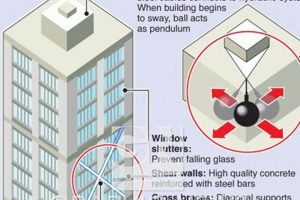



Concrete skyscrapers are tall buildings with a structural frame made of reinforced concrete. Reinforced concrete is a composite material made of concrete, which is a mixture of cement, sand, gravel, and water, and steel reinforcement bars. The steel reinforcement bars are embedded in the concrete and provide additional strength and support. Concrete skyscrapers are typically built using a slipform construction method, where the concrete is poured into a form that is raised as the building progresses.
Concrete skyscrapers have a number of advantages over other types of buildings. They are relatively inexpensive to build, they are fire-resistant, and they can be built to very tall heights. Some of the tallest buildings in the world are concrete skyscrapers, including the Burj Khalifa in Dubai, which is the tallest building in the world at 828 meters (2,717 feet) tall.
This type of structure has been around for over a century and has been used in the construction of some of the world’s most iconic buildings. It is a versatile and durable material that can be used to create a wide variety of architectural styles. While concrete skyscrapers have some disadvantages, such as their weight and the need for regular maintenance, their advantages make them a popular choice for builders around the world.
1. Strength

The strength of concrete skyscrapers is one of their most important features. Concrete is a very strong material, and when it is reinforced with steel, it becomes even stronger. This makes concrete skyscrapers able to withstand high winds, earthquakes, and other forces. This same strength also allows concrete skyscrapers to be built to very tall heights.
- Compressive strength: Concrete is very strong in compression, which means that it can withstand forces that push it together. This is important for concrete skyscrapers, as they must be able to support the weight of the building and its occupants.
- Tensile strength: Concrete is not as strong in tension, which means that it can be pulled apart. However, when concrete is reinforced with steel, its tensile strength is greatly increased. This makes concrete skyscrapers able to withstand forces that pull them apart, such as wind and earthquakes.
- Shear strength: Concrete is also strong in shear, which means that it can withstand forces that slide it sideways. This is important for concrete skyscrapers, as they must be able to withstand the forces of wind and earthquakes.
- Flexural strength: Concrete is also strong in flexure, which means that it can withstand forces that bend it. This is important for concrete skyscrapers, as they must be able to withstand the forces of wind and earthquakes.
The strength of concrete skyscrapers makes them a popular choice for builders around the world. Concrete skyscrapers are used in a variety of applications, including residential, commercial, and industrial buildings. They are also used in the construction of bridges, tunnels, and other structures.
2. Durability

The durability of concrete skyscrapers is one of their most important features. Concrete is a very durable material, and when it is reinforced with steel, it becomes even more durable. This makes concrete skyscrapers able to withstand the elements and last for many years.
- Resistance to weathering: Concrete is resistant to weathering, which means that it can withstand the effects of wind, rain, snow, and ice. This is important for concrete skyscrapers, as they are often exposed to these elements.
- Resistance to fire: Concrete is also resistant to fire, which means that it can withstand high temperatures without burning. This is important for concrete skyscrapers, as they are often used in areas where there is a risk of fire.
- Resistance to corrosion: Concrete is also resistant to corrosion, which means that it can withstand the effects of chemicals and salt. This is important for concrete skyscrapers, as they are often exposed to these elements.
- Resistance to abrasion: Concrete is also resistant to abrasion, which means that it can withstand the effects of wear and tear. This is important for concrete skyscrapers, as they are often used in areas with high traffic.
The durability of concrete skyscrapers makes them a popular choice for builders around the world. Concrete skyscrapers are used in a variety of applications, including residential, commercial, and industrial buildings. They are also used in the construction of bridges, tunnels, and other structures.
3. Fire resistance

Fire resistance is an important consideration for any building, but it is especially important for concrete skyscrapers. Concrete is a non-combustible material, which means that it will not burn. This makes concrete skyscrapers much more resistant to fire than buildings made from other materials, such as wood or steel. In the event of a fire, concrete skyscrapers are less likely to collapse, and they will provide more time for occupants to evacuate.
The fire resistance of concrete skyscrapers is due to the unique properties of concrete. Concrete is a cementitious material, which means that it is made from a mixture of cement, sand, and gravel. When concrete is exposed to heat, the cement undergoes a chemical reaction that causes it to harden and become even stronger. This makes concrete skyscrapers very resistant to fire. The amount of fire resistance provided by concrete depends on the thickness of the concrete and the type of concrete used. However, even relatively thin concrete walls can provide significant fire resistance.
The fire resistance of concrete skyscrapers has been demonstrated in numerous real-world fires. For example, during the 9/11 attacks, the concrete core of the World Trade Center towers provided significant fire resistance, allowing many people to evacuate before the towers collapsed. Similarly, during the 2005 Windsor Tower fire in Madrid, the concrete structure of the building prevented the fire from spreading to other parts of the building, and all of the occupants were able to evacuate safely.
The fire resistance of concrete skyscrapers is a key reason why they are so popular for use in high-rise buildings. Concrete skyscrapers provide a high level of safety for occupants in the event of a fire, and they can help to protect property and infrastructure.
4. Cost

The cost of concrete skys
crapers is a complex issue that depends on a number of factors, including the size and complexity of the building, the location, and the cost of labor and materials. However, there are some general trends that can be observed.
- Initial cost: The initial cost of constructing a concrete skyscraper is typically higher than the initial cost of constructing a building of a similar size made from other materials, such as steel or wood. This is due to the fact that concrete is a more expensive material and it takes longer to construct a concrete building.
- Maintenance cost: The maintenance cost of a concrete skyscraper is typically lower than the maintenance cost of a building of a similar size made from other materials. This is due to the fact that concrete is a very durable material and it does not require as much maintenance as other materials.
- Life cycle cost: The life cycle cost of a concrete skyscraper is typically lower than the life cycle cost of a building of a similar size made from other materials. This is due to the fact that concrete skyscrapers have a longer lifespan than buildings made from other materials.
Overall, the cost of concrete skyscrapers is a complex issue that depends on a number of factors. However, there are some general trends that can be observed. Concrete skyscrapers typically have a higher initial cost than buildings made from other materials, but they have a lower maintenance cost and a longer lifespan. This makes concrete skyscrapers a more cost-effective option in the long run.
5. Maintenance

Maintenance is an important consideration for any building, but it is especially important for concrete skyscrapers. Concrete is a durable material, but it is not indestructible. Over time, concrete can deteriorate due to exposure to the elements, wear and tear, and other factors. This deterioration can lead to structural problems, safety hazards, and other issues. Regular maintenance is essential to keep concrete skyscrapers in good condition and to prevent these problems from developing.
There are a number of different maintenance tasks that need to be performed on concrete skyscrapers. These tasks include cleaning, inspection, repair, and replacement. Cleaning is important to remove dirt, debris, and other contaminants from the concrete surfaces. Inspection is important to identify any signs of damage or deterioration. Repair is important to fix any damage that is found. Replacement is important to replace any concrete components that have become too damaged to repair.
The frequency of maintenance tasks will vary depending on the specific building and its environment. However, it is generally recommended to perform a thorough inspection of a concrete skyscraper at least once a year. More frequent inspections may be necessary in areas with harsh weather conditions or high levels of pollution. Repairs should be made as soon as possible after any damage is discovered. Replacement should be considered if the damage is too severe to repair.
Regular maintenance is essential to keep concrete skyscrapers in good condition and to prevent problems from developing. By following a regular maintenance schedule, building owners can help to ensure that their concrete skyscrapers remain safe and functional for many years to come.
6. Height

Concrete skyscrapers are known for their height. They are some of the tallest buildings in the world, with some reaching over 500 meters (1,640 feet) tall. This height is made possible by the strength and durability of concrete. Concrete is a very strong material that can withstand the weight of a tall building. It is also very durable, meaning that it can withstand the elements and last for many years.
- Structural Support
The height of concrete skyscrapers is made possible by the structural support provided by the concrete frame. The concrete frame is a network of columns and beams that support the weight of the building. The columns are vertical members that transfer the weight of the building to the ground. The beams are horizontal members that connect the columns and provide lateral support. The concrete frame is designed to withstand the forces of gravity, wind, and earthquakes.
- Wind Resistance
Concrete skyscrapers are also able to withstand high winds. The concrete frame provides a strong and stable structure that can resist the forces of wind. The smooth surface of concrete also helps to reduce wind resistance. This makes concrete skyscrapers ideal for use in areas with high winds, such as coastal areas and tall mountains.
- Fire Resistance
Concrete skyscrapers are also fire resistant. Concrete is a non-combustible material, which means that it will not burn. This makes concrete skyscrapers less likely to collapse in a fire. The concrete frame also provides a barrier that can help to prevent the spread of fire.
- Seismic Resistance
Concrete skyscrapers are also able to withstand earthquakes. The concrete frame is a very strong and stable structure that can resist the forces of an earthquake. The concrete also helps to absorb the energy of an earthquake, which can help to prevent the building from collapsing.
The height of concrete skyscrapers is a testament to the strength and durability of concrete. Concrete skyscrapers are able to withstand the forces of gravity, wind, fire, and earthquakes. This makes them an ideal choice for use in a variety of applications, including residential, commercial, and industrial buildings.
7. Design

Design plays a crucial role in the development and construction of concrete skyscrapers. It encompasses various aspects that contribute to the overall functionality, aesthetics, and sustainability of these towering structures.
- Structural Design
The structural design of concrete skyscrapers is paramount to ensure their stability and safety. Engineers carefully calculate the distribution of weight and forces acting on the building, determining the optimal arrangement of concrete elements such as columns, beams, and slabs. This design ensures that the skyscraper can withstand gravitational forces, wind loads, and seismic activity.
- Architectural Design
Architectural design focuses on the aesthetic and functional aspects of concrete skyscrapers. Architects explore innovative ways to shape and form concrete, creating visually striking and iconic structures. They consider factors such as the building’s height, shape, faade, and interior layout to create spaces that are both functional and visually appealing.
- Environmental Design
Environmental design principles are increasingly incorporated into concrete skyscraper design. Architects and engineers strive to minimize the environmental impact of these buildings by employing sustainable practices. This includes optimizing energy efficiency through insulation, utilizing renewable energy sources, and incorporating green spaces to improve air quality and reduce the urban heat island effect.
- Construction Design
Construction des
ign involves the planning and execution of the skyscraper’s construction process. Engineers and contractors collaborate to develop efficient and safe methods for erecting these massive structures. They consider factors such as material handling, formwork systems, and sequencing of construction activities to ensure the timely and successful completion of the project.
The interplay of these design facets shapes the form and function of concrete skyscrapers, contributing to their resilience, aesthetics, and sustainability. By integrating innovative design approaches, architects, engineers, and contractors continue to push the boundaries of what is possible with concrete skyscrapers, creating iconic landmarks that enhance our cities and skylines.
FAQs about Concrete Skyscrapers
Concrete skyscrapers are an architectural marvel, offering strength, durability, and design flexibility. Here are answers to some frequently asked questions about these towering structures:
Question 1: Are concrete skyscrapers safe?
Answer: Yes, concrete skyscrapers are generally very safe. Concrete is a fire-resistant and durable material, and the structural design of these buildings ensures their stability and resistance to earthquakes and high winds.
Question 2: Are concrete skyscrapers expensive to build?
Answer: The cost of constructing a concrete skyscraper can vary depending on factors such as height, design complexity, and location. However, concrete skyscrapers can be cost-effective in the long run due to their durability and low maintenance requirements.
Question 3: How tall can concrete skyscrapers be built?
Answer: The height of concrete skyscrapers is limited by engineering and technological advancements. Currently, the tallest concrete skyscraper is the Central Park Tower in New York City, standing at 472 meters (1,550 feet) tall.
Question 4: Are concrete skyscrapers environmentally friendly?
Answer: While concrete production can have an environmental impact, modern construction techniques and sustainable design practices can minimize this impact. Concrete skyscrapers can be designed to be energy-efficient and incorporate green features, such as rainwater harvesting systems and solar panels.
Question 5: Do concrete skyscrapers require a lot of maintenance?
Answer: Concrete skyscrapers generally require less maintenance compared to buildings made from other materials. Concrete is durable and resistant to weathering, reducing the need for frequent repairs or replacements.
Question 6: What are some iconic concrete skyscrapers?
Answer: Notable concrete skyscrapers around the world include the Burj Khalifa in Dubai (tallest building in the world), the Shanghai Tower in China, and the One World Trade Center in New York City.
In conclusion, concrete skyscrapers are safe, durable, and versatile structures that continue to shape skylines worldwide. With ongoing advancements in design and construction techniques, the future of concrete skyscrapers holds exciting possibilities for architectural innovation and sustainable urban development.
Transition to the next article section…
Tips for Designing and Constructing Concrete Skyscrapers
Concrete skyscrapers are complex structures that require careful planning and execution to ensure their safety, durability, and functionality. Here are some essential tips for designing and constructing concrete skyscrapers:
Tip 1: Prioritize Structural Stability
The structural design of a concrete skyscraper is paramount to its stability and safety. Engineers should carefully calculate the distribution of weight and forces acting on the building and design a structural system that can withstand these forces effectively. This includes designing robust columns, beams, and slabs, as well as considering the potential for seismic activity and high winds.
Tip 2: Utilize High-Performance Concrete
The quality of concrete used in a skyscraper significantly impacts its strength and durability. High-performance concrete mixes, such as those incorporating supplementary cementitious materials and fibers, enhance the concrete’s strength, durability, and resistance to environmental factors. This can lead to a longer lifespan and reduced maintenance costs.
Tip 3: Implement Sustainable Design Practices
Sustainable design practices can be integrated into concrete skyscraper construction to minimize environmental impact and promote energy efficiency. This includes using recycled materials, incorporating green spaces, optimizing energy consumption through insulation and efficient lighting, and utilizing renewable energy sources such as solar panels.
Tip 4: Focus on Fire Safety
Concrete is inherently fire-resistant, but additional measures can be taken to enhance fire safety in concrete skyscrapers. This includes installing fire-rated doors and windows, implementing sprinkler systems, and designing compartmentalized spaces to contain the spread of fire.
Tip 5: Consider Long-Term Maintenance
Concrete skyscrapers are generally low-maintenance structures, but regular inspections and maintenance are necessary to ensure their continued safety and performance. Proper maintenance includes cleaning and sealing concrete surfaces, monitoring for cracks or damage, and addressing any issues promptly to prevent further deterioration.
Tip 6: Collaborate with Experienced Professionals
Designing and constructing concrete skyscrapers is a complex undertaking that requires the involvement of experienced professionals, including architects, engineers, and contractors. Collaboration among these professionals is crucial to ensure that the project is executed smoothly and meets all safety, functional, and aesthetic requirements.
By following these tips, architects, engineers, and contractors can design and construct concrete skyscrapers that are safe, durable, sustainable, and aesthetically pleasing. These towering structures will continue to shape skylines and provide valuable spaces for living, working, and recreation for generations to come.
Transition to the article’s conclusion…
Conclusion
Concrete skyscrapers, with their inherent strength, durability, and design flexibility, have transformed the skylines of cities worldwide. Their ability to withstand various environmental forces and provide safe and functional spaces has made them a preferred choice for architects and engineers. This article has explored the key aspects of concrete skyscrapers, from their structural design to construction techniques and environmental considerations.
As technology continues to advance, the future of concrete skyscrapers holds exciting possibilities. Sustainable design practices, innovative construction methods, and the use of high-performance materials will further enhance the safety, energy efficiency, and aesthetic appeal of these iconic structures. Concrete skyscrapers will undoubtedly continue to shape the urban landscape, providing resilient and sustainable spaces for living, working, and recreation for generations to come.