


China is home to some of the world’s tallest and most iconic skyscrapers. However, these buildings are also susceptible to shaking, which can be caused by a variety of factors, including wind, earthquakes, and even human activity.
Skyscraper shaking can have a number of negative consequences, including damage to the building itself, injuries to occupants, and even death. In some cases, skyscraper shaking can also lead to the collapse of the building.The importance of understanding skyscraper shaking cannot be overstated. By understanding the causes and effects of skyscraper shaking, we can take steps to mitigate the risks and protect people and property.
There are a number of different ways to mitigate the risks of skyscraper shaking. These include:
- Using wind-resistant design features
- Installing seismic dampers
- Upgrading building codes
- Educating occupants about earthquake safety
By taking these steps, we can help to ensure that skyscrapers are safe and habitable, even in areas that are prone to earthquakes and other natural disasters.
1. Causes: Wind, earthquakes, human activity
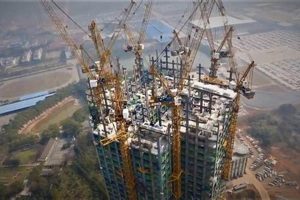
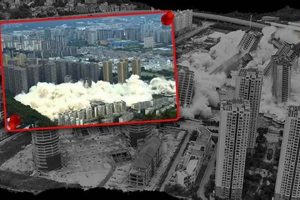
Skyscrapers in China are susceptible to shaking caused by a variety of factors, including wind, earthquakes, and human activity. Wind can cause skyscrapers to sway, which can damage the building and injure occupants. Earthquakes can cause skyscrapers to collapse, which can result in widespread injuries and death. Human activity, such as construction and demolition, can also cause skyscrapers to shake.
It is important to understand the causes of skyscraper shaking in order to mitigate the risks. Wind-resistant design features can be used to reduce the amount of sway caused by wind. Seismic dampers can be installed to reduce the amount of shaking caused by earthquakes. Building codes can be upgraded to ensure that skyscrapers are built to withstand earthquakes and other natural disasters. Occupants can be educated about earthquake safety so that they know what to do in the event of an earthquake.
By understanding the causes of skyscraper shaking and taking steps to mitigate the risks, we can help to ensure that skyscrapers are safe and habitable, even in areas that are prone to earthquakes and other natural disasters.
2. Consequences: Damage to building, injuries, death
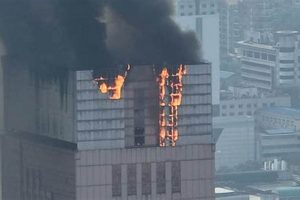
Skyscraper shaking can have a number of negative consequences, including damage to the building itself, injuries to occupants, and even death.
- Structural damage: Skyscraper shaking can cause structural damage to the building, including cracks in the walls, damage to the foundation, and even collapse. This damage can be expensive to repair and can make the building unsafe for occupants.
- Injuries to occupants: Skyscraper shaking can also cause injuries to occupants, including cuts, bruises, and broken bones. In some cases, skyscraper shaking can even be fatal.
- Death: In the most severe cases, skyscraper shaking can lead to the death of occupants. This can happen if the building collapses or if occupants are injured by falling debris.
The consequences of skyscraper shaking can be devastating. It is important to understand the risks and take steps to mitigate them. By understanding the causes of skyscraper shaking and taking steps to mitigate the risks, we can help to ensure that skyscrapers are safe and habitable, even in areas that are prone to earthquakes and other natural disasters.
3. Mitigation: Wind-resistant design, seismic dampers, building codes, occupant education
Skyscraper shaking is a serious problem in China, but there are a number of mitigation strategies that can be employed to reduce the risks. These strategies include:
- Wind-resistant design features: These features can help to reduce the amount of sway caused by wind. Some common wind-resistant design features include:
- Tapered towers
- setbacks
- aerodynamic fins
- Seismic dampers: These devices can help to reduce the amount of shaking caused by earthquakes. Some common types of seismic dampers include:
- Tuned mass dampers
- Viscous dampers
- Friction dampers
- Building codes: Building codes can be upgraded to ensure that skyscrapers are built to withstand earthquakes and other natural disasters. Building codes typically specify the minimum requirements for structural design, materials, and construction methods.
- Occupant education: Occupants can be educated about earthquake safety so that they know what to do in the event of an earthquake. This education can help to reduce the number of injuries and deaths that occur during earthquakes.
These mitigation strategies are essential for reducing the risks of skyscraper shaking in China. By implementing these strategies, we can help to ensure that skyscrapers are safe and habitable, even in areas that are prone to earthquakes and other natural disasters.
Challenges: One of the challenges in mitigating skyscraper shaking is the cost. Wind-resistant design features, seismic dampers, and building code upgrades can all be expensive to implement. However, the cost of mitigation is far less than the cost of repairing or replacing a damaged skyscraper. Another challenge is the need for cooperation between architects, engineers, and contractors. In order to effectively mitigate skyscraper shaking, all of these parties must work together to design and construct buildings that are safe and resilient.
Conclusion: Skyscraper shaking is a serious problem in China, but it can be mitigated through the use of wind-resistant design features, seismic dampers, building codes, and occupant education. These mitigation strategies can help to ensure that skyscrapers are safe and habitable, even in areas that are prone to earthquakes and other natural disasters.
4. Importance: Safety, habitability
Skyscrapers are an important part of the modern urban landscape, providing space for businesses, residences, and other activities. However, skyscrapers are also susceptible to shaking, which can pose a serious threat to safety and habitability.
- Structural integrity
Skyscrapers are designed to withstand a certain amount of shaking, but excessive shaking can damage the structural integrity of the building. This damage can lead to the collapse of the building, which can result in widespread injuries and death.
- Occupant safety
Skyscraper shaking can also cause injuries to occupants, even if the building does not collapse. Occupants can be injured by falling objects, broken glass, or other hazards. In some cases, skyscraper shaking can even lead to death.
- Psychological impact
Skyscraper shaking can also have a negative psychological impact on occupants. Occupants may feel anxious, stressed, or even traumatized after experiencing a skyscraper earthquake. This can lead to decreased productivity, absenteeism, and other problems.
- Economic impact
Skyscraper shaking can also have a significant economic impact. The cost of repairing or replacing a damaged skyscra
per can be enormous. In addition, skyscraper shaking can disrupt businesses and lead to lost productivity.
The importance of safety and habitability in relation to china skyscraper shaking cannot be overstated. Skyscrapers are essential to the modern urban landscape, but they must be designed and constructed to withstand shaking in order to protect the safety and well-being of occupants.
5. Examples: Shanghai Tower, Ping An Finance Centre
The Shanghai Tower and Ping An Finance Centre are two of the tallest skyscrapers in China, and both have been designed to withstand shaking. The Shanghai Tower is equipped with a tuned mass damper, which is a device that helps to reduce the amount of sway caused by wind. The Ping An Finance Centre has a unique structural design that helps to dissipate energy from earthquakes. These two buildings are examples of how skyscrapers in China are being designed to withstand shaking.
It is important to understand the connection between skyscrapers and shaking in China because earthquakes are a common occurrence in the country. In fact, China is home to some of the most seismically active regions in the world. As a result, it is essential that skyscrapers in China are designed to withstand shaking in order to protect the safety of occupants. The Shanghai Tower and Ping An Finance Centre are two examples of how skyscrapers in China are being designed to withstand shaking.
The connection between skyscrapers and shaking in China is a complex one. However, it is an important one to understand in order to ensure the safety of occupants. By understanding the causes of shaking and the design features that can be used to mitigate shaking, we can help to ensure that skyscrapers in China are safe and habitable, even in areas that are prone to earthquakes.
6. Research: Ongoing research to improve understanding and mitigation techniques
Research is ongoing to improve our understanding of skyscraper shaking in China and to develop more effective mitigation techniques.
- Structural engineering
Researchers are studying the structural behavior of skyscrapers under shaking conditions. This research is helping to identify the factors that contribute to skyscraper shaking and to develop new design features that can reduce shaking.
- Earthquake engineering
Researchers are also studying the behavior of earthquakes in China. This research is helping to identify the types of earthquakes that are most likely to cause skyscraper shaking and to develop new earthquake-resistant design features.
- Materials science
Researchers are developing new materials that can be used to construct skyscrapers that are more resistant to shaking. These materials include high-strength concrete, steel, and composite materials.
- Computer modeling
Researchers are using computer models to simulate skyscraper shaking. These models are helping to identify the most effective ways to mitigate shaking and to design skyscrapers that are more resistant to earthquakes.
This research is essential for improving the safety of skyscrapers in China. By understanding the causes of skyscraper shaking and developing new mitigation techniques, we can help to ensure that skyscrapers are safe and habitable, even in areas that are prone to earthquakes.
7. Regulations: Government regulations to ensure building safety
Government regulations play a crucial role in ensuring building safety in the context of china skyscraper shaking. These regulations establish minimum standards for the design, construction, and maintenance of skyscrapers to mitigate risks associated with shaking, primarily caused by earthquakes and strong winds. By enforcing these regulations, authorities aim to safeguard the well-being of occupants and the integrity of these structures.
Building codes and standards are fundamental components of government regulations. They outline specific requirements for structural design, materials, and construction practices to ensure that skyscrapers can withstand anticipated seismic and wind forces. These codes are regularly updated based on scientific research and lessons learned from past events, incorporating the latest advancements in earthquake engineering and wind-resistant design.
The practical significance of government regulations in mitigating china skyscraper shaking is evident in real-life examples. In the aftermath of the 1976 Tangshan earthquake, China revised its building codes to enhance the seismic resistance of structures. As a result, newer skyscrapers constructed after this event have demonstrated improved performance during subsequent earthquakes, reducing the risk of collapse and injuries.
Furthermore, regulations promote innovation and collaboration within the construction industry. By setting clear performance objectives, regulations encourage engineers and architects to develop creative solutions that meet or exceed safety standards. This fosters a culture of continuous improvement, driving advancements in construction technologies and materials.
In conclusion, government regulations are a critical component of china skyscraper shaking mitigation strategies. They establish minimum safety standards, promote innovation, and provide a framework for ensuring the structural integrity of skyscrapers. By adhering to these regulations, authorities and construction professionals contribute to creating a built environment that is both safe and resilient to the challenges posed by shaking.
FAQs on China Skyscraper Shaking
This section addresses frequently asked questions and misconceptions surrounding china skyscraper shaking, providing clear and informative answers to enhance understanding of this topic.
Question 1: Are skyscrapers in China safe from earthquakes?
Answer: China has implemented stringent building codes and regulations to ensure the safety of skyscrapers in earthquake-prone areas. Modern skyscrapers are designed to withstand significant seismic forces, incorporating advanced engineering techniques and materials to minimize the risk of collapse and protect occupants.
Question 2: Can wind cause skyscrapers to shake?
Answer: Yes, strong winds can cause skyscrapers to sway or vibrate. However, skyscrapers are designed with wind-resistant features such as tapered shapes, setbacks, and aerodynamic fins to reduce the impact of wind forces and maintain structural stability.
Question 3: What are the consequences of skyscraper shaking?
Answer: Skyscraper shaking can have several consequences, including structural damage to the building, injuries to occupants from falling objects or broken glass, and psychological distress. In extreme cases, severe shaking can lead to building collapse and loss of life.
Question 4: How is skyscraper shaking mitigated?
Answer: Mitigation strategies include incorporating wind-resistant design features, installing seismic dampers to absorb and dissipate energy during earthquakes, upgrading building codes to reflect the latest engineering knowledge, and educating occupants on earthquake safety protocols.
Question 5: Are there any examples of skyscrapers in China that have withstood major earthquakes?
Answer: Yes, the Shanghai Tower and Ping An Finance Centre are notable examples of skyscrapers in China that have successfully withstood major earthquakes. These buildings showcase the effectiveness of modern earthquake-resistant design and construction practices.
Question 6: What is the fut
ure of skyscraper construction in China in relation to earthquake safety?
Answer: China continues to invest in research and development to enhance the seismic resilience of skyscrapers. Advanced technologies such as base isolation systems and active control systems are being explored to further mitigate the effects of earthquakes on these structures.
In summary, skyscrapers in China are designed and constructed to withstand shaking from earthquakes and strong winds. Ongoing research and advancements in engineering practices contribute to the safety and resilience of these structures. By addressing common concerns and providing factual information, this FAQ section aims to increase understanding and dispel misconceptions about china skyscraper shaking.
Transition to the next article section: This concludes the FAQ section on china skyscraper shaking. The following section will delve into the historical context and significance of this topic.
Tips for Mitigating China Skyscraper Shaking
Understanding skyscraper shaking in China is crucial for ensuring the safety and well-being of occupants. Here are several essential tips to mitigate the risks associated with skyscraper shaking:
Tip 1: Implement Wind-Resistant Design Features
Incorporate aerodynamic shapes, setbacks, and fins into the skyscraper’s design to reduce wind-induced vibrations and enhance stability.Tip 2: Install Seismic Dampers
Install tuned mass dampers or viscous dampers to absorb and dissipate earthquake energy, reducing the amount of shaking transferred to the building.Tip 3: Upgrade Building Codes
Adhere to the latest building codes and standards that reflect advancements in earthquake engineering and wind-resistant design. Regularly update codes based on research and lessons learned from past events.Tip 4: Educate Occupants on Earthquake Safety
Provide occupants with clear instructions on earthquake safety protocols, including evacuation procedures, safe zones within the building, and emergency contact information.Tip 5: Monitor and Maintain Skyscrapers
Regularly inspect and maintain skyscrapers, including structural components, mechanical systems, and emergency, to ensure they are in good working order and can withstand potential seismic events.Tip 6: Promote Collaboration and Innovation
Foster collaboration between engineers, architects, and construction professionals to share knowledge, explore innovative solutions, and drive continuous improvements in skyscraper design and construction practices.Tip 7: Invest in Research and Development
Support ongoing research and development in earthquake engineering and wind-resistant technologies to enhance the understanding of skyscraper behavior under dynamic loads and develop more effective mitigation strategies.Tip 8: Enforce Government Regulations
Implement and enforce stringent government regulations to ensure that skyscrapers meet minimum safety standards and incorporate appropriate mitigation measures to withstand shaking.
By following these tips, stakeholders can contribute to the safety and resilience of skyscrapers in China, minimizing the risks associated with shaking and protecting occupants and the built environment.
Conclusion: Mitigating china skyscraper shaking requires a comprehensive approach involving design, construction, maintenance, education, and ongoing research. By implementing these tips, we can create skyscrapers that are not only architectural marvels but also safe and habitable spaces for communities.
Conclusion
Understanding and mitigating the effects of china skyscraper shaking is of paramount importance for ensuring the safety of occupants and the integrity of these structures. Through advancements in engineering, the implementation of mitigation strategies, and ongoing research, we can design and construct skyscrapers that are resilient to seismic and wind forces.
As China continues its urbanization and pembangunan, the construction of skyscrapers is expected to continue at a rapid pace. It is imperative that we prioritize the safety of these structures by adhering to building codes, incorporating innovative technologies, and promoting a culture of preparedness. By doing so, we can create skyscrapers that are not only architectural marvels but also safe and sustainable spaces for communities to live, work, and thrive.