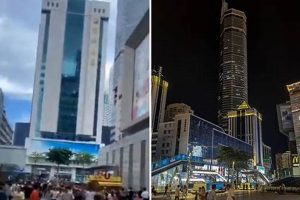



China’s horizontal skyscraper, also known as the “Sky City,” is a groundbreaking architectural marvel that has redefined the concept of urban living and sustainable construction.
This colossal structure boasts a staggering length of over 1,000 meters and a width of 200 meters, housing an entire city within its sprawling complex. It features residential units, offices, schools, hospitals, shopping malls, and even parks, all seamlessly integrated under one roof.
Beyond its sheer size, China’s horizontal skyscraper embodies sustainability and energy efficiency. Its innovative design incorporates natural elements such as sunlight, wind, and rainwater to reduce its environmental impact while providing a comfortable and healthy living environment for its residents.
The construction of this architectural wonder has attracted global attention, showcasing China’s advancements in engineering and sustainable urban planning. It serves as a testament to the country’s commitment to pushing the boundaries of innovation and creating livable, sustainable cities for the future.
1. Scale

The scale of China’s horizontal skyscraper is unprecedented, redefining the very concept of urban planning. Stretching over 1,000 meters in length and 200 meters in width, it encompasses an entire city within a single structure, challenging traditional notions of urban design and density.
This colossal scale has profound implications for urban planning. By integrating diverse functions such as residential, commercial, educational, and recreational facilities under one roof, the horizontal skyscraper creates a self-contained urban ecosystem that minimizes the need for external transportation and promotes walkability.
Moreover, the sheer size of the structure allows for innovative urban planning strategies. The building’s vast rooftop can be transformed into green spaces, parks, and urban farms, providing much-needed respite and recreational areas within the dense urban environment. Additionally, the integration of sustainable technologies, such as rainwater harvesting systems and solar panels, showcases how large-scale urban developments can embrace environmental consciousness.
China’s horizontal skyscraper serves as a model for future urban planning, demonstrating how unprecedented scale can be harnessed to create livable, sustainable, and interconnected cities. It challenges traditional urban design paradigms and opens up new possibilities for addressing the challenges of urbanization in the 21st century.
2. Sustainability

China’s horizontal skyscraper embodies sustainability as a core design principle, minimizing its ecological impact while maximizing the well-being of its occupants. This commitment to sustainability is evident in several key aspects of the building’s design and construction:
- Energy efficiency: The building’s envelope is designed to minimize heat loss and gain, reducing energy consumption for heating and cooling. Renewable energy sources, such as solar and wind power, are integrated into the design to generate clean electricity.
- Water conservation: Rainwater harvesting systems collect and store rainwater for non-potable uses, such as irrigation and flushing toilets. Low-flow fixtures and appliances further reduce water consumption.
- Waste management: Advanced waste management systems sort and recycle waste materials, minimizing the amount of waste sent to landfills.
- Green spaces: The building’s rooftop and terraces are transformed into green spaces, providing natural insulation, reducing the urban heat island effect, and offering recreational areas for residents.
By incorporating these sustainable features, China’s horizontal skyscraper demonstrates how large-scale urban developments can coexist harmoniously with environmental consciousness. It serves as a model for future cities, showcasing the practical applications of sustainable design and its significance in creating livable and resilient urban environments.
Moreover, the building’s sustainable design has practical implications for its occupants. By reducing energy and water consumption, the building lowers operating costs for residents and businesses. The integration of green spaces and natural light promotes well-being and productivity, creating a healthier and more enjoyable living environment.
In conclusion, the connection between sustainability and China’s horizontal skyscraper is integral to its design and operation. By prioritizing environmental consciousness, the building minimizes its ecological impact while maximizing the well-being of its occupants, demonstrating the practical significance of sustainable urban development.
3. Integration

The integration of diverse functions within China’s horizontal skyscraper is not merely a design concept but a fundamental aspect that redefines urban living. By housing residential units, offices, schools, hospitals, shopping malls, and parks under one roof, the building creates a self-contained city that offers a comprehensive living experience for its residents.
This integration has several key advantages. Firstly, it eliminates the need for extensive commuting, reducing traffic congestion and air pollution. Residents can easily access all essential amenities and services within the building, fostering a sense of community and convenience.
Secondly, the integrated design promotes social interaction and diversity. By bringing together people from different backgrounds and age groups, the building creates a vibrant and inclusive urban environment. The integration of public spaces, such as parks and plazas, further encourages social interaction and community building.
The practical significance of this integration extends beyond convenience and social benefits. By reducing the need for external transportation, the building minimizes its carbon footprint and contributes to a more sustainable urban environment.
In conclusion, the integration of diverse functions within China’s horizontal skyscraper is a transformative concept that enhances the quality of life for its residents, promotes sustainability, and redefines the very nature of urban living. It serves as a model for future urban developments, demonstrating how integration can create livable, sustainable, and vibrant cities.
4. Innovation

China’s horizontal skyscraper exem
plifies innovation in engineering and construction, showcasing groundbreaking techniques and pushing the boundaries of architectural design.
- Structural Design:
The building’s innovative structural design utilizes ultra-high strength steel and advanced construction methods to achieve its unprecedented scale and horizontal orientation, redefining the possibilities of skyscraper construction.
- Prefabrication and Modular Construction:
To ensure efficiency and precision, prefabricated components and modular construction techniques are employed, allowing for faster and more sustainable construction while maintaining the highest quality standards.
- Vertical Greenery and Green Architecture:
The integration of vertical greenery and green architecture principles not only enhances the building’s aesthetic appeal but also contributes to improved air quality, thermal regulation, and overall well-being of its occupants.
- Smart Technologies and Building Management Systems:
The building is equipped with advanced smart technologies and building management systems that optimize energy efficiency, enhance security, and provide a seamless living experience for its residents.
These innovative facets underscore the transformative power of engineering in shaping the future of urban construction. China’s horizontal skyscraper stands as a testament to the ingenuity and dedication of engineers and architects who continue to push the boundaries of what is possible in the built environment.
5. Efficiency

China’s horizontal skyscraper embodies efficiency as a core principle, optimizing energy consumption to promote sustainable living and minimize its environmental impact.
The building’s design incorporates several innovative strategies to enhance energy efficiency. Its envelope is meticulously engineered to reduce heat loss and gain, minimizing the need for heating and cooling. Renewable energy sources, such as solar and wind power, are integrated into the design, generating clean electricity and reducing reliance on fossil fuels.
Furthermore, advanced building management systems monitor and control energy consumption in real-time. These systems automatically adjust lighting, heating, and cooling based on occupancy and weather conditions, ensuring optimal energy usage. Lighting systems utilize energy-efficient LED technology, further reducing energy consumption.
The practical significance of energy efficiency in China’s horizontal skyscraper extends beyond environmental benefits. By optimizing energy consumption, the building reduces operating costs for residents and businesses, making sustainable living more accessible and affordable.
In conclusion, the connection between efficiency and China’s horizontal skyscraper is vital to its sustainability and long-term viability. The building’s innovative design and energy-saving strategies showcase the practical applications of efficiency in promoting sustainable urban living. It serves as a model for future developments, demonstrating how efficiency can contribute to a greener and more sustainable built environment.
6. Community

China’s horizontal skyscraper embodies the concept of community, fostering human connection and interaction within a dense urban environment. Its unique design and integrated amenities create a vibrant and inclusive living space that promotes social well-being and a sense of belonging.
- Shared Spaces and Common Areas:
The skyscraper features numerous shared spaces and common areas, such as parks, plazas, and communal kitchens, which encourage residents to interact and build relationships. These spaces provide opportunities for social gatherings, informal meetings, and spontaneous conversations. - Vertical Neighborhoods and Mixed-Use Spaces:
The building’s vertical neighborhoods and mixed-use spaces create a diverse and dynamic community. Residential units are interspersed with commercial, retail, and recreational facilities, allowing residents to interact with people from different backgrounds and interests. This diversity fosters social cohesion and a sense of shared ownership. - Community-Oriented Design and Programming:
The skyscraper’s design and management prioritize community-oriented initiatives. The building management organizes regular events, workshops, and social gatherings to encourage resident participation and foster a sense of community. These activities provide opportunities for residents to connect, share ideas, and contribute to the overall well-being of the community. - Technology-Enabled Communication and Engagement:
China’s horizontal skyscraper leverages technology to facilitate communication and engagement among residents. Online platforms, mobile applications, and smart building systems connect residents and provide a virtual space for community discussions, event coordination, and information sharing. This digital infrastructure enhances the sense of community and promotes inclusivity, especially for residents who may face physical or social barriers.
In conclusion, China’s horizontal skyscraper demonstrates how thoughtful design and innovative approaches can foster a strong sense of community within a dense urban environment. By creating shared spaces, promoting diversity, organizing community-oriented events, and leveraging technology, the skyscraper fosters human connection, enhances social well-being, and creates a truly livable and vibrant urban environment.
7. Landmark

China’s horizontal skyscraper stands as a prominent landmark, embodying the nation’s architectural prowess and rapid economic growth. Its colossal scale, innovative design, and sustainable features have captured global attention, solidifying its status as an iconic symbol of China’s advancement.
- Architectural Innovation:
The horizontal skyscraper pushes the boundaries of architectural design, showcasing China’s commitment to innovation and engineering excellence. Its unique form and integration of cutting-edge technologies have redefined urban architecture and set new standards for sustainable construction. - Economic Power:
The construction of such a massive and technologically advanced structure reflects China’s strong economic. The skyscraper represents the nation’s ability to undertake ambitious infrastructure projects and invest in long-term development, demonstrating its economic might and global influence. - National Pride:
The horizontal skyscraper has become a source of national pride for China, inspiring awe and admiration around the world. It represents the country’s progress, ambition, and its growing status as a global leader in architecture, engineering, and innovation. - Tourism and Economic Impact:
As a landmark destination, the horizontal skyscraper attracts tourists from around the globe, generating revenue and boosting the local economy. Its unique design and reputation as a architectural marvel make it a must-visit destination, further contributing to China’s econom
ic growth and global recognition.
In conclusion, the horizontal skyscraper serves as a powerful symbol of China’s architectural prowess and economic growth. It embodies the nation’s commitment to innovation, showcases its economic strength, instills national pride, and contributes to the country’s global reputation and economic prosperity.
8. Future

China’s horizontal skyscraper offers a glimpse into the future of sustainable and livable urban environments, showcasing innovative approaches and technologies that redefine the way we design and build cities. By integrating sustainability, efficiency, and community-centric principles, this architectural marvel provides a blueprint for future urban development.
- Vertical Urbanism:
The horizontal skyscraper challenges traditional notions of urban planning by introducing the concept of vertical urbanism. By stacking residential, commercial, and recreational spaces vertically, it creates a compact and efficient urban environment that minimizes sprawl and promotes walkability. - Sustainable Design:
The building’s design incorporates cutting-edge sustainable technologies, such as rainwater harvesting systems, solar panels, and green roofs. These features reduce the environmental impact of the building, creating a more sustainable and resilient urban environment. - Integrated Communities:
The horizontal skyscraper fosters a sense of community by providing shared spaces, communal amenities, and opportunities for social interaction. This integrated approach promotes social well-being and creates a more vibrant and livable urban environment. - Smart Technologies:
The building is equipped with smart technologies that optimize energy consumption, enhance security, and provide a seamless living experience for residents. These technologies contribute to a more efficient, convenient, and sustainable urban environment.
China’s horizontal skyscraper serves as a model for future urban development, demonstrating how innovative design and sustainable practices can create livable, sustainable, and resilient cities. As urbanization continues to intensify, the lessons learned from this architectural marvel will be invaluable in shaping the future of urban environments worldwide.
Frequently Asked Questions about China’s horizontal skyscraper
This section addresses commonly asked questions and misconceptions surrounding China’s horizontal skyscraper, providing concise and informative answers to enhance understanding.
Question 1: What is the purpose of China’s horizontal skyscraper?
Answer: China’s horizontal skyscraper is designed to be a self-contained city, integrating residential, commercial, recreational, and educational facilities within a single structure. It aims to promote sustainability, efficiency, and community living in a dense urban environment.
Question 2: How does the horizontal skyscraper achieve sustainability?
Answer: The skyscraper incorporates green building technologies such as rainwater harvesting, solar panels, and green roofs to minimize its environmental impact. Its compact vertical design also reduces urban sprawl and promotes walkability.
Question 3: What are the benefits of living in a horizontal skyscraper?
Answer: Residents benefit from reduced commuting time, access to diverse amenities, and a strong sense of community fostered by shared spaces and communal activities.
Question 4: Is the horizontal skyscraper structurally sound?
Answer: Yes, the skyscraper is engineered with advanced construction methods and high-strength materials to ensure structural stability and withstand seismic activity.
Question 5: How does the skyscraper promote community building?
Answer: The building features shared spaces such as parks, plazas, and communal kitchens, encouraging social interaction and a sense of belonging among residents.
Question 6: What is the significance of the horizontal skyscraper as a landmark?
Answer: The skyscraper stands as a symbol of China’s architectural prowess, economic growth, and commitment to sustainable urban development.
In conclusion, China’s horizontal skyscraper represents a bold and innovative approach to urban design, showcasing the integration of sustainability, efficiency, and community living. Its unique features and ambitious scale make it a landmark that embodies China’s architectural achievements and aspirations for the future.
Transition to next article section: This comprehensive overview provides a deeper understanding of China’s horizontal skyscraper and its implications for future urban environments.
Tips for Experiencing China’s Horizontal Skyscraper
China’s horizontal skyscraper offers a unique and awe-inspiring architectural experience. To fully appreciate its grandeur and innovative features, consider these tips:
Tip 1: Book a Guided Tour:
Guided tours provide comprehensive insights into the skyscraper’s design, construction, and sustainable features. Visitors can explore hidden areas and learn about the innovative technologies employed.
Tip 2: Visit the Observation Deck:
Ascend to the observation deck for panoramic views of the cityscape and surrounding landscapes. This vantage point offers a unique perspective on the scale and integration of the horizontal skyscraper within its urban context.
Tip 3: Explore the Public Spaces:
Take time to explore the skyscraper’s public spaces, including parks, plazas, and communal areas. These spaces foster a sense of community and provide opportunities to interact with locals and fellow visitors.
Tip 4: Dine in the Sky:
Indulge in a culinary experience at one of the skyscraper’s rooftop restaurants. Savor delectable cuisine while enjoying breathtaking views of the city below.
Tip 5: Attend Cultural Events:
The skyscraper often hosts cultural events, exhibitions, and performances. These events offer a glimpse into Chinese culture and provide a platform for local artists and performers.
Tip 6: Capture the Skyline:
Capture the iconic silhouette of the horizontal skyscraper against the backdrop of the city skyline. Experiment with different angles and perspectives to create stunning photographs that showcase its architectural grandeur.
Tip 7: Explore the Surrounding Area:
Venture beyond the skyscraper to explore the surrounding neighborhood. Discover hidden gems, local eateries, and cultural attractions that provide a deeper understanding of the city’s vibrant urban fabric.
Tip 8: Respect the Environment:
China’s horizontal skyscraper is a testament to sustainable design. Respect the environment by adhering to designated pathways, refraining from littering, and actively conserving resources during your visit.
By following these tips, you will gain a profound appreciation for China’s horizontal skyscraper, its architectural significance, and its role in shaping the future of urban living.
Conclusion
China’s horizontal skyscraper stands as a testament to the nation’s architectural ingenuity and commitment to sustainable urban development. Its innovative design, which integrates diverse functions and promotes community living within a dens
e urban environment, offers a glimpse into the future of livable and sustainable cities.
As urbanization continues to intensify globally, the lessons learned from this architectural marvel will be invaluable in shaping future urban environments. By prioritizing sustainability, efficiency, and human well-being, China’s horizontal skyscraper sets an aspirational benchmark for urban planning and design. It challenges conventional notions of urban living and showcases the potential for innovative solutions to address the challenges of modern cities.