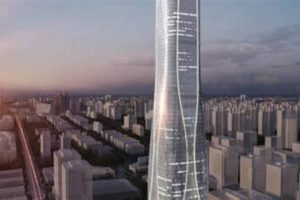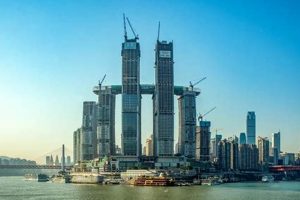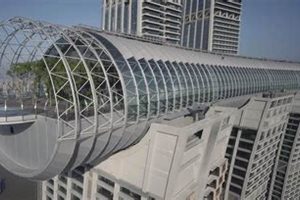



In the realm of architectural marvels, the rapid construction of skyscrapers has captured global attention. Among these feats, the construction of a Chinese skyscraper in a mere 19 days stands out as a testament to human ingenuity and engineering prowess. This architectural marvel, known as the Broad Sustainable Building, was erected in Changsha, China, in 2015.
The remarkable speed of construction was achieved through the use of prefabricated modular units, a technique that involves assembling pre-built components on-site. This innovative approach not only reduced construction time but also ensured precision and quality control. The building’s design incorporates sustainable features such as energy-efficient lighting and a rainwater collection system, making it an environmentally friendly structure.
The successful completion of this project has significant implications for the construction industry. It demonstrates the potential for faster, more efficient, and sustainable building methods. The reduced construction time can lower costs and allow for quicker occupancy, benefiting both developers and tenants. Moreover, the use of prefabricated units promotes standardization and quality control, leading to more durable and consistent structures.
1. Prefabrication

Prefabrication played a pivotal role in the construction of the Chinese skyscraper built in 19 days. It involves the manufacturing of building components in a controlled environment, often off-site, before being assembled on-site. This approach offers numerous advantages, including:
- Speed: Prefabrication allows for faster construction times as components can be produced concurrently and assembled quickly on-site.
- Efficiency: Prefabrication streamlines the construction process by minimizing on-site labor, reducing waste, and increasing productivity.
- Quality control: Prefabricated components are manufactured in controlled factory environments, ensuring higher quality and consistency compared to traditional on-site construction methods.
- Cost-effectiveness: Prefabrication can reduce construction costs by optimizing material usage, reducing labor expenses, and minimizing project timelines.
In the case of the Chinese skyscraper, prefabricated modular units were used, which further accelerated the construction process. These units were manufactured off-site and then assembled on-site, like building blocks. This innovative approach allowed for the rapid completion of the building, setting a new benchmark for high-rise construction.
The successful implementation of prefabrication in the construction of this skyscraper highlights its practical significance. Prefabrication offers a viable solution to address the challenges of speed, efficiency, quality, and cost-effectiveness in the construction industry. As technology continues to advance, prefabrication techniques are expected to become even more sophisticated, paving the way for even more ambitious and innovative construction projects in the future.
2. Modular construction

Modular construction played a crucial role in the rapid completion of the Chinese skyscraper built in 19 days. This innovative approach involves dividing a building’s structure into smaller, prefabricated modules that are manufactured off-site and then assembled on-site. Modular construction offers several advantages that contributed to the project’s success:
- Speed: Modular construction significantly reduces construction time compared to traditional methods. Since modules are manufactured concurrently in a controlled environment, on-site assembly can proceed quickly and efficiently.
- Quality control: Modules are constructed in factories under strict quality control measures, ensuring higher precision and consistency compared to on-site construction.
- Cost-effectiveness: Modular construction can reduce construction costs by optimizing material usage, minimizing labor expenses, and reducing project timelines.
- Flexibility: Modular construction allows for greater flexibility in design and customization, as modules can be easily reconfigured or replaced.
In the case of the Chinese skyscraper, the use of prefabricated modular units enabled the rapid assembly of the building’s structure. The modules were manufactured off-site and then transported to the construction site, where they were assembled like building blocks. This approach allowed for the completion of the building in a record-breaking 19 days, demonstrating the efficiency and practicality of modular construction.
The successful implementation of modular construction in this project highlights its significance as a viable solution to address the challenges of speed, efficiency, quality, and cost-effectiveness in the construction industry. As technology continues to advance and construction methods evolve, modular construction is expected to play an increasingly important role in shaping the future of building design and construction.
3. Speed

Speed was a crucial factor in the construction of the Chinese skyscraper built in 19 days. The rapid completion of this building showcased the efficiency and practicality of modern construction techniques, particularly prefabrication and modular construction. Prefabrication, the manufacturing of building components off-site, allowed for faster assembly on-site, reducing construction time significantly. Modular construction, the division of a building’s structure into prefabricated modules, further accelerated the construction process, as modules could be manufactured concurrently and assembled quickly on-site.
The importance of speed in this project cannot be overstated. The rapid construction time not only set a new benchmark for high-rise construction but also demonstrated the potential for faster, more efficient building methods. By reducing construction time, developers can save on costs, reduce project risks, and bring buildings into operation more quickly, leading to earlier returns on investment. Additionally, faster construction can minimize disruption to surrounding areas, reduce environmental impact, and allow for quicker occupancy, benefiting both tenants and end-users.
The successful completion of the Chinese skyscraper in 19 days highlights the practical significance of speed in modern construction. As urbanization continues and the demand for housing and infrastructure grows, faster and more efficient construction methods will become increasingly important. Prefabrication and modular construction offer viable solutions to address these c
hallenges, enabling the construction of high-quality buildings in a fraction of the time compared to traditional methods. This understanding will continue to shape the future of the construction industry, leading to more innovative and efficient building practices.
4. Efficiency

Efficiency was a paramount consideration in the construction of the Chinese skyscraper built in 19 days. It played a crucial role in achieving the project’s ambitious goal of rapid completion. Efficiency can be defined as the optimal use of resources, time, and effort to achieve maximum productivity. In the context of this project, efficiency was manifested in several key areas:
Firstly, the use of prefabrication and modular construction techniques significantly enhanced efficiency. Prefabrication, the manufacturing of building components off-site, allowed for faster assembly on-site, reducing construction time. Modular construction, the division of a building’s structure into prefabricated modules, further accelerated the construction process, as modules could be manufactured concurrently and assembled quickly on-site.
Secondly, the project’s logistical planning and coordination were meticulously executed to ensure efficient workflow. Just-in-time delivery of materials and components to the construction site minimized delays and wastage. The use of advanced construction equipment and technologies, such as automated cranes and laser leveling systems, further improved efficiency and accuracy.
Thirdly, the project team’s collaboration and communication were optimized to avoid bottlenecks and delays. Regular progress meetings, clear communication channels, and effective decision-making processes ensured that all stakeholders were aligned and working towards the common goal of completing the building efficiently.
The successful completion of the Chinese skyscraper in 19 days underscores the practical significance of efficiency in modern construction. By prioritizing efficiency at every stage of the project, the team was able to achieve remarkable results, setting a new benchmark for high-rise construction. The lessons learned from this project can be applied to other construction projects to enhance productivity, reduce costs, and deliver high-quality buildings in a timely manner.
5. Sustainability

The construction of the Chinese skyscraper built in 19 days was not only a feat of engineering but also a testament to the increasing importance of sustainability in modern architecture. Sustainability encompasses a wide range of considerations, including energy efficiency, water conservation, waste reduction, and the use of eco-friendly materials. In the context of this project, sustainability was manifested in several key areas:
- Energy Efficiency: The building’s design incorporates passive design strategies, such as natural ventilation and daylighting, to reduce energy consumption. Additionally, energy-efficient appliances and lighting systems were installed throughout the building.
- Water Conservation: The building features a rainwater harvesting system that collects and reuses rainwater for irrigation and other non-potable purposes. Low-flow fixtures and water-saving landscaping further contribute to water conservation.
- Waste Reduction: The use of prefabricated and modular construction techniques significantly reduced construction waste. Additionally, the building’s design incorporates recycling and waste management systems to minimize waste during operation.
- Eco-friendly Materials: Sustainable materials, such as recycled steel and low-VOC (volatile organic compound) paints, were used in the construction and finishing of the building to reduce environmental impact.
The successful integration of sustainability into the design and construction of this skyscraper demonstrates the growing commitment to environmental responsibility in the construction industry. By prioritizing sustainability, architects and engineers can create buildings that are not only efficient and cost-effective but also minimize their environmental footprint and contribute to a more sustainable future.
6. Innovation

Innovation played a pivotal role in the construction of the Chinese skyscraper built in 19 days. It involved the application of novel techniques and technologies to overcome challenges and achieve remarkable results. The use of prefabrication and modular construction, for instance, represented a significant departure from traditional building methods, enabling faster assembly and improved quality control.
The project team embraced innovation at every stage of the construction process. They employed advanced digital tools for design and coordination, optimized logistical planning to minimize delays, and implemented real-time monitoring systems to track progress and identify potential issues. This innovative approach not only accelerated construction but also enhanced safety and efficiency.
The successful completion of the Chinese skyscraper in 19 days highlights the practical significance of innovation in modern construction. It demonstrates that by embracing new ideas and technologies, architects and engineers can push the boundaries of what is possible, achieving remarkable feats of engineering and design while delivering high-quality buildings in a shorter timeframe and at a lower cost. This understanding will continue to shape the future of the construction industry, leading to more innovative and sustainable building practices.
7. Quality Control
In the realm of construction, quality control plays a crucial role in ensuring the safety, durability, and overall performance of buildings. In the remarkable case of the Chinese skyscraper built in 19 days, quality control was of paramount importance, given the ambitious timeline and the need to maintain high standards.
- Rigorous Material Inspection
Every component used in the skyscraper’s construction underwent rigorous inspection to ensure compliance with specifications and quality standards. From the steel beams to the glass panels, nothing was left to chance.
- Meticulous On-Site Assembly
During the on-site assembly of prefabricated modules, highly skilled technicians employed precise techniques to ensure the structural integrity and alignment of each module. Continuous monitoring and adjustments guaranteed a seamless fit, minimizing potential defects.
- Advanced Testing and Monitoring
State-of-the-art testing equipment was utilized throughout the construction process to assess the strength, stability, and performance of the building. Non-destructive testing methods, such as ultrasonic and radiographic testing, ensured the absence of hidden flaws or defects in critical structural elements.
- Continuous Improvement and Evaluation
The construction team implemented a robust qualit
y management system that encouraged continuous improvement and evaluation. Regular inspections, testing, and feedback loops allowed for the identification and rectification of any potential issues, ensuring the highest level of quality throughout the project.
The stringent quality control measures employed in the construction of this skyscraper paid dividends, resulting in a structurally sound and aesthetically pleasing building that met the highest safety and performance standards. The success of this project demonstrates the paramount importance of quality control in modern construction, especially in fast-paced and complex projects.
8. Cost-effectiveness

In the realm of modern construction, cost-effectiveness has emerged as a critical factor, especially in ambitious projects like the Chinese skyscraper built in 19 days. This remarkable feat was achieved through innovative approaches and meticulous planning, resulting in substantial cost savings without compromising quality or safety standards.
- Prefabrication and Modular Construction
Prefabricating building components off-site and assembling them on-site significantly reduced labor costs and construction time. Modular construction allowed for standardized production processes, minimizing material waste and optimizing resource allocation.
- Efficient Material Management
Careful planning and coordination ensured the timely delivery of materials to the construction site, eliminating delays and minimizing material wastage. Advanced inventory management systems tracked material usage, reducing the risk of overstocking or shortages, leading to further cost savings.
- Lean Construction Practices
The implementation of lean construction principles, such as just-in-time delivery and waste reduction, streamlined the construction process, eliminating non-value-added activities and reducing overall project costs.
- Long-Term Cost Savings
The use of durable materials and sustainable design strategies resulted in lower maintenance and operating costs over the building’s lifespan. Energy-efficient features, such as high-performance glazing and insulation, reduced energy consumption, leading to long-term savings on utility bills.
The Chinese skyscraper built in 19 days stands as a testament to the transformative power of cost-effective construction practices. By embracing innovative techniques and emphasizing efficient resource management, the project achieved remarkable cost savings while delivering a high-quality and sustainable building.
9. Durability
In the realm of skyscraper construction, durability stands as a cornerstone, ensuring the longevity and resilience of these architectural marvels. The Chinese skyscraper built in 19 days exemplifies this principle, showcasing how meticulous attention to durability can result in a building that withstands the test of time and environmental challenges.
The rapid construction timeline of this skyscraper demanded innovative approaches to durability. Prefabricated modular construction played a pivotal role, enabling the use of high-strength materials and precision engineering in controlled factory environments. Each module underwent rigorous testing to meet strict quality standards, ensuring structural integrity and resistance to various external forces.
The choice of materials also contributed significantly to the building’s durability. High-performance concrete, reinforced with advanced composites, provides exceptional strength and resistance to weathering. Corrosion-resistant steel was employed in structural components to enhance longevity in the face of moisture and environmental factors. The facade incorporates durable materials like tempered glass and aluminum cladding, ensuring resistance to extreme temperatures, UV radiation, and impact.
Beyond material selection, the design of the skyscraper prioritized durability. Wind tunnel testing optimized the building’s shape to minimize structural stress during high winds. Seismic dampers were strategically placed to mitigate earthquake forces, ensuring the building’s stability in the event of seismic activity. Advanced fire safety systems, including sprinklers, firewalls, and smoke detectors, further enhance the building’s resilience to potential hazards.
The durability of the Chinese skyscraper built in 19 days extends beyond its physical structure. Sustainable design principles were incorporated to ensure long-term performance and environmental resilience. The building’s energy-efficient features reduce its carbon footprint, while water conservation systems minimize resource consumption. These measures contribute to the building’s overall durability by mitigating the impact of external factors on its long-term integrity.
The successful construction of this skyscraper underscores the paramount importance of durability in modern architecture. By prioritizing durability at every stage of the design and construction process, architects and engineers can create buildings that stand the test of time, ensuring the safety, comfort, and sustainability of their occupants for generations to come.
FAQs on Chinese Skyscraper Built in 19 Days
The remarkable construction of a Chinese skyscraper in just 19 days has garnered significant attention, raising various questions and concerns. To address these inquiries, we have compiled a list of frequently asked questions and their corresponding answers.
Question 1: How was it possible to construct a skyscraper in such a short time frame?
Answer: The project employed innovative construction techniques, primarily prefabrication and modular construction. Building components were manufactured off-site and assembled on-site, significantly reducing construction time.
Question 2: Are buildings constructed using prefabrication and modular techniques less durable than traditionally built structures?
Answer: Prefabricated and modular buildings are designed and constructed to meet stringent quality standards. They undergo rigorous testing to ensure structural integrity and durability, making them comparable to or even exceeding the durability of traditionally built structures.
Question 3: What measures were taken to ensure the safety and stability of the building given its rapid construction?
Answer: The design of the skyscraper incorporated advanced engineering principles and materials to withstand various external forces. Wind tunnel testing optimized the building’s shape, and seismic dampers were installed to mitigate earthquake forces. Stringent quality control measures were implemented throughout the construction process to guarantee structural integrity and safety.
Question 4: How does prefabrication and modular construction impact the cost and sustainability of the building?
Answer: Prefabrication and modular construction offer cost benefits by optimizing material usage, reducing labor costs, and minimizing construction waste. These techniques also promote sustainability by allowing for better control over resource consumption and reducing environmental impact during construction.
Question 5: C
an prefabrication and modular construction be applied to other types of buildings besides skyscrapers?
Answer: Prefabrication and modular construction are versatile techniques applicable to various building types, including residential, commercial, and industrial structures. Their adaptability makes them suitable for projects of different scales and complexities.
Question 6: What are the potential limitations or challenges associated with prefabrication and modular construction?
Answer: Prefabrication and modular construction may have limitations in terms of design flexibility and customization compared to traditional construction methods. Additionally, the transportation of large prefabricated modules can pose logistical challenges, especially for projects in remote areas.
In summary, the construction of the Chinese skyscraper in 19 days showcases the transformative potential of prefabrication and modular construction techniques. These innovative approaches offer numerous advantages, including reduced construction time, improved quality, enhanced sustainability, and cost-effectiveness. While prefabrication and modular construction have their limitations, ongoing advancements in design and engineering practices are continually expanding their applicability and benefits.
Transition to the next article section…
Tips Inspired by the Chinese Skyscraper Built in 19 Days
The remarkable feat of constructing a Chinese skyscraper in just 19 days offers valuable insights and tips that can be applied to various construction projects. Here are a few key tips inspired by this architectural marvel:
Tip 1: Embrace Prefabrication and Modular Construction
Prefabrication and modular construction techniques can significantly reduce construction time and costs. By manufacturing building components off-site and assembling them on-site, projects can be completed more efficiently and cost-effectively.
Tip 2: Prioritize Quality Control
Rigorous quality control measures are crucial to ensure the safety, durability, and overall performance of a building. Establish clear quality standards, implement regular inspections, and utilize advanced testing methods to guarantee the integrity of materials and construction practices.
Tip 3: Optimize Material Management
Effective material management can minimize waste and costs. Implement just-in-time delivery systems, coordinate material deliveries to align with construction schedules, and explore sustainable material options to reduce environmental impact.
Tip 4: Implement Lean Construction Practices
Lean construction principles focus on eliminating waste and maximizing value. Identify and remove non-value-added activities, streamline processes, and encourage collaboration among project stakeholders to enhance efficiency and productivity.
Tip 5: Prioritize Durability and Sustainability
Construct buildings that withstand the test of time and minimize environmental impact. Choose durable materials, incorporate sustainable design strategies, and implement energy-efficient systems to create resilient and eco-friendly structures.
Tip 6: Foster Innovation and Collaboration
Encourage innovation and collaboration throughout the project lifecycle. Explore new technologies, embrace creative solutions, and foster a collaborative environment where ideas are shared and challenges are tackled collectively.
By incorporating these tips into construction projects, architects, engineers, and contractors can achieve greater efficiency, cost-effectiveness, and sustainability, while delivering high-quality and durable buildings.
Transition to the article’s conclusion:
The lessons learned from the construction of the Chinese skyscraper in 19 days serve as a valuable guide for the future of the construction industry. By embracing innovative techniques, prioritizing quality, and fostering collaboration, we can continue to push the boundaries of construction and create structures that are not only functional but also sustainable and inspiring.
Conclusion
The construction of a Chinese skyscraper in just 19 days stands as a testament to the transformative power of innovative construction techniques, meticulous planning, and unwavering commitment to quality. By embracing prefabrication and modular construction, the project achieved remarkable speed and efficiency, while maintaining high standards of safety and durability.
This architectural marvel offers valuable lessons for the future of the construction industry. It demonstrates the potential for faster, more cost-effective, and more sustainable building practices. Prefabrication and modular construction offer numerous advantages, including reduced construction time, improved quality control, optimized material management, and enhanced sustainability. By embracing these innovative approaches, we can address the challenges of urbanization, sustainability, and affordability in the built environment.
As we continue to push the boundaries of construction technology and engineering, we must also prioritize sustainability and durability. Buildings should not only be constructed quickly and efficiently but also designed to withstand the test of time and minimize their environmental impact. By incorporating sustainable design principles and durable materials, we can create structures that are not only functional but also resilient, eco-friendly, and inspiring.
The Chinese skyscraper built in 19 days serves as a beacon of innovation and a reminder that the future of construction lies in collaboration, creativity, and a relentless pursuit of excellence. By embracing these principles, we can create a built environment that meets the needs of the present and inspires generations to come.