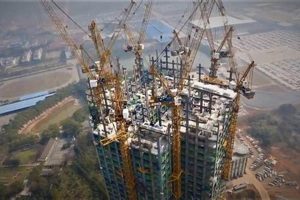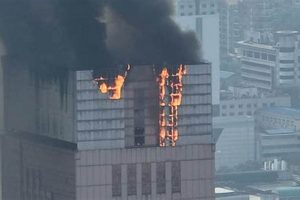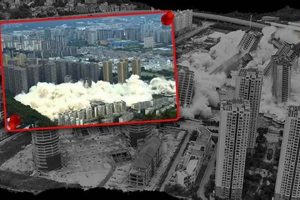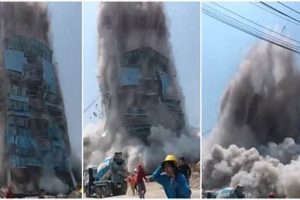



China Skyscraper Shakes refer to the phenomenon of skyscrapers in China experiencing substantial swaying or shaking, often caused by strong winds or seismic activity.
The design and construction of skyscrapers in China have evolved to incorporate advanced engineering techniques to withstand these dynamic forces. These buildings often feature innovative structural systems, such as tuned mass dampers and outrigger systems, which help dissipate or absorb vibrations, ensuring the stability and safety of the structures.
China Skyscraper Shakes have garnered significant attention due to their potential impact on building occupants and surrounding infrastructure. Understanding and mitigating these dynamic responses are crucial for ensuring the well-being of individuals and communities in urban environments. This has led to ongoing research and development efforts aimed at enhancing the resilience of skyscrapers against wind and seismic loads.
1. Height

The height of a building is a major factor in its susceptibility to swaying and shaking in high winds. This is because taller buildings have a greater surface area exposed to the wind, which can create more force on the building. Additionally, taller buildings are more flexible than shorter buildings, which means they are more likely to sway and shake in the wind.
China is home to some of the world’s tallest buildings, including the Shanghai Tower, the Ping An Finance Center, and the Guangzhou CTF Finance Centre. These buildings are all over 500 meters tall, and they are all susceptible to swaying and shaking in high winds. In fact, the Shanghai Tower has been known to sway by as much as 1 meter in high winds.
The swaying and shaking of tall buildings can be a major concern for occupants, as it can cause discomfort and even nausea. Additionally, swaying and shaking can damage the building’s structure and facade. To reduce the risk of swaying and shaking, tall buildings are often equipped with damping systems, which help to dissipate energy from the wind.
Understanding the connection between height and susceptibility to swaying and shaking is important for engineers and architects who design tall buildings. By taking this factor into account, they can design buildings that are safe and comfortable for occupants, even in high winds.
2. Wind

Strong winds are a major contributing factor to China Skyscraper Shakes. China’s coastal regions are particularly vulnerable to strong winds, especially during typhoon season. These winds can exert immense force on tall buildings, causing them to sway and shake. In some cases, strong winds can even cause skyscrapers to collapse.
The swaying and shaking of skyscrapers can be a major concern for occupants, as it can cause discomfort, nausea, and even injuries. Additionally, swaying and shaking can damage the building’s structure and facade. In severe cases, it can even lead to the collapse of the building.
To reduce the risk of swaying and shaking, skyscrapers in China are often equipped with damping systems. These systems help to dissipate energy from the wind, reducing the amount of swaying and shaking that occurs.
Understanding the connection between wind and China Skyscraper Shakes is important for engineers and architects who design tall buildings in China. By taking this factor into account, they can design buildings that are safe and comfortable for occupants, even in high winds.
3. Seismic activity
China is located in a seismically active region, meaning that it is prone to earthquakes. Earthquakes can cause ground shaking, which can cause skyscrapers to sway and shake. In some cases, earthquakes can even cause skyscrapers to collapse.
- Ground shaking
Ground shaking is the most common effect of earthquakes. It can cause the ground to move violently, which can cause skyscrapers to sway and shake. The amount of ground shaking depends on the magnitude of the earthquake and the distance from the epicenter. - Liquefaction
Liquefaction is a phenomenon that can occur when the ground is saturated with water. When an earthquake occurs, the ground can liquefy, causing buildings to sink and tilt. Liquefaction can also cause the ground to lose its bearing capacity, which can lead to the collapse of buildings. - Landslides
Landslides can occur when an earthquake causes the ground to move. Landslides can damage or destroy buildings, and they can also block roads and railways. - Tsunamis
Tsunamis are large waves that can be generated by earthquakes. Tsunamis can travel long distances and cause widespread damage.
China Skyscraper Shakes are a serious hazard that can cause widespread damage and loss of life. It is important to understand the risks of earthquakes and to take steps to mitigate these risks.
4. Design

The design of a skyscraper plays a crucial role in its ability to withstand shaking caused by wind and seismic activity. Engineers and architects consider various design aspects to mitigate the impact of these forces and ensure the safety and stability of these structures.
- Aerodynamic Design: Skyscrapers with streamlined shapes and rounded corners are more aerodynamic, reducing wind resistance and minimizing the forces that can cause swaying and shaking. Buildings like the Burj Khalifa in Dubai exemplify this design approach.
- Structural Reinforcement: Skyscrapers often incorporate reinforced concrete cores, steel frames, and shear walls to provide structural strength and rigidity. These elements help distribute and absorb seismic forces, reducing the overall shaking of the building. The Taipei 101 in Taiwan is renowned for its innovative structural design that incorporates a tuned mass damper to counteract wind-induced vibrations.
- Damping Systems: Many skyscrapers are equipped with damping systems, such as tuned mass dampers or viscous dampers, to dissipate energy and reduce vibrations caused by wind and earthquakes. These systems act as shock absorbers, minimizing the swaying and shaking of the building. The Shanghai Tower in China features a massive tuned mass damper weighing over 1,000 tons, which effectively reduces wind-induced oscillations.
- Base Isolation: Some skyscrapers are built on base isolation systems, which consist of layers of flexible materials placed between the building and the ground.
These systems allow the building to move independently of the ground during an earthquake, reducing the transmission of seismic forces to the structure. The San Francisco City Hall in the United States is an example of a building that utilizes base isolation.
By incorporating these design features, engineers and architects can create skyscrapers that are more resistant to shaking caused by wind and seismic activity, ensuring the safety and well-being of occupants and the surrounding environment.
5. Construction

The quality of construction plays a vital role in a skyscraper’s ability to withstand the dynamic forces of wind and seismic activity, contributing to the phenomenon of “China Skyscraper Shakes.” Proper construction practices ensure that buildings are structurally sound and can resist these forces without compromising safety.
- Building Materials and Structural Integrity
The quality of materials used in construction is crucial. High-strength concrete, reinforced steel, and durable cladding contribute to a building’s ability to maintain its structural integrity during dynamic events. Substandard materials or inadequate reinforcement can lead to structural weaknesses and increased vulnerability to shaking. - Foundation and Ground Conditions
The foundation of a skyscraper is its anchor to the ground. A well-engineered foundation system, considering soil conditions and seismic activity, ensures stability and minimizes the risk of excessive shaking. Poorly designed foundations can result in uneven settlement, compromising the building’s structural integrity. - Construction Techniques and Workmanship
Skyscrapers require precise construction techniques and meticulous workmanship to ensure proper load distribution and energy dissipation. Adherence to building codes and industry standards is essential. Cutting corners or using unqualified contractors can lead to construction defects and increased susceptibility to shaking. - Maintenance and Inspection
Ongoing maintenance and regular inspections are crucial to preserve a skyscraper’s structural integrity. Timely repairs and upgrades can prevent deterioration and ensure the building remains resilient against dynamic forces. Neglecting maintenance can lead to weakened components and increased risk of damage during earthquakes or high winds.
In the context of “China Skyscraper Shakes,” ensuring high-quality construction is paramount. Stringent building codes, rigorous inspections, and a commitment to best practices are essential to mitigate the risks associated with dynamic forces and safeguard the safety of occupants and the surrounding environment.
6. Occupancy

The number of people occupying a skyscraper can significantly influence its response to seismic activity, contributing to the phenomenon of “China Skyscraper Shakes.” Understanding this relationship is crucial for mitigating risks and ensuring the safety of occupants.
- Increased Seismic Mass: A heavily occupied skyscraper carries a greater mass due to the presence of occupants and their belongings. This increased mass can amplify the building’s seismic response, leading to more pronounced shaking and potential damage.
- Uneven Mass Distribution: During an earthquake, the movement of occupants within a skyscraper can cause uneven mass distribution. This can disrupt the building’s center of mass and increase torsional forces, resulting in more severe shaking and stress concentrations.
- Emergency Response and Evacuation: In the event of a major earthquake, a densely occupied skyscraper poses challenges for emergency response and evacuation. The large number of occupants can hinder efficient evacuation and increase the risk of injuries or fatalities.
- Non-Structural Damage: The presence of occupants and their belongings can contribute to non-structural damage during an earthquake. Furniture, fixtures, and personal items can become projectiles, causing injuries or damage to the building’s interior.
In the context of “China Skyscraper Shakes,” it is essential to consider the impact of occupancy when designing and managing skyscrapers. Building codes and regulations should address occupancy loads and incorporate measures to mitigate the potential risks associated with high occupancy levels during seismic events.
7. Safety
The safety of skyscrapers during earthquakes is a major concern, especially in regions like China that are prone to seismic activity. Engineers are constantly working to develop new ways to make buildings more earthquake-resistant and mitigate the risks associated with “China Skyscraper Shakes.”
- Structural Design and Engineering: Skyscrapers are designed with robust structural systems to withstand the forces of earthquakes. Engineers use advanced techniques such as base isolation, tuned mass dampers, and shear walls to absorb and dissipate seismic energy, reducing the impact on the building’s structure.
- Materials and Construction: The materials used in skyscraper construction play a crucial role in their earthquake resistance. High-strength concrete, reinforced steel, and advanced composite materials are employed to enhance the building’s ability to withstand seismic forces and maintain structural integrity.
- Seismic Codes and Regulations: Building codes and regulations are essential in ensuring the safety of skyscrapers during earthquakes. These codes specify design standards, construction practices, and inspection protocols to ensure that buildings are built to withstand anticipated seismic activity in the region.
- Emergency Preparedness and Response: In addition to structural measures, emergency preparedness and response plans are vital for managing “China Skyscraper Shakes” and minimizing their impact. Occupants are trained on evacuation procedures, and buildings are equipped with emergency systems such as backup power and communication.
By incorporating these safety measures, engineers and architects are continuously working to enhance the earthquake resistance of skyscrapers in China, reducing the risks associated with “China Skyscraper Shakes” and ensuring the safety of occupants and the surrounding environment.
FAQs on “China Skyscraper Shakes”
This section addresses frequently asked questions and misconceptions surrounding the phenomenon of “China Skyscraper Shakes.”
Question 1: What causes China Skyscraper Shakes?
Answer: China Skyscraper Shakes refer to the swaying or shaking of skyscrapers in China, primarily caused by strong winds or seismic activity. The height, design, and construction of these buildings, along with environmental factors, contribute to their susceptibility to these dynamic forces.
Question 2: Are China Skyscraper Shakes dangerous?
Answer: While unsettling, most China Skyscraper Shakes are within acceptable safety limits. However, in extreme cases, particularly during severe
earthquakes, excessive shaking can lead to structural damage or discomfort for occupants.
Question 3: How are skyscrapers designed to withstand shaking?
Answer: Engineers employ various techniques to enhance skyscraper resilience, such as incorporating robust structural systems, using earthquake-resistant materials, and implementing damping systems to absorb and dissipate seismic energy.
Question 4: What measures are in place to ensure occupant safety during China Skyscraper Shakes?
Answer: Skyscrapers are equipped with emergency protocols, evacuation plans, and backup systems to ensure occupant safety. Regular inspections and maintenance are also crucial for preserving structural integrity and mitigating risks.
Question 5: Are China Skyscraper Shakes a common occurrence?
Answer: China Skyscraper Shakes are not uncommon, especially during typhoon season or in areas prone to earthquakes. However, the severity and frequency of these events vary depending on the specific location and building design.
Question 6: What advancements are being made to mitigate China Skyscraper Shakes?
Answer: Ongoing research and development efforts focus on enhancing building codes, improving structural designs, and implementing innovative technologies to further reduce the impact of China Skyscraper Shakes and ensure the safety and resilience of these structures.
These FAQs provide a concise overview of the causes, safety measures, and ongoing efforts related to China Skyscraper Shakes, fostering a better understanding of this phenomenon.
Transition to the next article section…
Tips to Mitigate China Skyscraper Shakes
Understanding the causes and impact of China Skyscraper Shakes is essential for developing effective mitigation strategies. Here are some recommendations to enhance the safety and resilience of these structures:
Tip 1: Implement Advanced Structural Systems
Employ innovative structural designs, such as base isolation and tuned mass dampers, to absorb and dissipate seismic energy, reducing the impact on the building’s structure.
Tip 2: Utilize Earthquake-Resistant Materials
Incorporate high-strength concrete, reinforced steel, and advanced composite materials to enhance the building’s ability to withstand seismic forces and maintain structural integrity.
Tip 3: Adhere to Strict Building Codes and Regulations
Stringently follow established building codes and regulations to ensure that skyscrapers are designed and constructed to withstand anticipated seismic activity in the region.
Tip 4: Implement Regular Inspections and Maintenance
Conduct regular inspections and maintenance to identify potential structural issues, ensuring the ongoing integrity and safety of the building.
Tip 5: Develop Comprehensive Emergency Plans
Establish clear emergency protocols, evacuation plans, and occupant training programs to ensure a coordinated response during seismic events.
Tip 6: Promote Research and Innovation
Support ongoing research and development efforts to advance the understanding of seismic behavior and develop innovative technologies for mitigating China Skyscraper Shakes.
By implementing these tips, we can enhance the safety and resilience of China’s skyscrapers, safeguarding occupants and the surrounding environment from the potential impact of seismic activity.
Conclusion
In conclusion, “China Skyscraper Shakes” is a phenomenon that highlights the dynamic interaction between skyscrapers and seismic forces in China. Understanding the causes, impact, and mitigation strategies is crucial for ensuring the safety and resilience of these structures.
Through advanced structural designs, earthquake-resistant materials, strict building codes, regular maintenance, comprehensive emergency plans, and ongoing research, we can enhance the ability of China’s skyscrapers to withstand seismic activity. This not only safeguards the well-being of occupants but also contributes to the overall resilience of urban environments.
As China continues to grow and urbanize, addressing “China Skyscraper Shakes” will remain a critical aspect of sustainable and safe city planning. By embracing innovative technologies and collaborative efforts, we can create skyscrapers that are not only architectural marvels but also beacons of safety and resilience in the face of seismic challenges.